Matthew 2:1-12 tells the story of the Magi who come from the East, following a mysterious star, searching for “the newborn king of the Jews.” They arrive first in Jerusalem, which is exactly where you would expect a king of the Jews to be—but the real King is not in the palace with Herod, he is in hidden poverty in Bethlehem. Right from the start, Matthew is showing that God’s ways quietly overturn our expectations and that the true King is humble and vulnerable, yet worthy of adoration.thesoutherncross+2
When Herod hears about this child, he is frightened, and “all Jerusalem with him,” because a rival king threatens the fragile balance of his power. He gathers the chief priests and scribes, and they correctly identify Bethlehem as the place where the Messiah is to be born, quoting the prophecy that a ruler will come from Bethlehem who will shepherd God’s people. It is striking that the religious experts know the Scriptures but do not move an inch to seek the child, while pagan seekers from far away are willing to leave everything behind and follow the light God gives them.crs+2
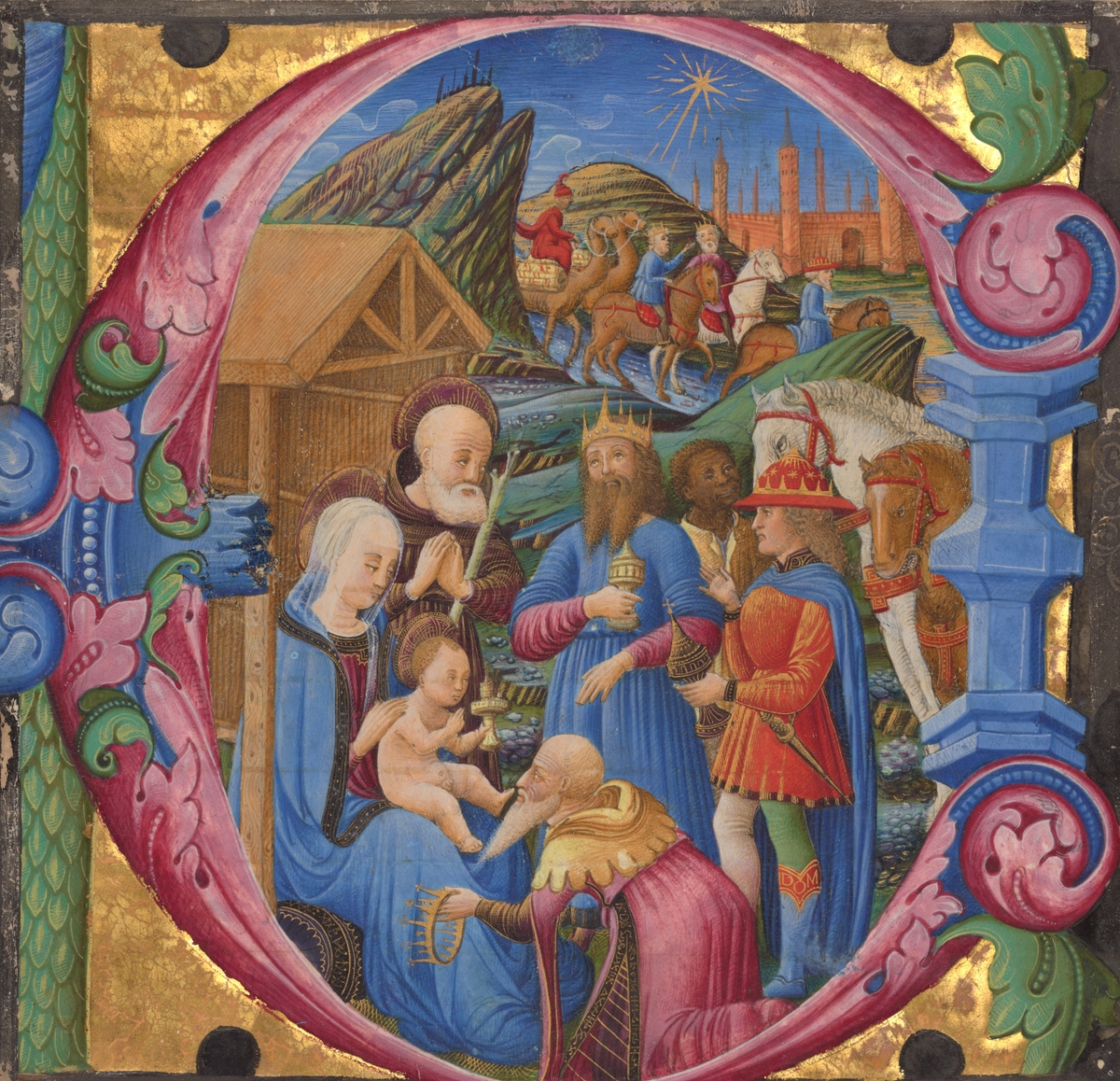
The star reappears and guides the Magi to the exact place where the child is, and Matthew tells us they are “overjoyed” at seeing it. When they enter the house, they see “the child with Mary his mother,” and they fall to the ground in adoration, a gesture of worship that the Gospel reserves for God. Then they open their treasures and offer gold, frankincense, and myrrh—gifts that Catholic tradition reads as a kind of small creed in action: gold for Christ’s kingship, frankincense for his divinity, and myrrh for his future suffering and death. The same child who lies in his Mother’s arms will reign as King, receive our worship as God, and freely give his life on the Cross.catholic+2
The conclusion of the passage is quiet but important: having been warned in a dream not to return to Herod, the Magi go back to their own country “by another way.” On the surface this protects the child from Herod’s plans, but spiritually it also suggests that a real encounter with Christ changes a person’s path; after worshiping him, they cannot simply go back the way they came. The God who drew them by a star now directs their conscience and their choices, and they respond with obedience and trust.missions.ewtn+1
In the Catholic Church, this Gospel is proclaimed on the Solemnity of the Epiphany, which is one of the great feasts of the Christmas cycle. “Epiphany” means manifestation or revelation: in Bethlehem, Christ is revealed not only to Israel, but to the nations, represented by these learned Gentile visitors who adore him. In many older traditions, Epiphany was seen as the crowning feast of Christmas, and in the current Roman Rite the broader Christmas season concludes with the Baptism of the Lord, which is closely linked to Epiphany as another moment when Jesus is manifested publicly.nationalshrine+3
The Church has also kept some beautiful customs to remember this event. In many places, Epiphany is known as “Three Kings Day,” reflecting the long-standing tradition that there were three wise men, often named Caspar, Melchior, and Balthasar, who brought three royal gifts. One especially meaningful practice is the Epiphany house blessing, or “chalking the door”: the family uses blessed chalk to write something like “20 + C + M + B + 26” above the main entrance, with the numbers marking the year and the letters standing both for the names of the Magi and for the Latin prayer “Christus mansionem benedicat” – “May Christ bless this house.” It is a simple way of saying that, just as the Magi entered the house of the Holy Family and found Christ, we want our own home to be a place where Christ is welcomed, honored, and allowed to guide everything that happens inside.detroitcatholic+3
For a family reading this passage together at the close of the Christmas season, the story of the Magi raises gentle but serious questions. Amid school, work, and all the noise of ordinary life, are we more like Herod, defending our own plans, or like the Magi, willing to be interrupted and led by God, even when it means taking “another way” than we expected? The gifts of gold, frankincense, and myrrh can become a pattern for what each of you might offer Christ this year: the “gold” of your talents and achievements, the “frankincense” of your prayer and worship, and the “myrrh” of your sacrifices and hidden sufferings, freely given to him in love. In that sense, Epiphany is not only the conclusion of Christmas, but also a beginning—a moment to step into the new year with the same attitude as the Magi: eyes fixed on Christ, hearts open, and ready, if needed, to go home by a different road.mycatholic+2
With Jesus’s birth, I have experienced a rebirth of my own in my career life. Directions I once took were redirected, and newer callings led me in ways I thought went astray, but later I would discover that there was greater purpose in store for me. In your reflections today, consider how in ways you have resisted God’s subtle guidance past our stubborness. Then think about the epiphany you experienced when you finally submitted and let it happen. The effect in my situations were eye opening and fulfilling. We do not know until God has revealed “by another way” that we realize our potential, and His mercy and grace at work in our lives.
Photo Credit, Painting:
Initial E: The Adoration of the Magi by Franco dei Russi
Original public domain image from Getty Museum
- https://www.thesoutherncross.org/news/unpacking-faith-gifts-of-epiphany/
- https://www.nationalshrine.org/blog/what-the-gifts-of-the-magi-tell-us-about-jesus/
- https://mycatholic.life/saints/saints-of-the-liturgical-year/january-6-epiphany/
- https://www.crs.org/five-facts-about-three-wise-men-epiphany-and-gift-you
- https://www.catholic.com/tract/three-kings-day-2026-catholic-answers-guide
- https://missions.ewtn.com/seasonsandfeastdays/epiphany/
- https://www.catholicnewsagency.com/news/250028/christmas-when-does-it-end
- https://portlanddiocese.org/solemnity-epiphany-lord
- https://en.wikipedia.org/wiki/Feast_of_the_Baptism_of_the_Lord
- https://www.detroitcatholic.com/news/20-c-m-b-19-epiphany-tradition-of-door-marking-evokes-magi-asks-gods-blessings-in-new-year
- https://www.stmarybrush.org/epiphany-blessing.html
- https://en.wikipedia.org/wiki/Biblical_Magi
- https://ppl-ai-file-upload.s3.amazonaws.com/web/direct-files/collection_c85d4bee-5b69-44a4-a53d-e4d82ffb7afe/26307aff-d78d-4ea0-bf17-1719e5066aca/help-me-write-a-journal-entry-oGxh_zxPTouFxXUv5iWBNg.md
- https://www.facebook.com/groups/298549307726102/posts/2120766275504387/
- https://www.newliturgicalmovement.org/2018/01/when-does-christmas-season-end.html
- https://www.northjersey.com/story/news/2025/01/05/20-cmb-25-why-nj-christians-are-chalking-the-door-for-epiphany/77410825007/
- https://www.ewtn.com/catholicism/library/baptism-of-the-lord-and-ordinary-time-4506
- https://ourladygc.org/resources/epiphany-house-blessing
- https://www.catholicculture.org/commentary/christmas-to-candlemas-when-is-real-end-christmas-season/
- https://bustedhalo.com/ministry-resources/chalk-it-up-bless-your-door-this-epiphany
- https://crosscatholic.org/blogs/2025/08/how-to-chalk-your-house-door-for-epiphany/

 10 Minutes For God