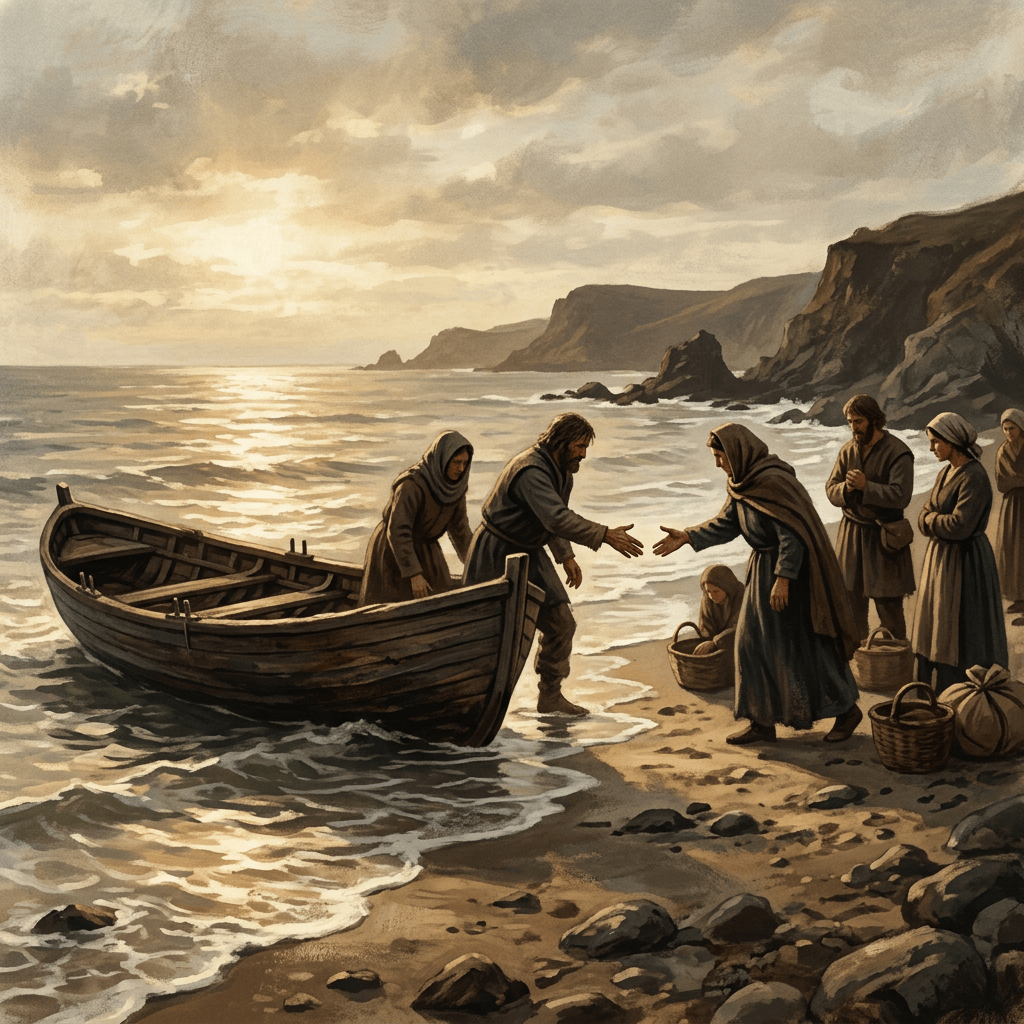
Hidden in the Heart: Choosing Humility Over Self-Righteousness

A Lent reflection on Luke 18:9-14, Mary’s Magnificat, and St. Thérèse’s little way.

“Jesus, hidden in my poor little heart, has once again made me understand how hollow and empty are all passing things.” St. Thérèse of Lisieux gives us a lens for today’s Gospel: God meets us most powerfully when we stop pretending, stop controlling, and stop trying to justify ourselves before Him. In the parable of the Pharisee and the tax collector, Jesus shows that the road to God begins not with self-congratulation, but with mercy.

The Prayer God Hears

Jesus tells this parable to people “who trusted in themselves that they were righteous and despised everyone else,” which is a sharp warning for every age. The Pharisee’s prayer is full of comparison, while the tax collector’s prayer is only a plea: “God, be merciful to me, a sinner!”. The surprising answer is that the man who went home justified was not the one with the most impressive record, but the one with the most humble heart.

The Catechism says it plainly: humility is the foundation of prayer. That is why the tax collector’s prayer is so powerful; he comes before God without pretending to be enough on his own. Lent invites us into that same honesty, because grace reaches us most deeply when self-righteousness falls away.

When Others Plot Against Us

Jeremiah gives voice to a painful truth: there are times when people do not merely misunderstand us, but actively seek our harm. “Yet I, like a trusting lamb led to slaughter,” he says, showing both innocence and vulnerability before human cruelty. Scripture does not deny that evil can be real, hidden, and dangerous; it names it without becoming consumed by it.

So what do we do when others plot our demise? We do not pretend evil is harmless, and we do not confuse mercy with passivity. We seek justice wisely, protect what must be protected, and place the final judgment in God’s hands, because vengeance does not belong to us. Self-righteousness tempts us to act as if we are the ultimate judge; humility remembers that God alone sees the whole truth and can right what we cannot.

Mary’s Better Way

Mary’s Magnificat gives the heart of the Christian response: “He has scattered the proud in the imagination of their hearts… he has exalted those of low degree”. Mary does not sing as someone who has control over everything; she sings as one who has been looked upon by God with mercy. Her song is the opposite of the Pharisee’s spirit, because it magnifies the Lord rather than the self.

This is the deeper issue in your opening reflection about wanting God to “do it our way.” The proud heart wants certainty on its own terms, but the humble heart learns to trust God’s timing, God’s methods, and God’s justice. St. Thérèse teaches us that Jesus can be hidden in the little things, which means we do not need to force extraordinary signs in order to believe that He is near. Mary and Thérèse together show that surrender is not weakness; it is a form of faith that lets God be God.

Living It At Home

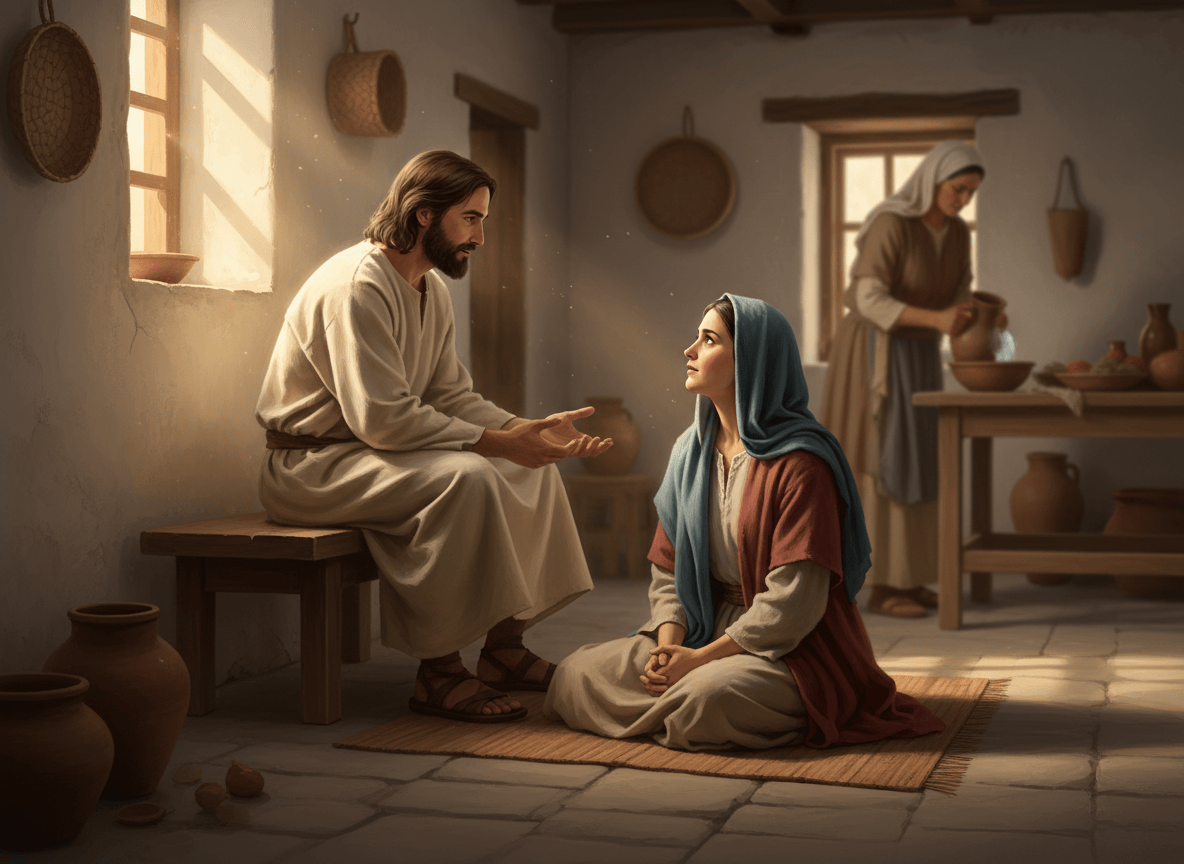
This Gospel also speaks to family life, because homes are where humility is tested in ordinary, repeated ways. Parents can practice this by admitting mistakes quickly, listening with patience, and correcting with gentleness rather than pride. Spouses can practice it by assuming the best, refusing suspicion, and choosing mercy before escalation.

Children and teens can practice humility by telling the truth, asking forgiveness, and learning that they do not need to prove themselves to be loved. Families grow in trust when they pray together, especially when life feels unclear or unfair, because prayer trains the heart to wait on God instead of trying to control everything. A home shaped by the Magnificat becomes a place where the lowly are noticed, the forgotten are honored, and the proud are gently called back to reality.

Closing Prayer

Lord Jesus, teach me to pray like the tax collector and to sing like Mary. Free me from the need to justify myself, to control outcomes, and to demand that You work according to my expectations. When others hurt me or misunderstand me, keep me from bitterness and from self-righteousness, and give me the grace to trust Your justice and mercy.

Jesus, hidden in my poor little heart, make me little enough to receive Your love and strong enough to offer mercy to others. Scatter the proud places within me, lift up what is lowly, and make my home a place of humility, trust, and peace. Amen.

Family Discussion Questions

What is one hidden, ordinary act this week where I can invite Jesus to dwell more deeply in my heart?

When do I find myself most tempted to “do it my way” instead of trusting God?

Which part of the Pharisee’s prayer do I recognize in myself, even in a small way?

How does the tax collector’s prayer help me think about repentance in a healthier, more honest way?

What does Mary’s Magnificat teach our family about how God sees the proud and the humble?

How can we practice humility at home this week in one concrete way?

When I feel misunderstood or treated unfairly, how can I respond with both wisdom and trust?

Sources and Further Reading

  • Luke 18:9-14 — USCCB Bible. The parable of the Pharisee and the tax collector, where Jesus teaches that the humble heart receives mercy.
  • Luke 1:46-55 — USCCB Bible. Mary’s Magnificat, which proclaims God’s mercy and His lifting up of the lowly.
  • Jeremiah 11:19 — USCCB Bible. The passage about the “trusting lamb led to slaughter,” which deepens the reflection on suffering, trust, and justice.
  • Catechism of the Catholic Church, Part Four — Vatican. The Church’s teaching on prayer, including humility as the foundation of prayer.
  • St. Thérèse of Lisieux — Society of the Little Flower. Her “little way” of trust and hidden love, including the reflection that Jesus is hidden in the poor little heart.

When you want to stay, and God sends you.

We know those seasons when life settles into a gentle rhythm. The early, unhurried morning; the familiar commute with the same sea of stranger-faces; the workday where nothing is on fire; even a season when prayer feels easy and God feels close. There’s a quiet comfort in that routine, almost like being on a little mountain where the view is familiar and the air is calm.

In today’s Gospel, Peter has his own version of that moment. He sees Jesus shining like the sun, hears the Father’s voice, watches Moses and Elijah appear in glory, and his instinct is to stay put: “Lord, it is good that we are here… I will make three tents.” He reaches for permanence, for a way to hold onto the moment and make it last. You and I know that impulse well—whether it’s a beautiful family moment we wish would never end, or a comfortable routine we don’t want disrupted.​

But before Peter can finish his sentence, a bright cloud overshadows them and the Father speaks: “This is my beloved Son… listen to him.” Not “build for him,” not “prove yourself to him,” but “listen to him.” The first call is not to perform, but to pay attention.​


Grace in a performance-driven Lent

In the second reading, Paul reminds Timothy—and us—that God “has saved us and called us to a holy life, not according to our works but according to his own purpose and grace.” That line cuts straight across a lot of the pressure we feel around Lent.

Lent can easily become a spiritual performance review. We set resolutions, compare our fasting or prayer habits to others, and listen to louder, more intense voices online that seem to say, “If you’re not doing as much as I am, you’re not serious.” Sometimes those voices are explicitly religious; sometimes they’re just the background hum of productivity culture, baptized in holy water.

But Paul says the opposite: it begins in grace, not in our performance. God’s call on your life is rooted in his purpose and his love, not in how dramatically you can give up coffee or how many holy hours you can log this month. The point of Lent is not to impress God; it’s to make space for God to impress his love and mercy more deeply into us.

That doesn’t mean we coast. Lent is “self-denial ordered toward love”—we willingly stretch, fast, and give, not because God keeps score, but because love wants to grow. We want to move beyond the bare minimum, beyond autopilot, and let God shape us into people who love more freely.

The danger is when that holy desire to “do more” quietly slides into a fear of not doing enough, of not being enough. When we start playing the comparison game—measuring our prayer life, our sacrifices, our spiritual “intensity” against what we see others posting—we can quickly forget that the foundation is grace. Sometimes we may just want a calm, private experience with God, away from the public eye, and that’s okay. Holiness doesn’t need a platform.


The temptation to pitch tents

Peter’s idea on the mountain is sincere. He’s not trying to escape responsibility; he’s just overwhelmed by a beautiful, holy moment and wants to hold onto it. You and I know that feeling. A retreat that changed us. A prayer time when Scripture suddenly came alive. A season when we felt close to God and everything seemed to flow. “Lord, it is good that we are here. Can we just stay like this?”​

But the Father interrupts with a different invitation: “Listen to him.” And what does Jesus say afterward? He doesn’t say, “Stay.” He says, “Rise, and do not be afraid,” and then leads them back down the mountain.​

In other words: the experience on the mountain is real, but it’s not the destination. It’s a gift meant to strengthen them for the journey ahead, a glimpse of glory that will carry them through the coming valley of the cross. The same Jesus who shines in light will soon sweat blood in Gethsemane.

The Little Flower Carmelite reflection captures this beautifully: God is both Place and Journey, the One who meets us on the holy mountain and the One who keeps calling us on when we would rather camp and pitch tents. God is not being cruel when he doesn’t let us stay in the “perfect” moment. He is inviting us into a deeper, more costly love.


Listening more than understanding

If you’re reading this on your phone late at night, or sipping coffee between notifications, it’s not news to you that we live in a loud time. Wars and conflicts across the globe, angry voices on every platform, headlines that pull our attention from one crisis to the next. It can feel like the world is on fire most days, and our instinct is either to doomscroll or to shut down and block it all out.

In that noise, “listening” can sound like a luxury. But the Father’s words on the mountain are surprisingly simple and practical: “Listen to him.” Not “understand everything,” not “solve all the problems,” but listen. Take his words seriously. Let them land in your actual life.​

Abram in the first reading does exactly that. God tells him, “Go from your country and your kindred… to the land that I will show you.” No map, no step-by-step plan, just a promise: “I will bless you… and you will be a blessing.” Abram doesn’t understand how it will all work out, but he listens and goes.

In Lent, listening often comes before understanding. We may not fully grasp why God is nudging us to forgive that person, to unplug a bit from our screens, to give more generously, to show up at Mass again. We may not see how our little acts of self-denial matter in a world on fire. But the pattern of Scripture is clear: God speaks, we listen, we step, and understanding often comes later.

Listening in this sense is an act of trust: “I don’t see the whole picture, but I’m going to take this next step with you, Lord.”


When you want to stay, and God sends you

So what does this look like for us, halfway through Lent?

Maybe your life right now feels like that peaceful routine: early mornings, familiar commutes, workdays on repeat, prayer that’s fine but not exactly stretching you. Or maybe it’s the opposite: too much noise, too many headlines, too many voices telling you what you should be outraged about today. In both cases, there’s a temptation to stay where we are—either comfortably settled or comfortably numb.

Lent, in this Sunday’s light, is Jesus taking us gently by the hand and saying: “Rise, and do not be afraid.” Not “rise and perform,” not “rise and prove yourself,” but “rise and come with me.” The Transfiguration reminds us that:​

  • We are called and saved by grace, “not according to our works.”
  • We are invited to listen before we understand.
  • We are meant to go back down the mountain with him, into a noisy, hurting world, as people who have seen his light.

For some of us, “going down the mountain” might mean stepping out of a comfortable spiritual routine and trying something a bit more courageous: going back to confession, returning to Sunday Mass, joining your family for prayer even if it feels awkward, reaching out to someone who is struggling. For others, it might mean turning down the volume of the world just enough to actually hear Jesus again: less doomscrolling, more Gospel; fewer hot takes, more quiet listening.

The Carmelite prayer asks God to “transfigure our cloudy and confused spirits so that we are not afraid to follow Jesus through the times of trial, tribulation and stretching.” That’s the heart of this Sunday. God doesn’t shame us for wanting to stay where it feels safe. He meets us there, shows us his glory, and then gently sends us back into the ordinary, carrying that light.


A simple listening practice for this week

If you can give God two or three quiet minutes sometime today or this week, here’s a small way to “listen more than understand”:

Three questions to sit with:

  1. Where am I most tempted right now to “pitch a tent”—to stay put spiritually or emotionally, rather than follow where Jesus might be nudging me next?
  2. Where have I slipped into a performance mindset with God—trying to earn his love, or comparing my efforts to others—instead of starting from grace?
  3. What is one small, concrete step Jesus might be inviting me to take this week, even if I don’t fully understand why yet?

A short prayer (adapted in the spirit of the Little Flower reflection):

Lord Jesus,
You are the beloved Son, and the Father tells me to listen to you.
Save me from the pressure to perform, and remind me that I am called by your grace, not my works.
When I want to stay where it feels safe, give me courage to follow you back down the mountain, into the world you love.
Take me through my clouds of doubt and distraction to your holy mountain, where I can see your glory,
and then send me as a quiet light into the places that feel dark.
Rise in me, Lord, and help me not be afraid. Amen.

If all you do this week is pause your scrolling long enough to ask, “Lord, what are you saying to me?” and then listen for a moment, that’s already a powerful Lenten step—not according to your works, but according to his grace.

Epiphany of the Lord

The Magi have come to see Jesus and pay homage to Him.

Matthew 2:1-12 tells the story of the Magi who come from the East, following a mysterious star, searching for “the newborn king of the Jews.” They arrive first in Jerusalem, which is exactly where you would expect a king of the Jews to be—but the real King is not in the palace with Herod, he is in hidden poverty in Bethlehem. Right from the start, Matthew is showing that God’s ways quietly overturn our expectations and that the true King is humble and vulnerable, yet worthy of adoration.thesoutherncross+2

When Herod hears about this child, he is frightened, and “all Jerusalem with him,” because a rival king threatens the fragile balance of his power. He gathers the chief priests and scribes, and they correctly identify Bethlehem as the place where the Messiah is to be born, quoting the prophecy that a ruler will come from Bethlehem who will shepherd God’s people. It is striking that the religious experts know the Scriptures but do not move an inch to seek the child, while pagan seekers from far away are willing to leave everything behind and follow the light God gives them.crs+2

The star reappears and guides the Magi to the exact place where the child is, and Matthew tells us they are “overjoyed” at seeing it. When they enter the house, they see “the child with Mary his mother,” and they fall to the ground in adoration, a gesture of worship that the Gospel reserves for God. Then they open their treasures and offer gold, frankincense, and myrrh—gifts that Catholic tradition reads as a kind of small creed in action: gold for Christ’s kingship, frankincense for his divinity, and myrrh for his future suffering and death. The same child who lies in his Mother’s arms will reign as King, receive our worship as God, and freely give his life on the Cross.catholic+2

The conclusion of the passage is quiet but important: having been warned in a dream not to return to Herod, the Magi go back to their own country “by another way.” On the surface this protects the child from Herod’s plans, but spiritually it also suggests that a real encounter with Christ changes a person’s path; after worshiping him, they cannot simply go back the way they came. The God who drew them by a star now directs their conscience and their choices, and they respond with obedience and trust.missions.ewtn+1

In the Catholic Church, this Gospel is proclaimed on the Solemnity of the Epiphany, which is one of the great feasts of the Christmas cycle. “Epiphany” means manifestation or revelation: in Bethlehem, Christ is revealed not only to Israel, but to the nations, represented by these learned Gentile visitors who adore him. In many older traditions, Epiphany was seen as the crowning feast of Christmas, and in the current Roman Rite the broader Christmas season concludes with the Baptism of the Lord, which is closely linked to Epiphany as another moment when Jesus is manifested publicly.nationalshrine+3

The Church has also kept some beautiful customs to remember this event. In many places, Epiphany is known as “Three Kings Day,” reflecting the long-standing tradition that there were three wise men, often named Caspar, Melchior, and Balthasar, who brought three royal gifts. One especially meaningful practice is the Epiphany house blessing, or “chalking the door”: the family uses blessed chalk to write something like “20 + C + M + B + 26” above the main entrance, with the numbers marking the year and the letters standing both for the names of the Magi and for the Latin prayer “Christus mansionem benedicat” – “May Christ bless this house.” It is a simple way of saying that, just as the Magi entered the house of the Holy Family and found Christ, we want our own home to be a place where Christ is welcomed, honored, and allowed to guide everything that happens inside.detroitcatholic+3

For a family reading this passage together at the close of the Christmas season, the story of the Magi raises gentle but serious questions. Amid school, work, and all the noise of ordinary life, are we more like Herod, defending our own plans, or like the Magi, willing to be interrupted and led by God, even when it means taking “another way” than we expected? The gifts of gold, frankincense, and myrrh can become a pattern for what each of you might offer Christ this year: the “gold” of your talents and achievements, the “frankincense” of your prayer and worship, and the “myrrh” of your sacrifices and hidden sufferings, freely given to him in love. In that sense, Epiphany is not only the conclusion of Christmas, but also a beginning—a moment to step into the new year with the same attitude as the Magi: eyes fixed on Christ, hearts open, and ready, if needed, to go home by a different road.mycatholic+2

​With Jesus’s birth, I have experienced a rebirth of my own in my career life. Directions I once took were redirected, and newer callings led me in ways I thought went astray, but later I would discover that there was greater purpose in store for me. In your reflections today, consider how in ways you have resisted God’s subtle guidance past our stubborness. Then think about the epiphany you experienced when you finally submitted and let it happen. The effect in my situations were eye opening and fulfilling. We do not know until God has revealed “by another way” that we realize our potential, and His mercy and grace at work in our lives.

Photo Credit, Painting:
Initial E: The Adoration of the Magi by Franco dei Russi
Original public domain image from Getty Museum

  1. https://www.thesoutherncross.org/news/unpacking-faith-gifts-of-epiphany/
  2. https://www.nationalshrine.org/blog/what-the-gifts-of-the-magi-tell-us-about-jesus/
  3. https://mycatholic.life/saints/saints-of-the-liturgical-year/january-6-epiphany/
  4. https://www.crs.org/five-facts-about-three-wise-men-epiphany-and-gift-you
  5. https://www.catholic.com/tract/three-kings-day-2026-catholic-answers-guide
  6. https://missions.ewtn.com/seasonsandfeastdays/epiphany/
  7. https://www.catholicnewsagency.com/news/250028/christmas-when-does-it-end
  8. https://portlanddiocese.org/solemnity-epiphany-lord
  9. https://en.wikipedia.org/wiki/Feast_of_the_Baptism_of_the_Lord
  10. https://www.detroitcatholic.com/news/20-c-m-b-19-epiphany-tradition-of-door-marking-evokes-magi-asks-gods-blessings-in-new-year
  11. https://www.stmarybrush.org/epiphany-blessing.html
  12. https://en.wikipedia.org/wiki/Biblical_Magi
  13. https://ppl-ai-file-upload.s3.amazonaws.com/web/direct-files/collection_c85d4bee-5b69-44a4-a53d-e4d82ffb7afe/26307aff-d78d-4ea0-bf17-1719e5066aca/help-me-write-a-journal-entry-oGxh_zxPTouFxXUv5iWBNg.md
  14. https://www.facebook.com/groups/298549307726102/posts/2120766275504387/
  15. https://www.newliturgicalmovement.org/2018/01/when-does-christmas-season-end.html
  16. https://www.northjersey.com/story/news/2025/01/05/20-cmb-25-why-nj-christians-are-chalking-the-door-for-epiphany/77410825007/
  17. https://www.ewtn.com/catholicism/library/baptism-of-the-lord-and-ordinary-time-4506
  18. https://ourladygc.org/resources/epiphany-house-blessing
  19. https://www.catholicculture.org/commentary/christmas-to-candlemas-when-is-real-end-christmas-season/
  20. https://bustedhalo.com/ministry-resources/chalk-it-up-bless-your-door-this-epiphany
  21. https://crosscatholic.org/blogs/2025/08/how-to-chalk-your-house-door-for-epiphany/