What It Means to Let God’s Word Take Root

Woman touching the blue coat of a performer while a crowd watches on a cobblestone street

Start with the Word

Before you dive into this reflection, you might want to spend a few quiet minutes with these passages:

  • Parable of the Sower: Matthew 13:1–9, 18–23
  • The hemorrhaging woman: Mark 5:25–34 (also Matthew 9:20–22; Luke 8:43–48)
  • The centurion and his servant: Matthew 8:5–13 (also Luke 7:1–10)

Let them sink in. Notice what stirs, comforts, or challenges you. Then come back and we’ll walk through them together.


Good soil looks like real people

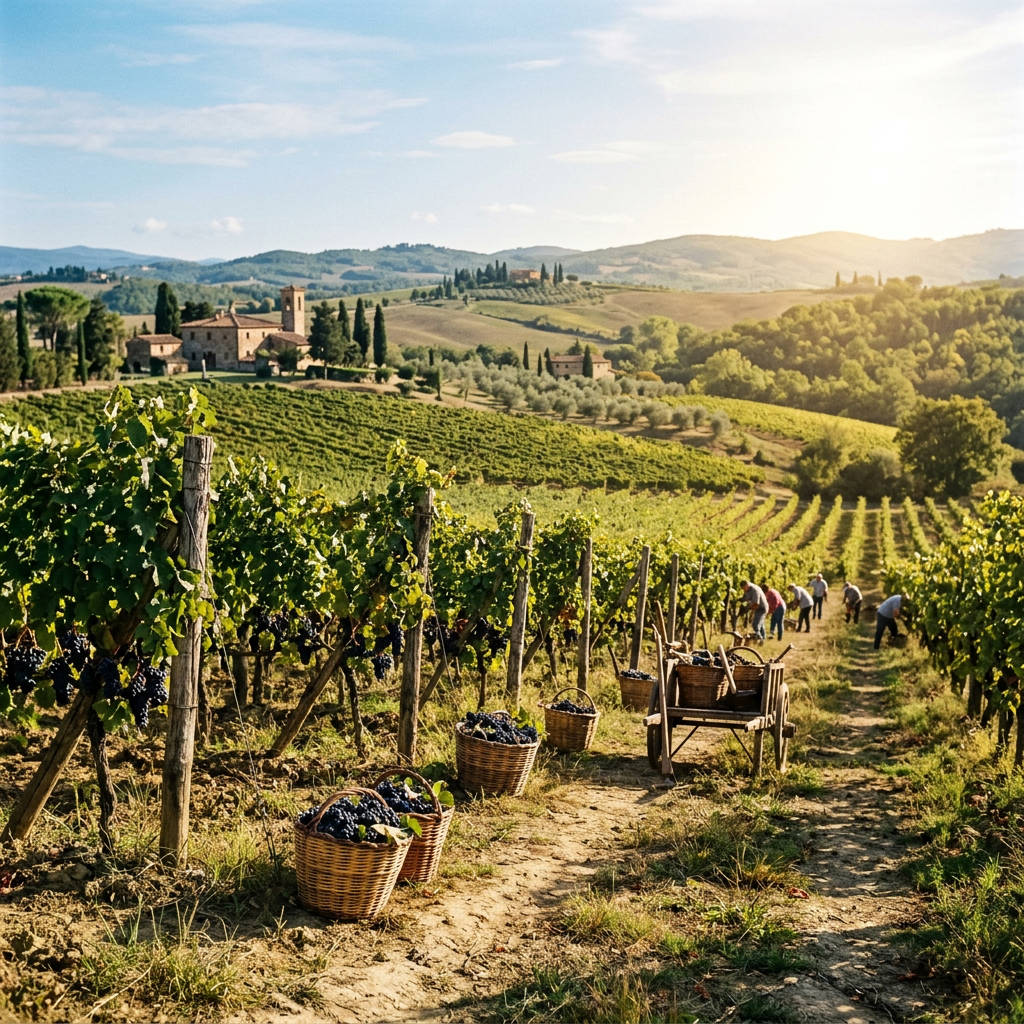
In the parable of the sower, Jesus tells this simple, earthy story about a farmer, some seed, and four kinds of ground—hard path, rocky soil, thorny soil, and good soil. Only one of them lets the seed really sink in and produce a harvest.

At Mass, Father Kwame put it plainly: “The soil is our hearts. The seed is Jesus, coming to us in the Word.” Every time the gospel is proclaimed, the Lord is sowing himself into our lives—into your life. And if that seed finds good soil, it doesn’t just sit there. It grows. It produces the fruits of the Holy Spirit that other people can actually see and taste.

What I love is that Jesus doesn’t leave this at the level of theory. In the hemorrhaging woman and the centurion, we get to see what “good soil” looks like with a face and a name (or in her case, a story, even if we never learn her name). Both of them have every reason to shut down. Both of them, in their own way, open their hearts and give Jesus permission to take root.


The hemorrhaging woman: when love, joy, and peace break through

Think of the hemorrhaging woman. Twelve years of suffering. Twelve years of doctors and disappointment. Twelve years of being considered “unclean,” kept at arm’s length from worship and community. If anyone’s heart could have turned into hard-packed path or thorn-choked ground, it’s hers.

But what does she do? She pushes through the crowd, quietly, almost secretly, and reaches out for Jesus, believing that just touching his cloak is enough. That’s good soil right there—not because she feels strong, but because she refuses to let shame, fear, or exhaustion have the last word. She lets faith crack the surface of the soil.

When Jesus turns and calls her “Daughter,” when he says, “Your faith has made you well. Go in peace,” something beautiful shows up above the surface. Love appears in her willingness to step forward and tell her story. Joy begins to replace the long years of humiliation. Peace settles over her future because she’s heard the Lord’s verdict on her life. These are the fruits of the Holy Spirit in real time—signs that Jesus’ word has taken root in the deepest, most wounded places of her heart.


The centurion: generosity, courage, and deep trust

Now look at the centurion. He’s a Roman officer, a man with rank and power. He could have stayed in his own world and handled things his own way. Instead, he crosses religious and cultural lines and comes to Jesus on behalf of a suffering servant. That’s already a hint of generosity: his heart is moved for someone who, in that culture, was easy to overlook.

Then comes that line we know so well from Mass: “Lord, I am not worthy to have you enter under my roof; only say the word and my servant will be healed.” It’s humble, yes, but it’s also brave. He’s basically staking his reputation—and his servant’s life—on the power of Jesus’ word alone. He’s saying, “I know how authority works; I believe your authority is that strong. You don’t even have to come to my house. Just speak.”[en.wikipedia][youtube]

That is rocky ground turning into good soil. Instead of letting fear or pride scorch the seed, he lets faith sink down into how he understands the world. He trusts that Jesus’ word carries more weight than his own rank, more power than distance, more hope than his own ability to control things.

And again, look at the fruit. His servant is healed. But beyond that, his faith becomes a sign for everyone watching—Jesus even says he hasn’t found such faith in Israel. The centurion’s trust, his generosity toward his servant, his courage in approaching Jesus, are all fruits growing from the seed of the Word planted in good, humble soil.[youtube]


What happens when we let God take root

Father Kwame said it clearly: when Jesus’ word finds a home in us, it should produce fruits—love, joy, peace, generosity, courage, and more. These aren’t just nice words on a confirmation banner. They’re the “harvest” that shows what kind of soil we really are.

We see it in these two:

  • In the woman, love looks like drawing near to God instead of hiding, even when she’s afraid. Joy and peace flow from hearing Jesus speak directly into her shame and suffering.
  • In the centurion, generosity looks like using his position to care for someone vulnerable. Courage looks like trusting Jesus’ word more than his own plans or expectations.[catholicsstrivingforholiness][youtube]

If we let Jesus take root in our own hearts—if we stop treating his word as background noise and start giving it space and time—those same fruits begin to grow in us. Not perfectly. Not all at once. But really.

Love might look like choosing patience instead of sarcasm with a family member. Joy might look like a quiet gratitude in the middle of a hard day. Peace might look like a refusal to spiral into anxiety when the news is bad or the bills are high. Generosity might mean giving our time, attention, or talent where it costs us something. Courage might look like admitting our weakness and asking for help—whether from God or from others.[lovedweller]

That’s what happens when we stop guarding the soil and start letting the Gardener work.


Letting someone “taste the pudding”

Father Kwame gave us a great image: “The proof of the pudding is in the eating.” You can’t tell if a pudding is any good by staring at it on the table. You have to taste it. In the same way, people can’t really tell if we have deep faith just by seeing us at Mass once a week. They learn it when they live with us, work with us, bump into us on our worst days and our tired mornings.

As you move into tonight’s examen, try sitting with this simple, honest question:

If someone close to me—my spouse, my kids, a coworker, a friend—were to “taste my pudding” this week, what would they find? Would they taste love, joy, peace, generosity, courage—the fruits that grow when Jesus’ word really has space in my heart? Or would they run into impatience, harsh words, constant worry, resentment, or indifference?[gcdiscipleship]

Don’t answer that to beat yourself up. Answer it to let the Lord show you where the soil is good, and where it needs tilling. Then, like the hemorrhaging woman and the centurion, you can bring that soil to Him and simply say:

“Lord, I am not worthy… but only say the word.”

And trust that His word can take root and grow, right there, in the very real ground of your life.

Fifteenth Sunday Reflections: The Parable of the Sower

Seedling sprouting from soil with seed coat still attached
Fifteenth Sunday in Ordinary Time

First Reading: Isaiah 55:10-11
Responsorial Psalm: Psalm 65:10, 11, 12-13, 14
Second Reading: Romans 8:18-23
Gospel: Matthew 13:1-23
Daily readings: https://bible.usccb.org/bible/readings/071226.cfm

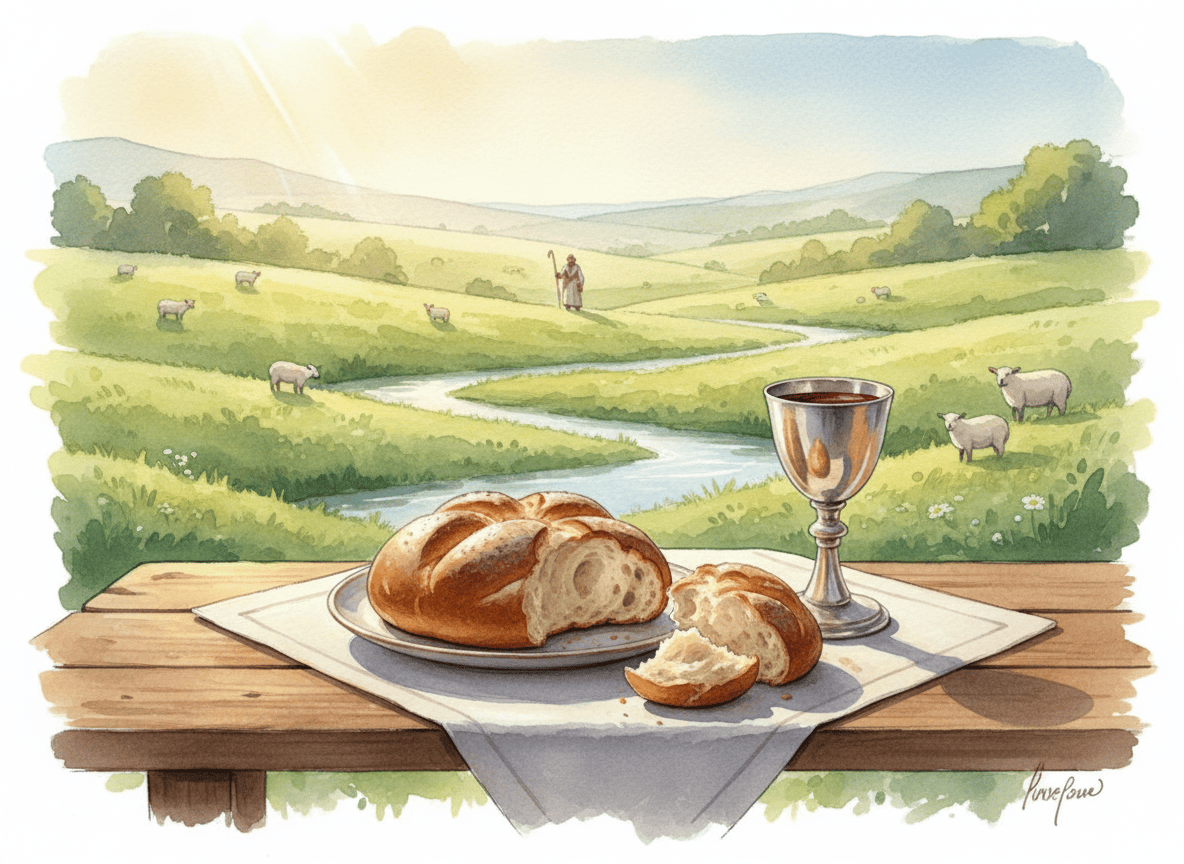
Isaiah opens with one of the most quietly confident images in Scripture. Rain and snow fall from the sky. They do not go back until they have done their work — watered the earth, made it fertile, given seed to the sower and bread to the one who eats. And then: so shall my word be. It goes out from God's mouth. It does not return void. It does what he sent it to do. The word of God is not fragile. It is patient and certain and productive in ways we often do not see or measure.

Paul fills that out in Romans. Creation is groaning, waiting, straining forward like a woman in labor — not in despair, but in hope. The sufferings of this present time are real. But they are not the final word. Creation itself is waiting for the children of God to be revealed. We too groan, even with the firstfruits of the Spirit already in us, waiting for the full redemption of our bodies. It is a strange kind of hope — held in the groaning, not in spite of it.

Then Jesus tells the parable of the sower. The same seed. Four kinds of soil. Path — the word never gets in. Rocky ground — it gets in but has no roots and scorches when heat comes. Thorns — it gets in but worldly anxiety and the lure of riches choke it before it bears fruit. And rich soil — it gets in, takes root, and yields a hundredfold. The question the parable asks is not whether the seed is good. Isaiah already answered that: the word of God does not return void. The question is about the soil. What kind of ground am I?

On a Sunday, walking into Mass, that is a good question to carry in. The word will go out. It will do what God sent it to do. The only variable is whether I am listening, rooted, and uncluttered enough to let it take.


A few questions to sit with today:

1. Which soil do I most recognize in myself right now — the path, the rocky ground, the thorns, or the rich soil? What is making me that kind of ground at this moment in my life?

2. Is there a word God has been speaking to me — in Scripture, in prayer, in the readings at Mass — that worldly anxiety or the pull of other things has been slowly choking? What are the thorns?

3. Paul says creation is groaning in hope. Is there a place in my life where I am groaning — where the waiting is real and hard — and have I brought that groaning honestly before God as a form of hope rather than defeat?

4. "Blessed are your eyes, because they see, and your ears, because they hear." Do I take that seriously — that I have access to something prophets and righteous people longed to see? Does my prayer life reflect that privilege?


One small thing for tomorrow:

Before you open your phone tomorrow morning, read one short passage of Scripture — even just the two verses of today's First Reading (Isaiah 55:10-11). Let the word go in before the noise starts. That is the whole practice. Good soil starts with actually receiving the seed.


Lord Jesus, your word does not return to you void. It goes out, it waters, it makes things grow in ways I cannot always see or measure. Help me to be good soil today. Help me to pull out the thorns — the anxieties, the lures, the noise — that keep your word from taking root and bearing fruit. And where I am groaning, Lord, help me to trust that the groaning itself is part of a movement toward something. Creation is straining forward. I want to strain forward with it, waiting in hope for what you have promised. Thank you for this Sunday, this word, this Mass. May Mary, who kept your word and let it bear fruit in her, teach me the same receptivity. Amen.


If you'd like to share: which soil do you most recognize in yourself right now — and what do you think is making you that kind of ground?

Overcoming Despair: The Gospel of the Sparrows

Person on rooftop looking at Milky Way over city at night

You are smaller than you realize—and more loved than you imagine.[pmc.ncbi.nlm.nih]

Under a Wide, Quiet Sky

Picture yourself on a rooftop at night, maybe on a campus building or your own back porch. The sky looks like a huge sheet of black, with a few faint stars scattered around. It feels quiet, maybe even a little lonely.

Now imagine looking through a telescope and suddenly seeing clouds of stars, glowing nebulae, constellations you’ve only ever seen in pictures. That same sky, which looked like empty darkness, turns out to be crowded with light. You can almost feel your own size shrinking in comparison: just one person, on one rooftop, on one small planet in a universe full of galaxies.

In moments like that, a question often sneaks in: If the universe is this big, does my little life really matter to God at all?

The Sparrows in Today’s Gospel

Today’s gospel reading, from Matthew 10:29–31, goes straight at that question in a surprisingly down-to-earth way. Jesus doesn’t talk about galaxies; He talks about sparrows. “Are not two sparrows sold for a penny?” He asks. “Yet not one of them will fall to the ground apart from your Father… So do not be afraid; you are of more value than many sparrows.”[bible]

In His world, sparrows were about as cheap and ordinary as it gets—sold for pocket change, sometimes thrown in as a bonus bird with a purchase. They were the background noise of daily life. And yet Jesus insists: not one sparrow drops to the ground without God noticing. No small, fluttering life is invisible to Him.[bible.oremus]

Then Jesus pushes the image further: “Even the hairs of your head are all counted.” That’s His way of saying, “God’s attention to you is not vague. It’s specific. It’s detailed. It’s personal.”[theberean]

Feeling Tiny, Living Loved

Maybe you don’t stand on rooftops, but you know the feeling: sitting at the kitchen table with unpaid bills, waiting in a hospital room, scrolling through bad news, wondering how one person can matter in a world where so much is broken.

From the perspective of Catholic Social Teaching, that feeling of insignificance is understandable—but it’s not the final word on you. The Church teaches that every human person has a God-given dignity: a worth that doesn’t come from your job, your health, your bank account, or how “religious” you seem, but from the fact that you are created in the image of God.[pmc.ncbi.nlm.nih]

If you’re not sure what you believe yet, this is one of Christianity’s boldest claims: you are not a random accident of cosmic forces. You are willed. You are known. You are loved—by the same God who keeps track of sparrows and starfields.[pmc.ncbi.nlm.nih]

When Despair Starts Whispering

Despair usually doesn’t show up with a big announcement; it just starts whispering. It says things like, “Nothing is going to change,” “You’re on your own,” or “Don’t expect too much; you’ll only be disappointed.” It’s not just sadness; it’s the belief that God either can’t or won’t act.

The gospel of the sparrows quietly challenges that. It doesn’t promise instant fixes or painless lives, but it does say that God is paying attention—even when you’re waiting, even when nothing seems to be happening. Your prayers are not tossed into a cosmic void; they’re heard by Someone who knows you down to the last detail.[biblehub]

Think of a person who’s praying for financial relief and sees no sudden lottery win or miracle deposit. Instead, they find themselves nudged toward a better job search, a side hustle, and hard decisions about cutting back. That isn’t God ignoring them; it’s God forming them—teaching stewardship, resilience, and trust, while still planning real help in His time.

God’s Providence and Your Part

One of the quiet truths behind this gospel is that God’s providence and our choices usually work together. We pray, we ask, we cry out—but we also act, decide, and take small steps. God doesn’t treat us like puppets; He treats us like partners.[pmc.ncbi.nlm.nih]

Catholic Social Teaching talks about this as co-creation: God invites us to participate in His work, in our families, workplaces, parishes, and communities. You might never feel like the “main character” in the story of the world, but in God’s eyes you are not background. You are part of His cast, with a role that no one else can play in exactly the way you do.[pmc.ncbi.nlm.nih]

A Vital Member of His Vast Cast

So where does that leave you under that wide, quiet sky? You are small, yes—that’s just honest. But you are not insignificant. You are a vital member of God’s vast cast of creation. Your kindness to a stranger, your patience with a child, your courage in suffering, your quiet prayer at the end of a long day—all of these matter.[pmc.ncbi.nlm.nih]

The sparrow gospel is not a sentimental Hallmark moment; it’s a steady, realistic promise:

  • You will feel small sometimes.
  • You will feel overlooked sometimes.
  • But you are never unseen by God.

If even a cheap little sparrow doesn’t fall without His notice, then your tears don’t fall without it either. The invitation today is simple: when you feel like one more face in the crowd, let Jesus’ words interrupt that thought—“You are worth more than many sparrows”—and let that truth sink in until it starts to change how you see yourself.[bible]

Let us pray.

Loving Father,
when we feel small under the weight of the world,
remind us that we are seen and treasured by You.[sacredspace]
You care for the sparrows and number every hair on our heads;
teach us to trust that Your attention and love rest on us, even in the quiet, hidden parts of our lives.[bible]

Lift our eyes from fear to faith,
from despair to hope,
and help us live today as people who know they are deeply loved.[sacredspace]
We ask this through Christ our Lord. Amen.[sacredspace]

Purging Religious Yeast

The first book of Corinthians writes in a figurative sense about “yeast” when it says:

Get rid of the old yeast that you may be a new batch without yeast – as you really are. For Christ, our passover lamb, has been sacrificed. – 1 Corinthians 5:7

From an old post on the blog “Finding the Motherlode” the author poses a theological discussion on the nature of religion. Religion (religious thoughts, rules, ways and means), the author writes, is selfish. It stems from self and revolves around self. This selfish sense of “religion” is present in all of us and like a speck of yeast, it is very difficult to spot and remove. Some examples of this sense of “religion” that we should be warned of:

  • Religion is when I try to make something happen before God has ordained it.
  • Religion is doing all the right things for all the wrong reasons.
  • Religion is saying Hallelujah before having the faith to say Amen.
  • Religion is saying “Yes” to God without saying “No” to ungodliness.

I think I have a sense from where the author is coming from and I offer up an example from another blog which studies the works of James and the warning “Faith Without Works is Dead.” This selfish notion of religion is in saying and doing things that are biblically advisable but not really making the effort to make it happen. That in itself is a contradiction. It’s in the contradiction that we find the “yeast” in our lives.

But if a brother or sister is naked and may be lacking in daily food and any one of you say to them, Go in peace, be warmed and filled, but does not give them the things the body needs, what gain [is it]? – James 2:14-15

This is a tough brand of yeast for me to purge from myself as I am faced daily with many homeless and poor individuals on the streets, all of whom are begging for their meager living. I usually pass them up knowing that a smile or a good word is not enough to fulfill their bodily needs, as the Bible demands. Finding ways of fulfilling my obligations to the poor is a lifelong challenge that faces me and possibly many others.

Like I said, once you recognize what yeast is in your life, it’s really, really hard to figure out how to remove it. It takes work and it takes sacrifice. As in the promise of salvation through Christ, we are challenged by Corinthians to prepare and make ourselves “new” (a new batch without yeast) to meet Christ’s sacrifice.

Where is Jesus?

Many of us are familiar with the promoted acronym: WWJD. For those who don’t, it stands for “What Would Jesus Do?”; it is a reminder for those who wear bracelets or accessories with the simple saying to consider their actions and decide if they are Christlike in nature. I’ve been reflecting on this saying and find it very catchy. It really gets to the point about a Christian’s journey seeking the path that Jesus has laid down for us to follow. On the other hand, in a post on “Eventful Journey“, a blogger makes an apt statement about the WWJD sentiment when he wrote:

Recently I have been rephrasing the bracelet: What WILL Jesus Do? This seems a much better way of looking at things. Jesus is not absent. Nor is he waiting to see if, through our own efforts, we can live up to his enormous expectations. Instead, he is in us, working through us by the same Holy Spirit that raised him from the dead (Romans 8:11). We are co-workers with him, not second-rate replacements for him. I have found this new way of thinking profoundly liberating.

I like that thinking because I agree that Jesus is NOT absent at all throughout our lives, our trials and our struggles. On the contrary, He is guiding our every action and gently leading the way. WWJD (What Would Jesus Do) is a nice sentiment, but to some people who consider its nuance will realize that the saying pits each of us alone at a crossroads, faced with decisions that are eminently beyond our ability to handle. As Jesus said in John 14:6: “no one comes to the Father except through me.” Our lives as Christians isn’t about rediscovering some hidden formula or path behind the life Jesus led on earth. It’s in finding Jesus Himself within the things that we pursue and the things that we do. So, where is Jesus? As in the beautiful poem about the footprints in the sand, we continue our life’s journey not alone and falling behind a trail Jesus has left behind. Instead we are right there, side by side with Jesus through whom we find our way to the heavenly Father.

Getting What You Need

Like the Rolling Stones song that goes: “You can’t always get what you want…” We have to remember daily through our disappointments and shortcomings that

Faith in God will not get for you everything you want, but it will get for you what God wants you to have. The unbeliever does not need what he wants; the Christian should want only what he needs. – Vance Havner

This rings some truth in many ways. We don’t always have what we want, which contrary to common wisdom, is a good thing. The trick is in paying close enough attention to the things we do have. These are our blessings. This is what the saying “count your blessings” is all about. All our needs are laid out before us for the asking. All the needs for the moment have already been provided for us. It is up to us to be thankful and to recognize this throughout our moments of disappointment and want.

Perhaps you may want a better job, or a bigger pay raise. Maybe you want more recognition for your labors at the office. Maybe you want to win big money in the lottery or in a casino. The important question is however, what will become of your life if these moments or events never come into your life? Chances are very good that you will still go on living and breathing. The important thing is that you don’t imprison yourself in the cycle of “wants”.

There is a parable I recall from Max Lucado’s book: “Traveling Light”, about a man who in a bad turn of the stock market lost overnight his entire fortune and savings. When asked of his situation, he replied: “I lost everything“. A colleague and close friend of his then asked “Have you lost your faith?”; “No,” he replied. “Have you lost your character?”; “No,” he replied again. “Have you lost your salvation?” his colleague quizzed once more. “Why, no.” To which his friend replied: “Then it appears to me that you have lost none of the things that matter.”

The friend is a wise one. Indeed, when you think about it, what really matters in this life? God doesn’t look at the number of cars you own, the brand name labels on the clothing on your back, the money in your wallet or bank accounts and assets or even the fanciness of the home you live in. God looks at your heart.

1 Samuel 16:7 – “The Lord does not look at the things man looks at. Man looks at the outward appearance, but the Lord looks at the heart.”

That is where all of us should begin to look… at the inside and all of the needs that originate from that place within. When we look there, we circumvent the slavery of “wants” and materialism that takes us places, but eventually takes us nowhere. Having better things, more things or any things doesn’t increase the value or the worth of our inner being. Take some time to focus on the needs that we have to make our inner beauty shine and pray for them.

“Casting the whole of your care [all your anxieties, all your worries, all your concerns, once and for all] on Him, for He cares for you affectionately and cares about you watchfully.” – 1 Peter 5:7 (AMP)

In the long run, if you focus on putting these anxieties on the Lord, you’ll find that “You can’t always get what you want… but if you try sometimes, you get what you need.” (Rolling Stones) Search through your countless blessings and look for the needs that have been answered… most evidently at the right time, place and situation. You may surprise yourself when you do.

The Tree

A Passage on Trees

From one of my reading sessions, I found a nice life-parable to share from the works of Australian author and inspirational speaker, Matthew Kelley. In his book The Rhythm of Life: Living Every Day with Passion & Purpose, he remarked an observation of a tall, old tree on the grounds of the monastary where he was staying, that “despite its imperfect forms and crooked branches, it had a perfection of its own.” Kelley admired the great tree and went on to remark on its significance.

Later in the year, Kelley writes of an experience on a nature walk after a storm that revealed a meaningful metaphor for him and his spiritual growth. The violent storm had uprooted and destroyed many of the trees in the surrounding area, but this large, lone tree was virtually unaffected. He observed that

A tree with strong roots grows strong. A tree with strong roots bears much fruit. A tree with strong roots bears good fruit. A tree with strong roots can weather any storm. If a tree is uprooted and replanted often, it will not be able to sink its roots deep into the earth and therefore will not grow strong or be fruitful.

Likewise, for people, these tree roots are a metaphor for our intellectual and spiritual growth. The things that we do to grow and to establish these roots affects our strength to weather overpowering challenges and strife, as well as the quality of our existence through the fruits that we bear on our branches.

Meditations as a Tree

Another reflection on trees comes from Eastern Asian philosophy (I’m not sure exactly which one though) which I learned a long time ago as a teenager from a family acquaintance. It’s a meditation that also involves thinking of trees – its thought processes gives you the opportunity to relax and expel negative energies from the body.

Imagine your body as a tree. Your leaves and your branches on top pull in the pollution, carbon dioxide and negative energies from the atmosphere. These toxins pass through your branches, down your trunk and into your roots. As a tree, your body processes these negative energies and converts them to basic, life-giving ingredients to put back into the earth: oxygen, water and nutrients.

Imagine your tree-like body as a part of this earthly cycle. Absorbing, processing, releasing. Whatever problems or strife you have experienced and “absorbed” into your self, let it pass through your branches, down your trunk and out of your body into the ground.

Close your eyes and focus on your breathing. Each breath pulls in more from the atmosphere, then pushes it down and releases it into the ground. Know that you are a part of a cycle – not an ending point in the absorption of those negative energies. Whatever you’ve endured to this point in the day is just as easily released back into the earth. Think and feel yourself through several cycles of breathing, allowing yourself to relax.

I like to think of life’s daily events as generators of energy (both good and bad). We can choose to react – which catches and holds on to the energy,  or we can simply let it pass. Over the years, I have managed stress and stress relief very well with this simple visualization. Give it a try and see if it works for you!


The Unmerciful Servant

Today, while chatting with my wife and after an extended rant about my rough career experiences, she remarked: Why do you keep bringing up what happened in the past? It’s like you can’t let go of what happened to you, no matter how negative it was… and THAT is what may be keeping you from moving ahead with what God has planned for you now.

Very wise indeed. All I wanted to do was vent, but perhaps this was one of my more well-used soap-box speeches. In the past, indiscretions at the hands of past managers have made it difficult for me to do my work and in one case, it unjustly had cost me my job. For some reason, my anger and desire for justice (or revenge) would lead me back to retell and relive the experiences that had cost me so dearly.

My excuse: I simply wanted to remind myself of my past mistakes (in letting my guard down) and I didn’t want to let myself become a victim again.

My wife later added: Leave it up to God. If they have harmed you, they will have their day where they will have to answer for their actions. It isn’t up to you to handle that.

What she didn’t add was the most important lesson that Jesus Christ wishes to deliver to people everywhere: forgive.

Here I am, praying fervently each day for blessings, forgiveness and guidance from God and yet I still have a grudge in my heart against my neighbor. I tell myself time and again that they are forgiven, but that is easier said than done. If that was the case, there would be no need to bring up their name or their “crimes” in conversation or thought for any reason. Forgiven means also forgotten.

In Jesus’s parable of the unmerciful servant (Matthew 18:21-35), a servant begs of his master for mercy and forgiveness of an enormous debt he had owed to him. The master magnanimously forgives the debt only to witness later that same servant unmercifully punish and harass his neighbor for a debt owed to him. The master was enraged and he had his unmerciful servant thrown into prison and punished for his outstanding debt. In Matthew’s gospel, we see that we cannot expect to experience the blessing of God’s grace and forgiveness until we also forgive the ways our neighbors have sinned against us. 

“Lord, how many times shall I forgive my brother when he sins against me? Up to seven times?” Jesus answered, “I tell you not seven times but seventy-seven times.” (Matthew 18:21-22)

I pray today for the presence of mind and the strength to show mercy towards my neighbors and fellow humans. For whatever ways I have been harmed, I must release myself from holding a grudge and likewise from the desire for revenge or blind justice. Such incidents are totally in the hands of the Father, from whom Jesus Christ delivers a message of peace and forgiveness in response.