Cleaning the Inside First: A Spiritual Reflection

Glowing cup of tea on a wooden coaster beside a candle

Tuesday of the Twenty-first Week in Ordinary Time

First Reading: 2 Thessalonians 2:1-3a, 14-17

Responsorial Psalm: Psalm 96:10, 11-12, 13

Gospel: Matthew 23:23-26

Daily readings: https://bible.usccb.org/bible/readings/082526.cfm

Jesus is still talking to the crowds about the scribes and Pharisees, and today he zeroes in on something specific: the cup. You clean the outside of the cup and the dish, he says, but inside they are full of extortion and self-indulgence. You tithe mint and dill and cumin — the small precise things, the ones that are easy to measure and verify — but you have neglected justice, mercy, and faith. The weightier things. The ones that cost something. He does not say stop tithing the herbs. He says: clean the inside first. Then the outside will be clean too.

Most of us know this tension from the inside. We can manage our appearance — what we post, what we say at Mass, how we come across to people at work or at a family dinner — while carrying something quite different in our interior. Resentment we have not dealt with. A habit we keep quiet. A hardness toward someone that we dress up as principle. It is not hypocrisy in the dramatic sense. It is just the ordinary human gap between the face we show and the life we are actually living inside. Jesus is not condemning that gap with cruelty. He is naming it with clarity, and pointing toward the solution: let me clean the inside.

Paul writes to the Thessalonians: God has loved us and given us everlasting encouragement and good hope through grace. Stand firm. Hold to what you were taught. The good news underneath Jesus’s challenge today is not that we have to fix ourselves before we come to him — it is that he comes to us with love and grace precisely so he can do the cleaning. The Psalm sings it: let the heavens rejoice, let the earth be glad, let the trees of the forest sing for joy. The Lord comes. And when he comes to judge, he comes to the inside first.

A few questions to sit with today:

1. Is there a place in my life right now where I am keeping the outside clean but the inside has gone unattended? A relationship, a habit, an attitude — something I would not want Jesus to look at too closely?

2. Jesus says: you have neglected the weightier things — justice, mercy, faith. Which of those three feels most neglected in my daily life right now?

3. God has loved me and given me everlasting encouragement and good hope through grace. Do I actually believe that about myself today? What makes it hard to receive?

4. Is there a small precise thing I do religiously — a practice, a routine, a rule — that has become more important to me than the relationship with Jesus it was supposed to serve?

One small thing for tomorrow:

Before you start tomorrow, take one quiet minute — not to plan or review or check a phone — and just ask Jesus: what is going on inside me right now that I have not brought to you? Then listen. That is enough.

Lord Jesus, you see the inside of the cup. You see past the face I present and into the places I have not cleaned in a while. I do not want to hide from you. Help me to be less concerned with how I appear and more willing to let you work on the inside — the resentments, the fears, the habits that have quietly taken up space. You loved me before I had any of it sorted out, and you offer encouragement and hope through grace, not through performance. Come and clean what needs cleaning. I trust you with what is inside. Amen.

If you would like to share: is there a small precise practice in your faith life that has helped you keep the inside of the cup clean?

Who Do You Say Jesus Is? A Reflection

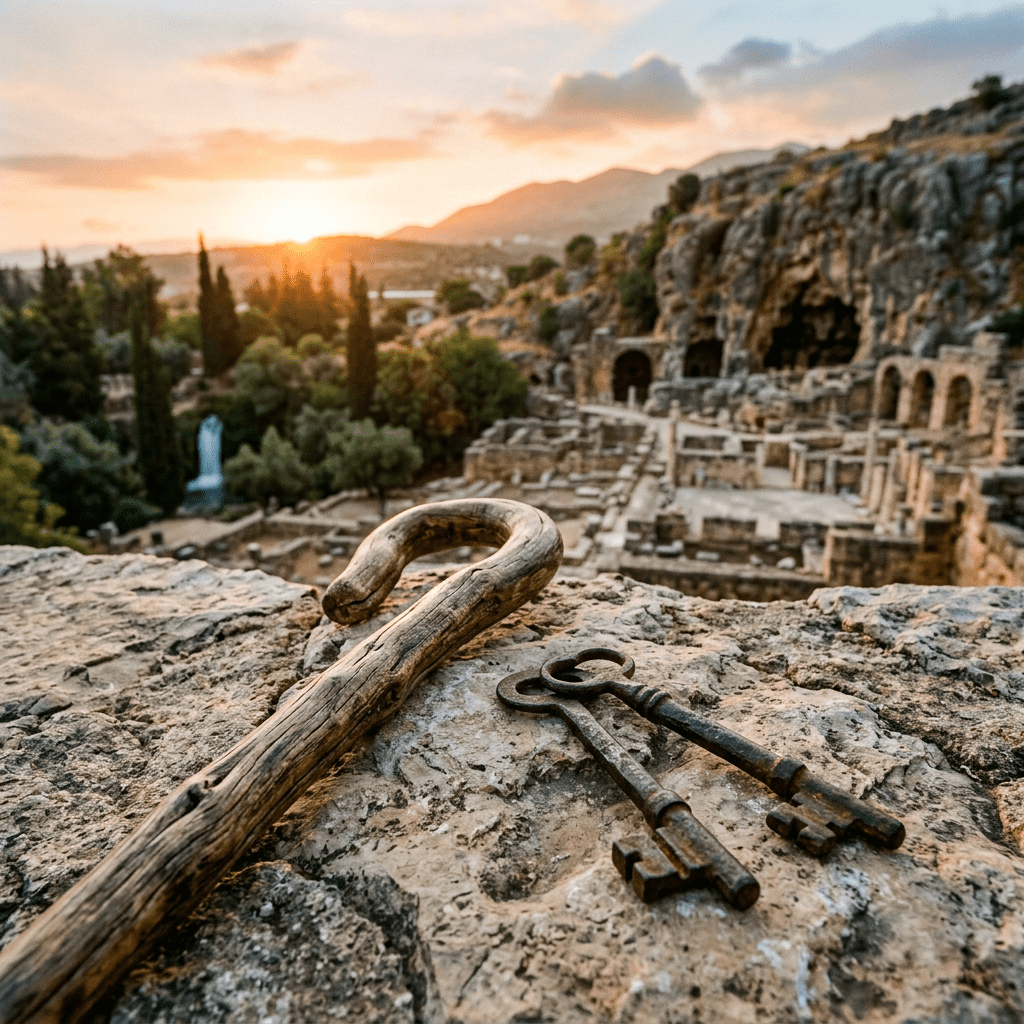
Antique keys and wooden staff on a stone ledge above ancient ruins

Twenty-first Sunday in Ordinary Time

First Reading: Isaiah 22:19-23

Responsorial Psalm: Psalm 138:1-2, 2-3, 6, 8

Second Reading: Romans 11:33-36

Gospel: Matthew 16:13-20

Daily readings: https://bible.usccb.org/bible/readings/082326.cfm

Jesus is in the region of Caesarea Philippi, far from Jerusalem, and he asks his disciples a question. Who do people say that the Son of Man is? They give the crowd’s answers: John the Baptist, Elijah, Jeremiah, one of the prophets. Good answers. Respectful answers. The kind of answer you give when you have observed something from a safe distance and formed an opinion. Then Jesus asks the question that changes everything. But who do you say that I am? That single word — you — shifts the whole weight of the conversation. Not what they are saying. What do you say? What have you, who have been with me, who have eaten at my table, who have watched me in the storms, who have heard me at night in prayer — what have you concluded?

Peter answers. You are the Christ, the Son of the living God. And Jesus responds in a way he rarely does — with blessing. Blessed are you, Simon son of Jonah. He does not just accept the confession; he marvels at it. Because flesh and blood has not revealed this to you. Peter did not think his way there. The Father showed him. The knowing of Jesus is always, underneath everything, a gift. It is received before it is declared. And Jesus builds on it anyway — this impulsive, sometimes-failing fisherman becomes the rock, receives the keys, is fixed like a peg in a sure spot.

Paul writes in Romans: oh, the depth of the riches and wisdom and knowledge of God. How inscrutable his judgments, how unsearchable his ways. Who has known the mind of the Lord? No one. And yet here is Peter, a fisherman, confessing the Son of the living God because the Father chose to show him. This is how the Church is built — not on the brightest minds or the most accomplished people, but on the ones to whom the Father reveals his Son. On ordinary people who, in one graced moment, see clearly and say what they see.

A few questions to sit with today:

1. Jesus asks: but who do you say that I am? If I had to answer that question honestly today — not the Sunday school answer, but what I actually believe in my gut — what would I say?

2. Peter’s confession was a gift, not an achievement. Is there a moment in my own life when I knew something about Jesus that I could not have figured out on my own? When the Father just showed me?

3. Jesus called Peter a rock even knowing Peter would deny him three times. Is there a way I have been disqualifying myself from being useful to God because of my failures? What would it mean to let him fix me like a peg in a sure spot anyway?

4. Paul says: from him and through him and for him are all things. Is there a corner of my life that I have not yet handed over to that — that I am still running for myself rather than for him?

One small thing for tomorrow:

At some point tomorrow, ask Jesus the question Peter answered — not out loud, but in your heart. Who do I say you are? Sit with whatever comes. You do not have to have a polished answer. Just be honest with him about where you are.

Lord Jesus, you asked the question that matters most: who do I say you are? I want to answer it honestly, from the inside out, not just from habit or formula. Help me to know you the way Peter knew you — not because I figured it out, but because the Father showed me. Build something on whatever rock I have to offer, even if it is small and unsteady. Your love is eternal; do not forsake the work of your hands. From you and through you and for you are all things, including me. Amen.

If you would like to share: who do you say Jesus is — in your own words, from your own experience?

Finding God in the Eleventh Hour

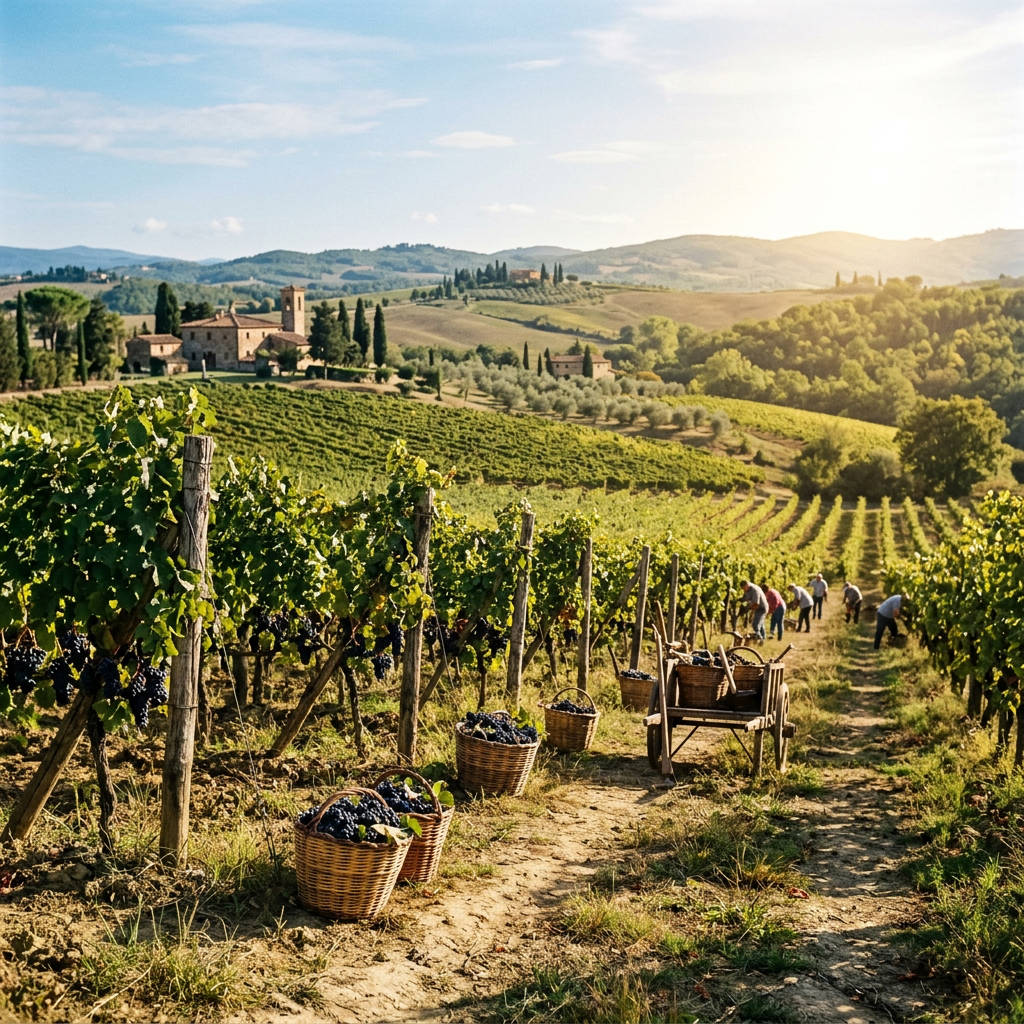
Workers harvesting grapes in a sunlit vineyard near a Tuscan village

Wednesday of the Twentieth Week in Ordinary Time

Optional Memorial of Saint John Eudes, Priest

First Reading: Ezekiel 34:1-11

Responsorial Psalm: Psalm 23:1-3a, 3b-4, 5, 6

Gospel: Matthew 20:1-16

Daily readings: https://bible.usccb.org/bible/readings/081926.cfm

God speaks through Ezekiel in one of the most direct indictments in the Old Testament. Woe to the shepherds who have been pasturing themselves. You fed off the milk and wore the wool but did not pasture the sheep. You did not strengthen the weak or heal the sick or bind up the injured. You did not bring back the strayed or seek the lost. And so they were scattered, wandering over all the mountains and high hills, with no one to look after them. And then God turns the oracle on its own axis: Therefore I myself will look after and tend my sheep. The people who had been abandoned by the ones supposed to care for them will be cared for by God directly. That promise becomes Psalm 23 — the most beloved psalm in Scripture, the one people reach for at bedsides and gravesites and in the middle of the night. The Lord is my shepherd. I shall not want.

The Gospel takes that same God and shows us how he works. A landowner goes out at dawn and hires workers. Then goes out again at nine. Again at noon. Again at three. And then at five o’clock — the eleventh hour, when the workday is nearly done — he finds more people standing idle in the marketplace. Why have you been standing here idle all day? Because no one has hired us. And he says: you go into my vineyard too. At the end of the day he pays everyone the same full wage, starting with the last. The ones who worked all day grumble. And the landowner says something that stops you cold: Are you envious because I am generous?

That is the question that lands on an ordinary Wednesday. Not just about the parable — about today. About the colleague who seems to get credit without the effort. The person in line who gets served first. The family member who wandered far and came back and got the celebration. Something in us keeps very careful accounts. And God says: I am not cheating you. But I am also free to be generous with others. Can you let me be?

A few questions to sit with tonight:

1. God says through Ezekiel: I myself will look after and tend my sheep. Is there a place in my life where I have been trying to be my own shepherd — managing everything myself — instead of letting God do that?

2. The landowner kept going out all day looking for workers no one else had hired. Has God found me at an unlikely hour — an unexpected moment of grace? When?

3. Am I envious because God is generous with someone else? Is there a person in my life whose good fortune I find hard to celebrate?

4. The psalm says: even though I walk in the dark valley, I fear no evil, for you are at my side. Is there a dark valley I am walking through right now? Have I told God about it honestly?

One small thing for tomorrow:

The next time you feel the sting of someone else’s good fortune — a promotion, recognition, a relationship, anything — pause before the reaction hardens. Say quietly: God is generous. Let him be generous with me too.

Lord Jesus, you are the Good Shepherd Ezekiel promised — the one who comes after the lost ones personally, who binds up the injured, who does not lord it over the flock but lays down his life for it. I have been that lost sheep more times than I can count. And you went looking. Help me to trust your generosity instead of measuring it against what others receive. Help me to walk through the dark valley without pretending it is not dark — but also without forgetting you are at my side. I want to live in the house of the Lord a long, long time. Amen.

If you’d like to share: has there been a moment when God found you at the eleventh hour — when you felt it was almost too late but he showed up anyway?

Lessons from the Rich Young Man: What Are You Holding Onto?

Mountain trail at sunset with coins, jewelry, goblet, and jeweled dagger

Monday of the Twentieth Week in Ordinary Time

First Reading: Ezekiel 24:15-23

Responsorial Psalm: Deuteronomy 32:18-19, 20, 21

Gospel: Matthew 19:16-22

Daily readings: https://bible.usccb.org/bible/readings/081726.cfm

The rich young man is not a villain. That is what makes this Gospel so hard to sit with. He came to Jesus — that already says something. He ran up and knelt, according to the other Gospel accounts. He was earnest. He asked the right question: what good must I do to gain eternal life? And when Jesus listed the commandments, he said with what sounds like genuine honesty: all of these I have observed. What do I still lack? He wanted more. He was not satisfied. And Jesus, looking at him, loved him — Mark’s version says that plainly. And then Jesus named the one thing. And the young man went away sad, because he had many possessions.

He did not argue. He did not get angry. He did not try to negotiate. He just went away sad. And there is something very familiar about that. Most of us do not walk away from Jesus in defiance. We walk away slowly, sadly, not quite ready to let go of the thing we are holding. We come back to the edge of the conversation and drift away again. The possessions do not have to be money — they can be control, comfort, a grudge we have carried so long it has become part of our identity, a habit we know is not helping us but feels like ours. Jesus names the one thing and we go quiet.

Ezekiel’s reading today is strange and severe — God tells him his wife is about to die and he is not to mourn publicly. He is to be a living sign to a people who are about to lose everything and will be too stunned to grieve. What holds us together, says God, is something other than the things we thought were keeping us safe. Ezekiel lost the delight of his eyes and kept walking. The rich young man could not put down his possessions. We are usually somewhere between the two.

A few questions to sit with tonight:

1. Jesus looked at the young man and loved him — and still let him walk away. Is there something Jesus is asking of me that I have been walking away from, not with anger, but just with sadness and not yet?

2. What is my version of many possessions — the thing I hold onto that makes Jesus’ invitation feel like it costs too much?

3. The young man asked: what do I still lack? Am I willing to ask that question honestly? What might Jesus name if I did?

4. Ezekiel lost the delight of his eyes and did not stop. Is there something I have lost, or am afraid to lose, that I have not yet brought to God?

One small thing for tomorrow:

Sit for a few minutes and ask Jesus quietly: what is the one thing I still lack? Do not rush to answer. Let the question sit. You do not have to resolve it — just be willing to hear it.

Lord Jesus, you loved that young man and let him go. You do not force the one thing from our hands. You name it and wait. I know there are things I am holding that keep me from following you more freely — habits, comforts, fears disguised as good sense. I do not always know what they are until you name them. Give me the courage not to walk away when you do. Help me to trust that what you offer in exchange is better than what I am carrying. And when I drift toward the door, call me back — not with judgment, but with the same love you showed him. Amen.

If you’d like to share: what is something you have gradually let go of that turned out to cost less than you feared?

What It Means to Let God’s Word Take Root

Woman touching the blue coat of a performer while a crowd watches on a cobblestone street

Start with the Word

Before you dive into this reflection, you might want to spend a few quiet minutes with these passages:

  • Parable of the Sower: Matthew 13:1–9, 18–23
  • The hemorrhaging woman: Mark 5:25–34 (also Matthew 9:20–22; Luke 8:43–48)
  • The centurion and his servant: Matthew 8:5–13 (also Luke 7:1–10)

Let them sink in. Notice what stirs, comforts, or challenges you. Then come back and we’ll walk through them together.


Good soil looks like real people

In the parable of the sower, Jesus tells this simple, earthy story about a farmer, some seed, and four kinds of ground—hard path, rocky soil, thorny soil, and good soil. Only one of them lets the seed really sink in and produce a harvest.

At Mass, Father Kwame put it plainly: “The soil is our hearts. The seed is Jesus, coming to us in the Word.” Every time the gospel is proclaimed, the Lord is sowing himself into our lives—into your life. And if that seed finds good soil, it doesn’t just sit there. It grows. It produces the fruits of the Holy Spirit that other people can actually see and taste.

What I love is that Jesus doesn’t leave this at the level of theory. In the hemorrhaging woman and the centurion, we get to see what “good soil” looks like with a face and a name (or in her case, a story, even if we never learn her name). Both of them have every reason to shut down. Both of them, in their own way, open their hearts and give Jesus permission to take root.


The hemorrhaging woman: when love, joy, and peace break through

Think of the hemorrhaging woman. Twelve years of suffering. Twelve years of doctors and disappointment. Twelve years of being considered “unclean,” kept at arm’s length from worship and community. If anyone’s heart could have turned into hard-packed path or thorn-choked ground, it’s hers.

But what does she do? She pushes through the crowd, quietly, almost secretly, and reaches out for Jesus, believing that just touching his cloak is enough. That’s good soil right there—not because she feels strong, but because she refuses to let shame, fear, or exhaustion have the last word. She lets faith crack the surface of the soil.

When Jesus turns and calls her “Daughter,” when he says, “Your faith has made you well. Go in peace,” something beautiful shows up above the surface. Love appears in her willingness to step forward and tell her story. Joy begins to replace the long years of humiliation. Peace settles over her future because she’s heard the Lord’s verdict on her life. These are the fruits of the Holy Spirit in real time—signs that Jesus’ word has taken root in the deepest, most wounded places of her heart.


The centurion: generosity, courage, and deep trust

Now look at the centurion. He’s a Roman officer, a man with rank and power. He could have stayed in his own world and handled things his own way. Instead, he crosses religious and cultural lines and comes to Jesus on behalf of a suffering servant. That’s already a hint of generosity: his heart is moved for someone who, in that culture, was easy to overlook.

Then comes that line we know so well from Mass: “Lord, I am not worthy to have you enter under my roof; only say the word and my servant will be healed.” It’s humble, yes, but it’s also brave. He’s basically staking his reputation—and his servant’s life—on the power of Jesus’ word alone. He’s saying, “I know how authority works; I believe your authority is that strong. You don’t even have to come to my house. Just speak.”[en.wikipedia][youtube]

That is rocky ground turning into good soil. Instead of letting fear or pride scorch the seed, he lets faith sink down into how he understands the world. He trusts that Jesus’ word carries more weight than his own rank, more power than distance, more hope than his own ability to control things.

And again, look at the fruit. His servant is healed. But beyond that, his faith becomes a sign for everyone watching—Jesus even says he hasn’t found such faith in Israel. The centurion’s trust, his generosity toward his servant, his courage in approaching Jesus, are all fruits growing from the seed of the Word planted in good, humble soil.[youtube]


What happens when we let God take root

Father Kwame said it clearly: when Jesus’ word finds a home in us, it should produce fruits—love, joy, peace, generosity, courage, and more. These aren’t just nice words on a confirmation banner. They’re the “harvest” that shows what kind of soil we really are.

We see it in these two:

  • In the woman, love looks like drawing near to God instead of hiding, even when she’s afraid. Joy and peace flow from hearing Jesus speak directly into her shame and suffering.
  • In the centurion, generosity looks like using his position to care for someone vulnerable. Courage looks like trusting Jesus’ word more than his own plans or expectations.[catholicsstrivingforholiness][youtube]

If we let Jesus take root in our own hearts—if we stop treating his word as background noise and start giving it space and time—those same fruits begin to grow in us. Not perfectly. Not all at once. But really.

Love might look like choosing patience instead of sarcasm with a family member. Joy might look like a quiet gratitude in the middle of a hard day. Peace might look like a refusal to spiral into anxiety when the news is bad or the bills are high. Generosity might mean giving our time, attention, or talent where it costs us something. Courage might look like admitting our weakness and asking for help—whether from God or from others.[lovedweller]

That’s what happens when we stop guarding the soil and start letting the Gardener work.


Letting someone “taste the pudding”

Father Kwame gave us a great image: “The proof of the pudding is in the eating.” You can’t tell if a pudding is any good by staring at it on the table. You have to taste it. In the same way, people can’t really tell if we have deep faith just by seeing us at Mass once a week. They learn it when they live with us, work with us, bump into us on our worst days and our tired mornings.

As you move into tonight’s examen, try sitting with this simple, honest question:

If someone close to me—my spouse, my kids, a coworker, a friend—were to “taste my pudding” this week, what would they find? Would they taste love, joy, peace, generosity, courage—the fruits that grow when Jesus’ word really has space in my heart? Or would they run into impatience, harsh words, constant worry, resentment, or indifference?[gcdiscipleship]

Don’t answer that to beat yourself up. Answer it to let the Lord show you where the soil is good, and where it needs tilling. Then, like the hemorrhaging woman and the centurion, you can bring that soil to Him and simply say:

“Lord, I am not worthy… but only say the word.”

And trust that His word can take root and grow, right there, in the very real ground of your life.

Returning to the Lord: Healing Through Honest Words

Wooden cross on rocky hill with green translucent fabric blowing around it at sunset
Friday of the Fourteenth Week in Ordinary Time

First Reading: Hosea 14:2-10
Responsorial Psalm: Psalm 51:3-4, 8-9, 12-13, 14, 17
Gospel: Matthew 10:16-23
Daily readings: https://bible.usccb.org/bible/readings/071026.cfm

We have been walking with Hosea all week — through the warnings, the grief, the indictments of a people who kept turning away. And today he closes his book with something breathtaking. "Return, O Israel, to the LORD, your God; you have collapsed through your guilt. Take with you words, and return to the LORD." That is the whole invitation. You do not need to arrive cleaned up. You do not need to have fixed yourself first. Just take whatever honest words you have — even the admission of collapse — and return.

And then God's answer: "I will heal their defection. I will love them freely; for my wrath is turned away from them. I will be like the dew for Israel." Dew. Not thunder. Not a legal decree. Dew — quiet, overnight, arriving while you are asleep, making things green that were dry. "He shall blossom like the lily. He shall strike root like the Lebanon cedar." From collapse to cedar. From defection to blossoming. This is what free love does when it is allowed to work.

Then Jesus prepares his disciples for something harder. Sheep among wolves. Courts. Scourging. Brothers handing over brothers. You will be hated because of my name. It is not a cheerful pep talk. But inside it is a promise that changes everything: when they hand you over, do not worry about what to say — the Spirit of your Father will be speaking through you at that moment. The same God who promised to be dew for Israel promises to be the voice inside the silence when words fail. You will not be alone in the hard moment. He will be there, speaking through what you thought was nothing.


A few questions to sit with today:

1. Is there a place in my life where I have collapsed through guilt — something I have been carrying that I have not yet brought back to the LORD with honest words? What would it sound like to say it plainly and return?

2. Do I trust that God's love is free — not earned by my improvement, not withheld until I am better — or do I secretly believe I need to clean myself up before I can come back?

3. Have I experienced God as dew lately — something quiet that arrived overnight and made something green that was dry? Did I notice it?

4. Is there a hard situation I am facing — at work, at home, in a relationship — where I have been anxious about what to say or how to handle it? Have I invited the Spirit into that moment?


One small thing for tomorrow:

Take with you words, Hosea says. Tomorrow, set aside five minutes to pray very simply and honestly — not polished prayer, just actual words about where you are. "Lord, here is what has happened. Here is where I collapsed. Here is what I am afraid of. I am returning." That is the whole thing. Let those plain words be your offering.


Lord Jesus, Hosea ends his book with dew. Not punishment — dew. Quiet, generous, arriving while I am not looking, making things blossom that I thought were beyond repair. I want to believe that for my own life. I bring you today whatever honest words I have about where I have been — the drifting, the small collapses, the ways I have said 'our god' to things I made with my own hands. Receive this return. Love me freely, the way you promised. And when the hard moments come — when I am handed over to something I did not plan for — remind me that it will not be me speaking alone. Your Spirit will be there. May Mary, who trusted your presence even at the foot of the cross, teach me the same quiet trust. Amen.


If you'd like to share: is there something you have been waiting to bring back to God — some honest words you have been rehearsing but not yet saying? You are welcome to say them here, or just let us know you are returning.

Identifying Idols: Understanding Spiritual Blindness

Winding dirt path through green hills towards a cross on a distant hilltop under partly cloudy sky.
Tuesday of the Fourteenth Week in Ordinary Time

First Reading: Hosea 8:4-7, 11-13
Responsorial Psalm: Psalm 115:3-4, 5-6, 7ab-8, 9-10
Gospel: Matthew 9:32-38
Daily readings: https://bible.usccb.org/bible/readings/070726.cfm

Hosea delivers one of the most memorable lines in all the prophets today: "When they sow the wind, they shall reap the whirlwind." He is talking about Israel's habit of building its own gods — literally casting idols from silver and gold, establishing kings without asking God, making altars to expiate sin that only multiplied sin. The logic of the image is simple and devastating: you cannot plant nothing and harvest something. If what you put into the ground is emptiness — chasing things that have no life in them — what comes back will be a whirlwind. Empty, destructive, out of control.

The Psalm answers it directly: our God is in the heavens. The idols of the nations have mouths but cannot speak, eyes but cannot see, ears but cannot hear, hands but cannot feel. They are made by human hands and they make their worshippers like them — unable to speak truth, unable to see clearly, unable to hear what matters. Whatever we give our attention and devotion to will slowly shape us into its image.

Then Jesus comes into Matthew's Gospel and sees the crowds. Not the crowds abstractly — he sees them specifically, closely. "Troubled and abandoned, like sheep without a shepherd." And his heart is moved with pity. The word in Greek is splanchnizomai — it means a gut-level, visceral compassion, the kind that comes from somewhere deep in the body, not just the mind. Jesus does not see a problem to be managed. He sees people. And then he says the same sentence he said before sending out the seventy-two: the harvest is abundant, the laborers are few — pray for workers. He turns his compassion outward. He invites his disciples into the same seeing.


A few questions to sit with today:

1. What have I been sowing this week — with my time, my attention, my emotional energy? Is it likely to bear fruit, or am I planting wind?

2. Is there an idol in my life right now — something I have been trusting or leaning on that cannot actually speak, see, or hear? A screen, an approval, a comfort that has become a false center?

3. When I look at the people around me — my family, my coworkers, the strangers I pass — do I see them the way Jesus does, as troubled and abandoned and worth his gut-level compassion? Or do I mostly see inconveniences and types?

4. Have I prayed for laborers for the harvest lately — including that I might be one?


One small thing for tomorrow:

The next time you are in a crowd or a waiting room or a meeting, try this: look at one person near you and quietly say inside, "Jesus sees you." Not out loud, not in a strange way — just a private act of extending the way Jesus looks at the crowds to one specific person in front of you. Then notice what shifts in how you treat them.


Lord Jesus, your heart was moved with pity at the sight of troubled and abandoned people. Help me to see the way you see — not abstractly, not impatiently, but with that gut-level compassion that actually stops and looks. I confess that I often plant wind: I give my best attention to things that cannot speak back to me, that cannot feed me, that will only return emptiness. Realign my loves. Show me where I have been trusting idols made by my own hands instead of turning to you. And when I see someone today who is troubled and abandoned, give me enough of your compassion to actually notice them. May Mary, who stood near the crowds watching her Son move through them with such tenderness, teach me to look with the same eyes. Amen.


If you'd like to share: where have you most sensed God's gut-level compassion for you this week — a moment when you felt truly seen rather than managed?

Celebrating God’s Generosity: A Reflection for July 4

Stone church with bell tower in misty rural landscape at sunrise
Saturday of the Thirteenth Week in Ordinary Time

First Reading: Amos 9:11-15
Responsorial Psalm: Psalm 85:9-10, 11-12, 13-14
Gospel: Matthew 9:14-17
Daily readings: https://bible.usccb.org/bible/readings/070426.cfm

All week, Amos has been bringing hard words. Judgment, exile, warning, fire. And today — the very last verses of his book — he pivots completely. "Yes, days are coming, says the LORD, when the plowman shall overtake the reaper." That is an image of such overwhelming abundance that harvest cannot keep pace with planting. The mountains will run with wine. Ruined cities will be rebuilt. People will be planted firmly in their own ground, and never uprooted again. After all the warnings, after all the honest accounting of what had gone wrong, Amos ends with God's intention: restoration. Not because the people earned it, but because God is who he is.

Jesus speaks today about new wine and old wineskins. John's disciples come asking why his followers do not fast — and Jesus's answer is essentially: something new is here. You cannot pour what I am bringing into the old containers. It is not that the old is bad — it is that what I bring is so alive, so expansive, so full of new possibility, that it needs room to breathe. New wineskins. New cloth. A new way of being with God that is less about anxious religious performance and more about being present to the bridegroom who is right here, right now.

Today in the United States, many families are gathering for the Fourth of July — cookouts, fireworks, children running in the yard, the ordinary abundance of a summer holiday. It is a good day to notice that abundance itself is a form of God's speech. Amos's image of mountains running with wine was his way of pointing to the same thing: a God who, when he restores, does not restore stingily. He restores with such generosity that the harvest cannot keep up. Whatever container you have been using for your faith — if it has felt tight, dry, or too small — today's readings invite you to ask for a new one.


A few questions to sit with today:

1. Is there an area of my faith that has started to feel like an old wineskin — brittle, tight, going through motions? What would it look like to ask God for something new and alive there?

2. Where have I experienced God's abundance this week — not just spiritually, but in ordinary life: food, laughter, rest, the people around me?

3. Is there something I have been mourning or grieving that God might be ready to restore? Have I brought that hope honestly to him?

4. Am I present to the bridegroom who is with me right now — or am I mostly anxious about whether I am doing religion correctly?


One small thing for today and tomorrow:

At some point in the holiday today — a meal, a moment of fireworks, a quiet pause — say a simple prayer of gratitude. Not a long one. Just: "Thank you. This is from you." Let the abundance around you be a reminder of Amos's final word: restoration, wine running down the mountains, planted and never uprooted.


Lord Jesus, Amos ends his hard book with your Father's heart laid open: restoration, abundance, a people planted so firmly they will never be uprooted again. I want to believe that for my own life. There are places that feel like ruins — relationships, habits, hopes that collapsed a while back — and I sometimes wonder if they are too far gone. Today's readings say they are not. Help me to be a new wineskin for whatever you are pouring. Loosen what has gone brittle. Give me room to receive you freshly, not just faithfully. On this holiday, surrounded by ordinary abundance, help me to see it all as a word from you. May Mary, who treasured God's abundance in her heart, teach me to receive it the same way. Amen.


If you'd like to share: where have you experienced God's restoration in your life — something ruined that was rebuilt, something lost that came back?

Embracing Forgiveness in Ordinary Life

Green vine leaves climbing a wooden trellis with sunlight shining through
Thursday of the Thirteenth Week in Ordinary Time

First Reading: Amos 7:10-17
Responsorial Psalm: Psalm 19:8, 9, 10, 11
Gospel: Matthew 9:1-8
Daily readings: https://bible.usccb.org/bible/readings/070226.cfm

Amos is not a professional prophet. He tells us that himself. "I was no prophet, nor did I belong to a company of prophets. I was a herdsman and a dresser of sycamore trees." He is an ordinary man from an ordinary trade, and God pulled him out of it and sent him to speak. Amaziah the priest wants him silenced — tells him to go back to Judah and earn his bread prophesying there, not here. And Amos's response is simple: I did not choose this. God took me and said, go, prophesy. This is not my idea. When an ordinary person is willing to be used, God tends to take them at their word.

Then Jesus comes back to his own town. A paralyzed man is brought to him on a stretcher. And before he does anything else, Jesus says something that causes a small scandal in the room: "Courage, child, your sins are forgiven." Not — you are healed. First: your sins are forgiven. The scribes immediately recognize what this implies. Only God forgives sins. So either Jesus is blaspheming, or he is who he says he is. Jesus reads the room, addresses their thoughts directly, and then heals the man to demonstrate that the authority is real. "But that you may know that the Son of Man has authority on earth to forgive sins..." He gets up and walks home.

The crowd's response is worth sitting with: "They were struck with awe and glorified God who had given such authority to human beings." Not just to this one man — to human beings. The Incarnation means that God, in becoming one of us, has authorized something new. Forgiveness walking the earth in a human body. Healing happening through human hands. Ordinary people like Amos — like us — being taken from their fig trees and sent somewhere. The same authority that raised the paralyzed man is offered to the Church, and through the Church, to each of us in confession, in prayer, in the ordinary moments of a Thursday.


A few questions to sit with tonight:

1. Is there something I am carrying — a guilt, an old wound, a sin I keep circling back to — that I have not yet fully received forgiveness for? What is keeping me from letting it go?

2. Like Amos, has God ever pulled me out of something ordinary and asked me to do something I did not choose? How did I respond?

3. When I encounter Jesus in prayer or at Mass, do I come as someone who needs forgiveness first — or do I mostly come with requests? What would it change to start there?

4. Was there a moment today when I was struck with awe — when something reminded me that God is real and near? Did I stop long enough to notice it?


One small thing for tomorrow:

If you have been away from Confession for a while, let tomorrow be the day you look up your parish's confession times and write them down. You do not have to go tomorrow — just find the time and put it somewhere visible. That small act of intention is already a turning.


Lord Jesus, you said to the paralyzed man what you say to me: courage, your sins are forgiven. I do not always feel the courage or the forgiveness. But I want to receive both. Thank you for crossing into my ordinary life — my ordinary Thursday — with the same authority you brought to that room in Capernaum. Forgive me for the things I carry that I have not laid down. Heal what is paralyzed in me, the places where I have stopped moving because I stopped believing you could reach there. Like Amos, I am nothing special — just someone you took from their ordinary work. Use me anyway. May Mary, who said yes before she understood, help me to say the same. Amen.


If you'd like to share: is there something you have been carrying that you have not yet fully received forgiveness for — and can we pray together that you find the courage to lay it down?

Connecting Worship to Life: A Call for Justice

Open Bible with rosary beads, wooden cross, and lit candle on wooden table
Wednesday of the Thirteenth Week in Ordinary Time

First Reading: Amos 5:14-15, 21-24
Responsorial Psalm: Psalm 50:7, 8-9, 10-11, 12-13, 16bc-17
Gospel: Matthew 8:28-34
Daily readings: https://bible.usccb.org/bible/readings/070126.cfm

Amos has been speaking hard words all week, but today he offers something surprising — a way through. "Seek good and not evil, that you may live. Hate evil and love good, and let justice prevail." It is not complicated. There is no elaborate ritual required, no spiritual performance. Just a turning: toward good, away from evil, toward justice for the people around you. God will be with you if you do this, he says. As you have claimed.

Then comes the part that stings: "I hate, I spurn your feasts. I take no pleasure in your assemblies. Away with your noisy songs. I will not listen to the melodies of your harps." God is not dismissing worship — he is dismissing worship that is hollow because it is disconnected from how people treat each other. You can fill a church, sing every hymn, show up every Sunday, and still be far from God if outside those walls you are indifferent to the suffering of the people around you. "Let justice surge like water, and goodness like an unfailing stream." The worship God wants is a life.

Then Jesus arrives in Gadara — territory outside Israel, pagan land, a place of tombs — and two men possessed by demons come out to meet him. They are violent, untouchable, living among the dead. And immediately they recognize him. "What have you to do with us, Son of God?" They know exactly who he is. He casts them out, the pigs rush into the sea, and the town comes to meet him. And then this strange, sad ending: the whole town begs Jesus to leave. He has just freed two men who had been terrorizing the region. And instead of celebrating, they want him gone. Perhaps his power frightened them. Perhaps losing the pigs cost too much. Whatever the reason — when Jesus shows up fully, it sometimes asks more of us than we planned to give.


A few questions to sit with today:

1. Is my worship — my Sunday Mass, my daily prayer, my Catholic identity — connected to how I actually treat people the rest of the week? Where is the gap?

2. Is there something in my life I would rather Jesus not touch — because cleaning it up would cost something I am not ready to lose?

3. Where have I been asked to let justice surge like water, and quietly turned down the volume instead?

4. Was there someone today living among the tombs — isolated, struggling, pushed to the edges — whom I noticed, or whom I passed by?


One small thing for tomorrow:

Think of one person in your life who is overlooked, difficult, or on the outside of your usual circle. Tomorrow, do one thing that acknowledges their dignity — a word, a small act, a moment of real attention. Let justice be, for that one moment, an unfailing stream.


Lord Jesus, you crossed into pagan territory, into the land of tombs, to free two men nobody else would go near. I want to be that kind of follower. Help me to connect my worship to my life — to let what I receive at Mass on Sunday actually change how I treat people on Wednesday. Forgive me for the places where I have sung the songs and said the prayers but kept the door closed on the justice you are asking for. And where you show up in my life asking for something costly — help me not to beg you to leave, but to trust that your presence is worth whatever it rearranges. May Mary, whose whole life was an act of justice and love, pray for me to live the same way. Amen.


If you'd like to share: is there a place in your life where you sense God is asking for more than ritual — more than showing up — and what would it look like to say yes?