Trusting Jesus in the Storm: Reflection for the First Martyrs of Rome

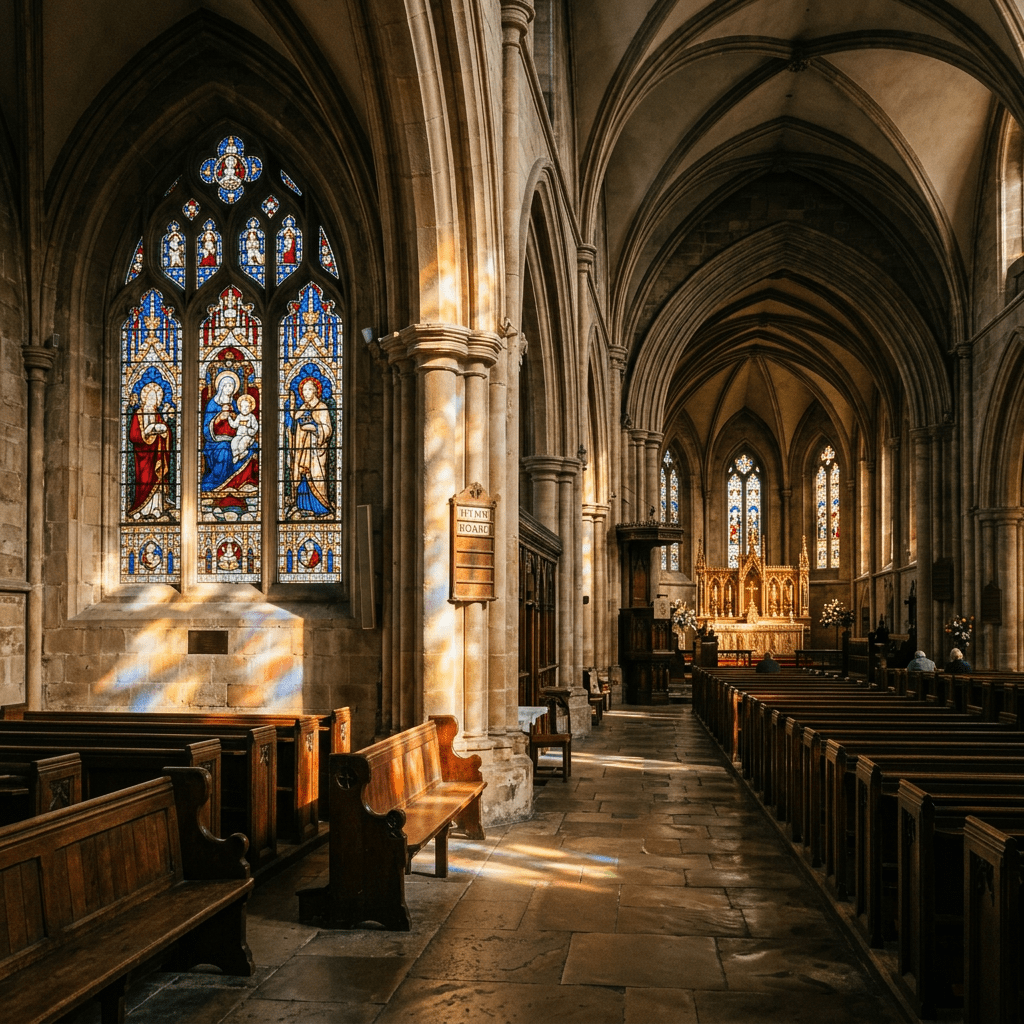
Sunlight shining through stained glass windows inside a gothic church with wooden pews and stone arches
Tuesday of the Thirteenth Week in Ordinary Time
Optional Memorial of the First Martyrs of the Church of Rome

First Reading: Amos 3:1-8; 4:11-12
Responsorial Psalm: Psalm 5:4b-6a, 6b-7, 8
Gospel: Matthew 8:23-27
Daily readings: https://bible.usccb.org/bible/readings/063026.cfm

Amos opens today with something that sounds severe but is actually a word of intimacy: "You alone have I known, of all the families of the earth — therefore I will punish you for all your iniquities." That word "known" is the same word used for the deepest kind of relationship in Hebrew Scripture. God is not punishing Israel like a distant judge punishing strangers. He is correcting people he is close to, people he brought out of Egypt, people he carried like a father. The warning comes because the relationship is real.

Then the string of rhetorical questions — do two walk together unless they have agreed? Does the lion roar without a reason? Does a trumpet sound in a city without alarming the people? — each one pointing to the same truth: things happen for reasons, and God's warnings through the prophets are not random. When hardship comes, when things shake loose, there is often something God is saying in it. The question is whether we are listening. "The Lord GOD has spoken; who can but prophesy?"

Then Jesus and his disciples get into a boat. A violent storm comes up. The disciples wake him in a panic: "Lord, save us! We are perishing!" And Jesus gets up, rebukes the winds and the sea, and there is great calm. Then the small, stunning question the disciples ask each other: "What sort of man is this, whom even the winds and the sea obey?" They have been with him. They have watched him heal people, teach crowds, touch the untouchable. And still the storm reveals how little they really knew. The answer to the disciples' question is the same answer Peter gave yesterday: the Christ, the Son of the living God. The one in the boat with you in the storm is that one.

Today we also remember the First Martyrs of Rome — the Christians burned and killed by Nero following the Great Fire of 64 AD, the ones Tacitus described as being covered with the skins of beasts and torn by dogs, or nailed to crosses and set afire as living torches after dark. They knew the answer to the disciples' question. And they got into the boat anyway.


A few questions to sit with today:

1. Is there a storm in my life right now — a fear, a crisis, a season of uncertainty — where I have been reacting with panic before turning to Jesus? What would it look like to wake him first?

2. When hardship has come, have I asked what God might be saying through it — not in a self-punishing way, but with the openness of someone in a real relationship listening for a word?

3. Is Jesus someone I really know, or someone I know about? Where does the difference show up in how I handle hard days?

4. What would it cost me to trust him enough to stay in the boat?


One small thing for tomorrow:

The next time something goes wrong tomorrow — a frustration, a difficulty, an unexpected interruption — before you react, say one sentence: "Lord, you are in this boat with me." Not a long prayer. Just that. Then see what follows.


Lord Jesus, you were asleep in the stern of the boat, and the storm was real, and your disciples were genuinely afraid. You did not shame them for waking you. You just got up and spoke, and there was great calm. I need that today. There are storms in my life that I have been managing on my own, trying not to bother you with, white-knuckling through on my willpower. Forgive me for forgetting you are in the boat. Help me to turn to you first — before the panic, before the plan, before I decide I need to handle it myself. Through the intercession of the First Martyrs of Rome, who knew exactly who you were and trusted you with everything, give me even a small portion of that faith. Amen.


If you'd like to share: what storm are you in right now — and have you woken Jesus yet, or are you still bailing water on your own?

Examen: Friday of the Twelfth Week in Ordinary Time

Dirt path winding through lush green bushes and trees in foggy morning light
Friday of the Twelfth Week in Ordinary Time

First Reading: 2 Kings 25:1-12
Responsorial Psalm: Psalm 137:1-2, 3, 4-5, 6
Gospel: Matthew 8:1-4
Daily readings: https://bible.usccb.org/bible/readings/062626.cfm

The First Reading today is the bottom of the long fall we have been watching all week. The Temple burns. The walls of Jerusalem come down. Zedekiah watches his sons killed, then has his own eyes put out — the last thing he ever sees is the worst moment of his life. The people are carried away into exile, and Psalm 137 puts their grief into words: "By the rivers of Babylon we sat mourning and weeping when we remembered Zion." They hung their harps on the willow trees. Their captors asked them to sing — and they could not. How could they sing the Lord's song in a foreign land?

It is the cry of anyone who has lost something they thought was permanent. A marriage. A parent. A health diagnosis that changes everything. A faith that used to feel easy and now feels distant. The exile is not just a historical event — it is a season many of us know from the inside. The harps go silent. The songs stop coming. We sit by the river and grieve.

And then Jesus comes down the mountain, and a leper walks up to him. This man has been untouchable — by law, by custom, by everyone around him — for who knows how long. He does not demand. He does not bargain. He says nine words: "Lord, if you wish, you can make me clean." It is one of the most honest prayers in the Gospels. He knows Jesus has the power. He is not sure about the willingness. And Jesus answers immediately: "I will do it." He stretches out his hand and touches him — actually touches someone no one had touched in years. That touch alone, before the healing even registers, must have been everything.

In the middle of a week that ends in exile and burned temples, the Gospel gives us this: Jesus still comes down the mountain. He still sees the one everyone else passes by. And he still says, "I will."


A few questions to sit with today:

1. Is there something I have been afraid to bring to Jesus because I am not sure he is willing — not sure he wants to touch that part of my life? What would it feel like to say, "Lord, if you wish, you can"?

2. Am I in an exile season right now — somewhere I did not choose to be, grieving something I thought was permanent? Have I let myself bring that grief honestly to God?

3. Where have I hung up my harp this week — stopped singing, stopped praying, gone quiet in a way that is more avoidance than rest?

4. Who in my life is untouchable right now — someone others avoid, someone I find it hard to reach toward? What might it cost me to stretch out a hand?


One small thing for tomorrow:

Pray those nine words tonight before you sleep: "Lord, if you wish, you can." Fill in whatever comes after — whatever the thing is you have been holding back. Just say it. You do not have to have faith the size of a mountain. You just have to be honest enough to walk up to him and ask.


Lord Jesus, this week's readings have walked us through exile, burned temples, and silent harps. And then you come down the mountain and touch the one no one would touch. Thank you for that. Thank you for still coming. There are things in my life that feel like the Temple burning — losses I have not known how to pray about, places where my faith has gone quiet. I am walking up to you today like that leper: not certain of your willingness, but certain of your power, and hoping. Touch me there. Say "I will." Help me to trust that you are still coming down the mountain for me. May Mary, who stood at the foot of the cross without losing hope, pray for me to do the same. Amen.


If you'd like to share: is there something you have been afraid to bring to Jesus because you were not sure he would be willing — and can we pray that prayer together?

Examen: Thursday of the Twelfth Week in Ordinary Time

Stone church and graveyard in green countryside with sunrise and winding road
Thursday of the Twelfth Week in Ordinary Time

First Reading: 2 Kings 24:8-17
Responsorial Psalm: Psalm 79:1b-2, 3-5, 8, 9
Gospel: Matthew 7:21-29
Daily readings: https://bible.usccb.org/bible/readings/062526.cfm

The First Reading today is blunt and sad. Jerusalem falls. The temple is stripped. Ten thousand people are carried off into exile. Jehoiachin had been king for only three months, and the text gives his reign a quiet, devastating epitaph: "He did evil in the sight of the LORD, just as his forebears had done." He inherited a kingdom already weakened by generations of people who chose their own way over God's. When the storm came, there was nothing solid underneath.

Jesus closes the Sermon on the Mount today with the same image — but told as a choice, not a judgment. Two men, two houses, one storm. The rain falls on both. The floods come for both. The winds batter both. The only difference is what is underneath. The house on rock does not avoid the storm. It simply stands through it because it was built on something real.

The key line is easy to miss: "Not everyone who says to me, 'Lord, Lord,' will enter the Kingdom of heaven, but only the one who does the will of my Father." Jesus is not talking about being good enough or working hard enough. He is talking about whether the relationship is real. The people who say "Lord, Lord" and are told "I never knew you" — they had activity, even impressive activity. What they did not have was intimacy. A house built on Jesus is not just a house that uses his name. It is a house where someone actually lives with him, listens to him, and then does what he says. That is what holds when the flood comes.


A few questions to sit with today:

1. Is my faith built on a real relationship with Jesus, or mostly on routines, appearances, and saying the right things? When did I last actually listen to him and let it change something?

2. When the storms have come in my life — the hard seasons, the losses, the failures — what did I discover was solid underneath me, and what gave way?

3. Is there something Jesus has been saying to me — in Scripture, in prayer, in a quiet nudge — that I have been hearing but not acting on?

4. Where today did I say "Lord, Lord" with my words but build on sand with my choices?


One small thing for tomorrow:

Pick one teaching of Jesus that you know well but have been slow to live — one thing from the Sermon on the Mount that you have heard many times and keep meaning to do. Tomorrow, do just one small version of it. Not a big overhaul. Just one brick laid on rock instead of sand.


Lord Jesus, you taught with authority — not the authority of someone showing off, but the authority of someone who actually knows. I want to build on you, not just speak about you. I confess the places where my faith has been more performance than foundation — the routines I keep up without meeting you in them, the words I say without letting them reach my choices. Forgive me, and help me to build something real. When the storms come — and they will — I want to be found standing, not because I was strong, but because I was standing on you. Thank you for the Sermon on the Mount, and for ending it with this honest warning spoken in love. May Mary, who built her entire life on your word alone, pray for me to do the same. Amen.


If you'd like to share: what is one area of your life where you sense your foundation has been more sand than rock — and what would it look like to build there on Jesus?

Examen: Tuesday of the twelfth Week in Ordinary Time

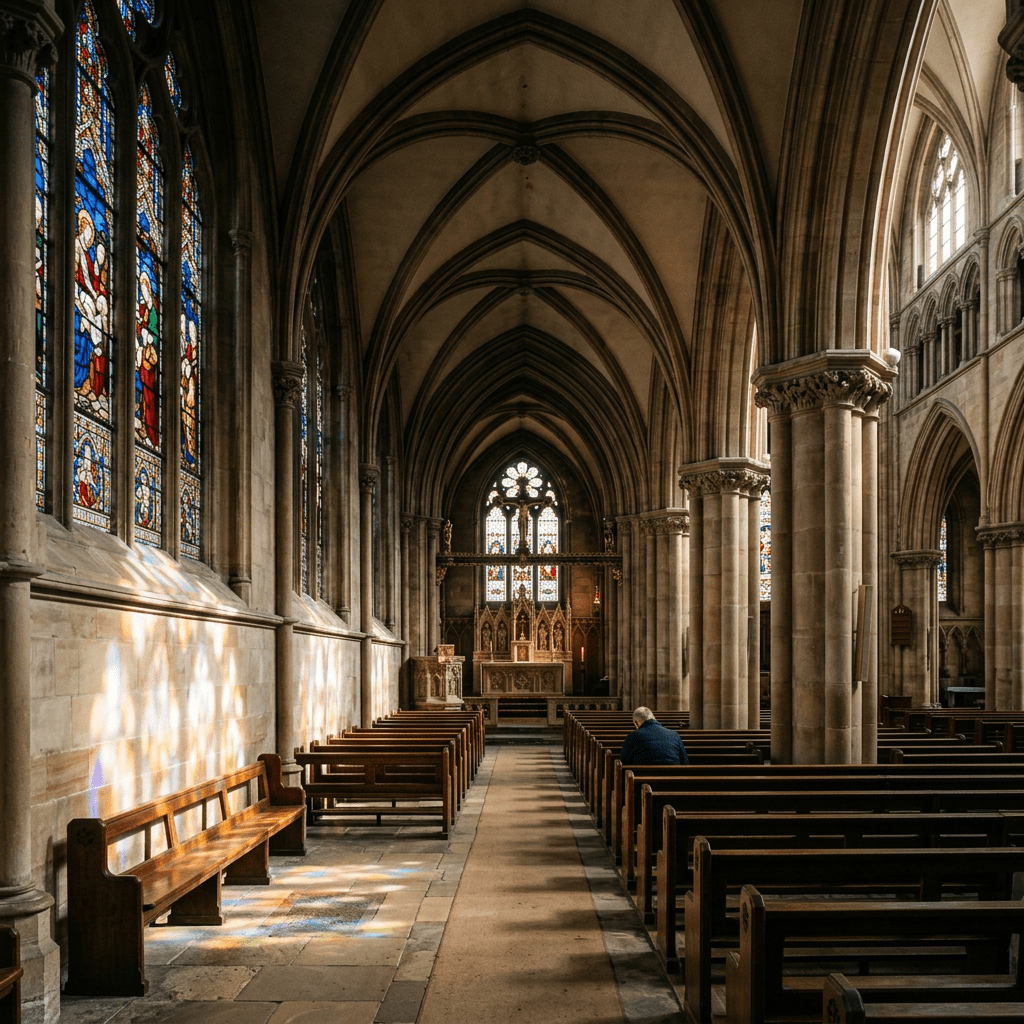
Interior of a Gothic church with arched ceilings, stained glass windows, wooden pews, and one person sitting
Tuesday of the Twelfth Week in Ordinary Time

First Reading: 2 Kings 19:9b-11, 14-21, 31-35a, 36
Responsorial Psalm: Psalm 48:2-3ab, 3cd-4, 10-11
Gospel: Matthew 7:6, 12-14
Daily readings: https://bible.usccb.org/bible/readings/062326.cfm

There is something beautiful in what Hezekiah does today. He receives a letter — a threatening, mocking letter from the most powerful king in the world, telling him that his God cannot save him. And instead of panicking, strategizing, or firing back, Hezekiah walks up to the temple and spreads the letter out before the LORD. He just puts it there. He says: you see this, God? You hear what they are saying about you? He does not pretend he is not afraid. He does not try to solve it himself first. He brings the whole thing, exactly as it is, and places it in front of the one who made the heavens and the earth.

And God answers. Not with a long speech, not with conditions, but simply: "I have listened."

That is the model of prayer today's reading is giving us. Not elegant language, not spiritual performance — just bringing the actual situation, the actual threat, the actual letter, and laying it before a God who sees and hears. It is honest. It is humble. And it is enough.

Jesus then gives us three short, dense teachings in the Gospel — on discernment, on the Golden Rule, and on the narrow gate. The one that belongs with Hezekiah is the narrow gate. The wide road is easy, broad, crowded. The narrow gate takes intention — you have to actually choose it, duck your head a little, mean what you are doing. Hezekiah could have taken the wide road: appease Sennacherib, negotiate, give a little ground to survive. Instead he walked up to the temple. That was the narrow gate. It is rarely the obvious move. But it is the one that leads somewhere.


A few questions to sit with today:

1. Is there a letter I have been carrying — a threat, a worry, a situation that feels too big — that I have not yet spread before the LORD? What would it feel like to just put it down in front of him tonight?

2. When I pray, am I bringing my actual situation, or am I bringing a cleaned-up version I think God will find more acceptable?

3. Today, was I on the wide road or the narrow one? Where did I take the easier path when the truer one was available?

4. Did I treat someone today the way I would want to be treated — and where did I fall short of that?


One small thing for tomorrow:

Think of one thing you are carrying right now — a worry, a conflict, a decision — that you have been trying to manage on your own. Tomorrow morning, write it down on a piece of paper or in your notes, and say out loud: "Lord, I am spreading this before you. I have listened. Now I need you to." Then leave it there.


Lord Jesus, thank you for Hezekiah's example today — the courage to walk into your presence with the actual problem, not a dressed-up version of it. I want to do that too. There are things I am carrying that I have not fully handed to you because I am still trying to fix them myself or because I am not sure you will answer. Forgive me for that small faithfulness. Help me to believe that you see, that you hear, that your answer — even when it comes differently than I expect — is enough. Give me the wisdom to find the narrow gate tomorrow when the wide one is right there and so much easier. May Mary, who brought her own impossible situation to you and trusted your word, pray for me when my trust runs thin. Amen.


If you'd like to share: is there something you have been carrying that you have not yet fully laid before God — and would you like us to pray with you?

Examen: Monday of the Twelfth Week in Ordinary Time

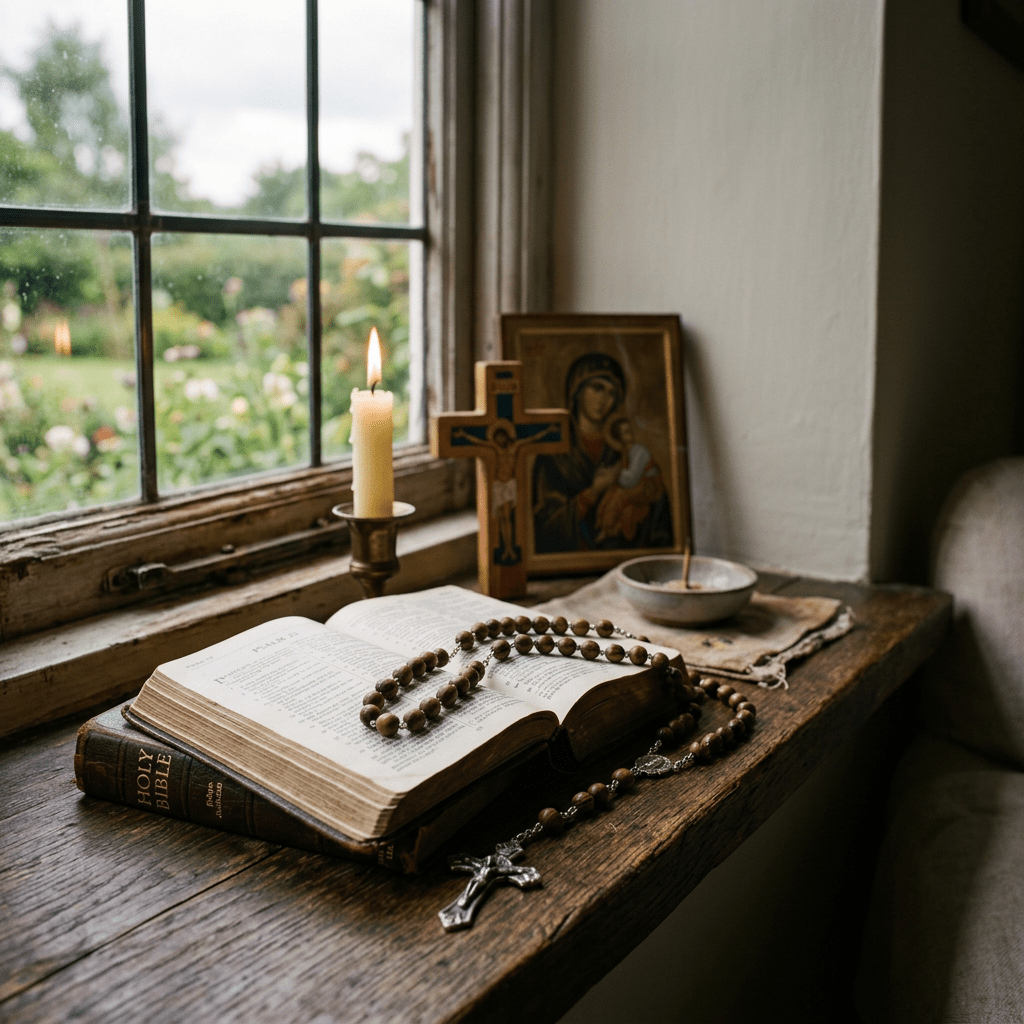
Open Bible with rosary, lit candle, wooden cross, and religious icon on wooden window ledge
Monday of the Twelfth Week in Ordinary Time

First Reading: 2 Kings 17:5-8, 13-15a, 18
Responsorial Psalm: Psalm 60:3, 4-5, 12-13
Gospel: Matthew 7:1-5
Daily readings: https://bible.usccb.org/bible/readings/062226.cfm

Today's First Reading is one of the saddest in all of Scripture. The northern kingdom of Israel — the whole people, carried into exile by Assyria — did not fall in a single dramatic moment. They drifted. They followed the ways of the nations around them instead of the ways of God. The LORD warned them through every prophet and every seer. And they did not listen. "They were as stiff-necked as their fathers," the text says, "who had not believed in the LORD, their God." In the end, God let them experience the full weight of the direction they had chosen. Only Judah was left.

It is a sobering way to start a Monday. But the warning is not meant to shame — it is meant to wake us up. The exile did not happen overnight. It was the result of a hundred small choices to look elsewhere, to blend in, to shrug off the prophets' words. The same thing can happen in a life, in a marriage, in a heart. Not with a bang, but with a long, slow drift.

Then Jesus arrives with the beam and the splinter. Stop judging, he says — and the image he uses is almost funny in how extreme it is. You are trying to remove a tiny splinter from someone else's eye while you are walking around with a wooden beam sticking out of your own head. He is not saying we should never discern right from wrong. He is saying: start with yourself. The person who has done the honest work of examining their own heart is the one who can actually help another — not the one who has been avoiding that work by focusing on everyone else's failures.

Those two readings belong together on a Monday morning. The exile came from not listening to the warnings. The beam comes from not seeing ourselves clearly. Both call us back to the same place: honest, humble attention to our own soul, before God.


A few questions to sit with today:

1. Is there anyone in my life I have been quietly judging — cataloguing their faults, keeping a mental record? What would it look like to turn that same attention toward my own heart tonight?

2. Has God been sending me a warning lately — through a reading, a conversation, a feeling I keep ignoring — that I have been too stiff-necked to receive?

3. Where have I been drifting — in prayer, in my relationships, in my integrity — without fully admitting it to myself?

4. Is there a beam in my own eye that I have been too comfortable to deal with because it is easier to notice someone else's splinter?


One small thing for tomorrow:

Before you comment on, correct, or criticize anyone tomorrow — at home, at work, in your own head — pause for five seconds and ask: "Is there something in me that needs this same correction?" You do not have to share that with anyone. Just let the question do its quiet work.


Lord Jesus, you know how easy it is for me to see what is wrong with everyone else and miss what is wrong with me. Forgive me for the judgments I carry, the tallies I keep, the ways I look outward to avoid looking inward. Today's readings are a mirror, and I do not always love what I see. Give me the courage to be honest with myself — not to condemn myself, but to bring what I find to you. Help me to hear the warnings you send before they become exiles. Pull the beam out of my eye, Lord, gently — I know I cannot do it myself. May Mary, who held her own heart open and undefended before you, teach me the same humble attentiveness. Amen.


If you'd like to share: is there an area of your life where you sense God has been gently warning you — and you have been slow to listen?

Examen: Saturday of the Eleventh Week in Ordinary Time

Winding dirt path through a meadow with wildflowers and morning mist at sunrise
Saturday of the Eleventh Week in Ordinary Time

First Reading: 2 Chronicles 24:17-25
Responsorial Psalm: Psalm 89:4-5, 29-30, 31-32, 33-34
Gospel: Matthew 6:24-34
Daily readings: https://bible.usccb.org/bible/readings/062026.cfm

There is a quiet tragedy running through today's First Reading. Joash — the child hidden in the temple, protected by God's faithfulness, crowned king by the courage of a priest — drifts. After the death of Jehoiada, the man who guided and formed him, the princes of Judah come flattering, and Joash listens. He forsakes the temple. He turns to idols. And when Zechariah, Jehoiada's own son, stands up to tell him the truth, Joash has him stoned. The man who owed everything to that family cannot bring himself to hear an honest word from them.

It is a sobering picture of what happens when we stop seeking first the kingdom. Not usually a dramatic fall — more often a slow drift, a series of small decisions to listen to the flattering voices rather than the faithful ones.

Jesus speaks directly to this in the Gospel. You cannot serve two masters. Do not worry about food, clothing, what tomorrow brings. Look at the birds. Look at the wildflowers. Your Father feeds them, clothes them, holds them — and you are worth so much more. Seek first the kingdom of God, and everything else will find its place. It sounds almost too simple. But worry is its own kind of idolatry — it is trusting our own anxious management of the future more than we trust the Father who already holds it. Jesus is not asking us to be irresponsible. He is asking us to remember who we belong to.

On a Saturday — maybe tired from the week, maybe carrying anxiety about money, health, family, the future — this is a good word. The Father knows what you need. All of it. Before you ask.


A few questions to sit with today:

1. What have I been most anxious about this week — and underneath that anxiety, what am I really afraid of? Have I brought that fear honestly to God?

2. Is there a voice I have been listening to this week — flattering, accommodating, comfortable — that has been pulling me away from what I know is true?

3. Did I seek the kingdom first today, or did I let worry, distraction, or comfort run the day?

4. Where did I catch a glimpse of God's care for me today — something small, like a bird or a wildflower — that I almost missed?


One small thing for tomorrow:

Tomorrow is Sunday — a good day to name one specific worry you have been carrying and place it at the foot of the altar at Mass. You do not have to have it solved. Just set it down and say: "Father, you know. I trust you." That act of release, even if it does not feel complete, is the beginning of seeking the kingdom first.


Lord Jesus, I come to this Saturday carrying more than I probably need to be carrying. There are worries I have been turning over all week that I have not really handed to you. Forgive me for trusting my own anxious planning more than your faithful provision. You clothe the wildflowers and feed the sparrows, and you have never once forgotten me. Help me to believe that not just in my mind but in the tired, worried places of my heart. Free me from the quiet idolatries — the comfort, the approval, the security — that I keep choosing over you. May Mary, who trusted you with everything she could not understand, teach me what it looks like to seek the kingdom first. Amen.


If you'd like to share: what is one worry you would like to set down this weekend — and can we pray for you in the comments?

Examen: Friday of the Eleventh Week in Ordinary Time

A bright, glowing cross formed by light beams in the sky during sunset above mountains and trees.

Friday of the Eleventh Week in Ordinary Time
Optional Memorial of Saint Romuald, Abbot

First Reading: 2 Kings 11:1-4, 9-18, 20
Responsorial Psalm: Psalm 132:11, 12, 13-14, 17-18
Gospel: Matthew 6:19-23
Daily readings: https://bible.usccb.org/bible/readings/061926.cfm

Today’s First Reading is dramatic — a palace coup, a hidden king, a usurper finally brought down. But underneath all that noise is a quiet thread: a young child named Joash, hidden in the temple for six years, kept safe while chaos reigned outside. The temple was the place of God’s presence. In the middle of a world bent on seizing power and wealth, there was a secret refuge that the scheming could not touch.

Jesus picks up that thread in the Gospel. Do not store up treasures on earth, he says — the kind that rust, decay, and get stolen. Store them in heaven instead. And then this line: “Where your treasure is, there also will your heart be.” He is not giving us a lecture on finances. He is asking us a question about our attention. What do I keep returning to? What do I check first in the morning? What is the thing I am most afraid to lose? That is my treasure. And wherever that is, that is where my heart lives.

Saint Romuald, whose optional memorial we celebrate today, took this question seriously in a radical way. He was born into wealth, watched his father kill a man in a duel over property, and in that moment of horror walked away from the whole thing. He spent the next fifty years wandering Italy, founding monasteries, seeking silence, and teaching others to sit with God. His simple rule said: “Sit in your cell as in paradise. Put the whole world behind you and forget it.” He was not asking for despair of the world — he was asking for freedom from it. The Camaldolese monks he founded still live this today: together for prayer, but mostly alone with God, with no phones, no internet, no noise. Their screen, someone once said, is the tabernacle. Romuald teaches us that the eye can only take in so much light — and what we fix it on shapes everything.


A few questions to sit with today:

1. Where has my attention lived today — what have I returned to most, worried about most, scrolled past most? Is that where I want my heart to be?

2. Is there something I am holding onto tightly because I am afraid of losing it? Can I loosen that grip a little tonight?

3. Did I find any moment of quiet today — even a brief one — where I was simply with God and not performing or producing?

4. Where did I experience something that felt like treasure that cannot rust — a moment of real love, peace, or beauty?


One small thing for tomorrow:

Tomorrow morning, before you check your phone, take sixty seconds to sit quietly and ask God: “What do you want my attention on today?” Just one minute of stillness before the noise begins. Saint Romuald spent a lifetime learning this. We can start with sixty seconds.


Lord Jesus, you know exactly where my treasure is — you can see it in what I worry about, what I reach for, what I am afraid to lose. I do not always like what that reveals about me. Forgive me for storing up things that cannot last and neglecting the things that do. Help me to fix my eye on you — simply, quietly, without so many words — the way Saint Romuald learned to. I want the light in me to be actual light, not the glow of a screen or the shimmer of something I am grasping. Teach me to be still. Teach me that you are enough. May Mary, who treasured all things in her heart, help me to treasure the right things. Amen.


If you’d like to share: what is one thing you noticed yourself reaching for today that might be a sign of where your heart actually is?


Examen: Thursday of the Eleventh Week in Ordinary Time

Open ancient book with a red ribbon bookmark and a lit candle in a holder on a wooden table
Thursday of the Eleventh Week in Ordinary Time

First Reading: Sirach 48:1-14
Responsorial Psalm: Psalm 97:1-2, 3-4, 5-6, 7
Gospel: Matthew 6:7-15
Daily readings: https://bible.usccb.org/bible/readings/061826.cfm

The Book of Sirach pauses today to sing about Elijah and Elisha — two men whose lives were so fully given to God that miracles followed them like a second shadow. "Like a fire there appeared the prophet Elijah, whose words were as a flaming furnace." That is not a description of someone who was loud or impressive for its own sake. It is a description of someone so filled with God that simply speaking the truth changed things.

Then Jesus gives us the Our Father. Right after yesterday's reminder to pray in secret, today he teaches us what to actually say. And it is striking how simple it is. Not many words. Not elaborate theology. Just a child talking to a Father — your name be holy, your kingdom come, give us bread, forgive us as we forgive, keep us from evil. The whole shape of the Christian life is right there in a few lines.

The line that tends to catch in the throat is the forgiveness one. Forgive us as we forgive those who trespass against us. Jesus drives the point home at the end: if you do not forgive others, your Father will not forgive you. That is not a threat — it is a description of how the heart works. A heart clenched tight around an old wound cannot receive much. The same hands that hold a grudge have a hard time holding grace. Jesus is not asking us to pretend the hurt never happened. He is asking us to let the debt go — for our own sake as much as theirs.


A few questions to sit with today:

1. When I pray, am I actually talking to my Father — or am I going through motions, filling time, performing a duty?

2. Is there someone I have not yet fully forgiven — someone whose name comes up in my chest before my mind? What would it take to loosen that grip a little?

3. Did I ask God for what I actually need today, simply and honestly, the way a child asks a parent?

4. Where did I see God's kingdom show up in a small way today — in my family, my work, a stranger, a moment of unexpected peace?


One small thing for tomorrow:

Pray the Our Father slowly tomorrow — once, out loud if you can, pausing at each line. Let "forgive us as we forgive" land fully before you move on. If a face comes to mind at that line, hold it there gently and say: "Lord, I release what they owe me. Help me mean it." That is enough.


Lord Jesus, thank you for teaching me to pray. I confess that I often rush through words without really meaning them, or I come to you with a list instead of a conversation. Slow me down. Help me to pray the way you taught — simply, honestly, from the heart. And the forgiveness part, Lord — I need your help with that. There are places where I am still holding on, still keeping score, still carrying something I said I already let go. Free me from that. You forgave me everything on the cross; help me to forgive others the small things I am still clutching. Through Mary, who forgave the world its rejection of her Son, teach me what gracious release looks like. Amen.


If you'd like to share: is there a line of the Our Father that always catches your attention or feels especially alive for you right now?

Examen: Wednesday of the Eleventh Week in Ordinary Time

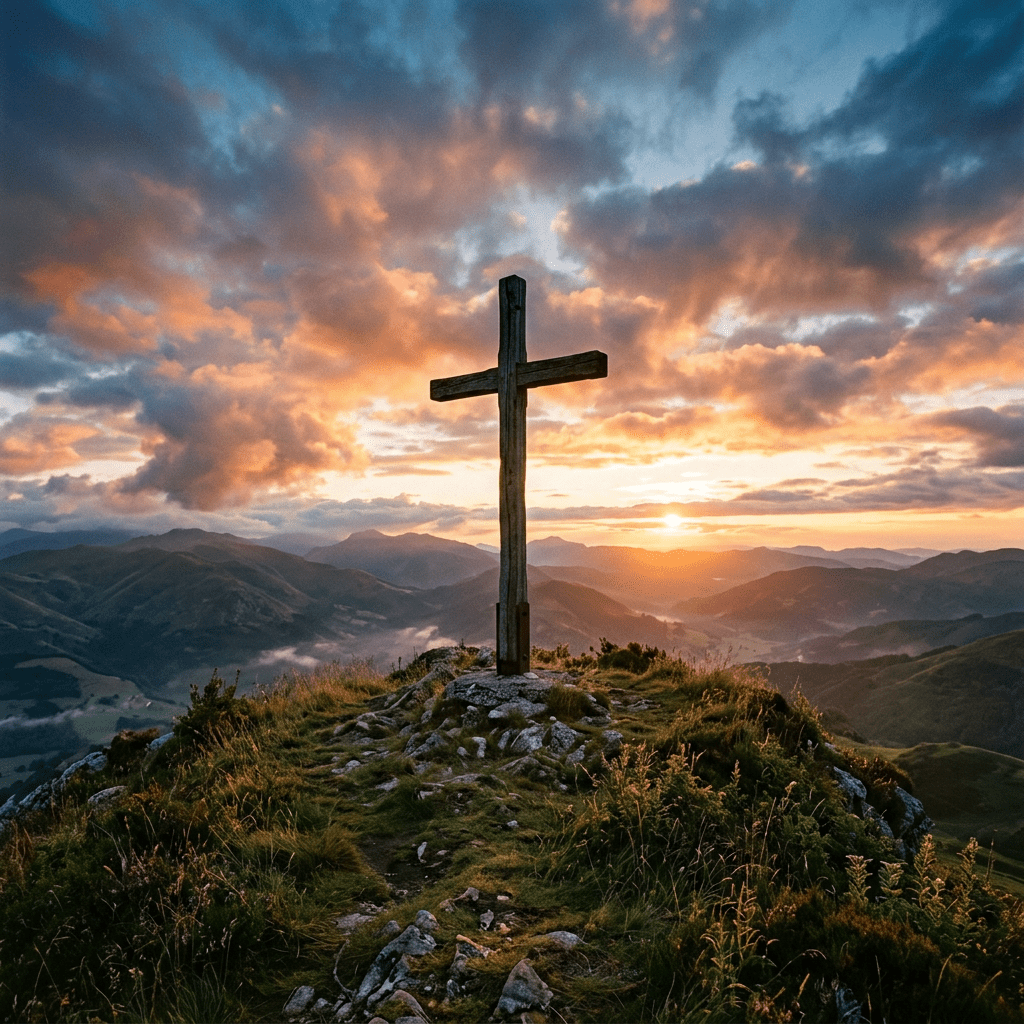
Wooden cross on rocky mountain peak with sun setting behind clouds
Wednesday of the Eleventh Week in Ordinary Time

First Reading: 2 Kings 2:1, 6-14
Responsorial Psalm: Psalm 31:20, 21, 24
Gospel: Matthew 6:1-6, 16-18
Daily readings: https://bible.usccb.org/bible/readings/061726.cfm

There is a moment in today's First Reading that is easy to rush past. Elijah is about to be taken up to heaven, and Elisha refuses to leave his side. Three times he is told to stay behind. Three times he says no. "As the LORD lives, and as you yourself live, I will not leave you." He is not doing this for anyone to see. There are fifty other prophets watching from a distance, but Elisha is not performing for them. He is just staying close to the one he loves, all the way to the end.

That quiet faithfulness — the kind nobody posts about — is the thread connecting both readings today. Jesus in the Gospel turns our attention to the same thing. Give in secret. Pray in your inner room with the door closed. Fast without making a show of it. Your Father who sees in secret will repay you. The point is not the action itself but who you are doing it for. There is a kind of goodness that needs an audience, and there is a kind of goodness that is content to be known only by God. Jesus is asking us to practice the second kind.

That is countercultural in the age of the highlight reel. We live in a world that practically rewards the public performance of virtue — the post, the story, the comment that signals we are one of the good ones. Jesus does not condemn generosity or prayer or fasting. He just asks: who is the audience? When I help someone, give something, or make a sacrifice — am I doing it to be seen, or am I doing it because I love God and I love this person?


A few questions to sit with today:

1. Was there a moment today when I did something good — and noticed I wanted someone to see it or know about it? What was underneath that?

2. Is there a place in my prayer life that has become more about routine or appearance than about actually being with God?

3. Did I stay close to what matters today — to the people I love, to God — or did I drift toward what was easier or more visible?

4. Where did I sense God seeing something in me that nobody else saw today — a small kindness, a quiet struggle, a hidden prayer?


One small thing for tomorrow:

Do one good thing tomorrow that no one will know about. It does not have to be big — leave a kind note somewhere anonymous, let someone go ahead of you without making it a moment, say a prayer for someone without telling them. Let it be between you and God. Notice how that feels.


Lord Jesus, thank you for seeing what is hidden. You see the small acts of love no one notices — the patience held together at the end of a long day, the prayer said quietly before sleep, the kindness given to someone who will never think to thank me. I confess that I do not always do these things just for you. Sometimes I want to be seen, to be known, to be credited. Forgive me for the ways I perform goodness instead of simply living it. Help me to close the door a little more often and meet you in the quiet. Teach me Elisha's faithfulness — staying close to you not for an audience, but because you are my life. Amen.


If you'd like to share: what is one small, hidden way you tried to love someone today — something only God saw?

Examen: Tuesday of the Eleventh Week in Ordinary Time

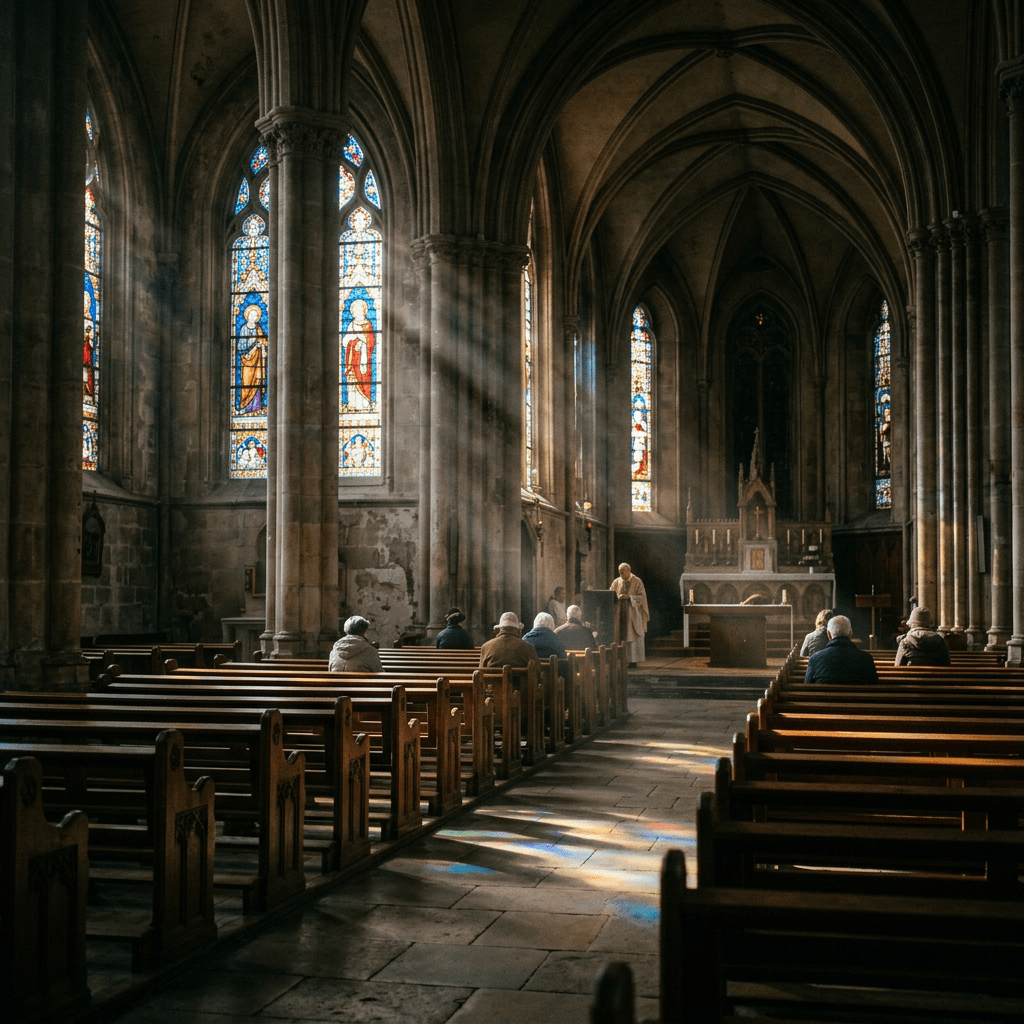
Interior of a gothic church showing stained glass windows and people seated during a religious service
Tuesday of the Eleventh Week in Ordinary Time

First Reading: 1 Kings 21:17-29
Responsorial Psalm: Psalm 51:3-4, 5-6ab, 11 and 16
Gospel: Matthew 5:43-48
Daily readings: https://bible.usccb.org/bible/readings/061626.cfm

Yesterday we watched Ahab pout and scheme his way into an innocent man's vineyard. Today the story continues — and something unexpected happens.

Elijah comes with a word of judgment. God names what Ahab did: he murdered, and he took. There is no softening it. But then Ahab does something surprising. He tears his garments, puts on sackcloth, fasts, and walks humbly. And God sees it. "Have you seen that Ahab has humbled himself before me?" God asks. And because of that small turning, God's response changes.

It is a remarkable thing. Not because Ahab deserved mercy — he didn't — but because God is paying attention to the posture of the heart, even in a man who had done terrible things. Then Jesus arrives in the Gospel and pushes further still. Love your enemies. Pray for those who persecute you. Be perfect as your heavenly Father is perfect. God lets the sun rise on the bad and the good. The rain falls on the just and the unjust alike. We are being invited into a love that does not sort people by what they deserve first.

That is a hard ask for an ordinary Tuesday. At work, there may be someone who got credit you earned. At home, there may be a wound that hasn't fully healed. On the road, there's probably someone who cut you off. Jesus is not asking us to pretend none of it happened. He is asking us whether we are willing to let God's kind of love be bigger than our accounting.


A few questions to sit with today:

1. Is there someone in my life I have quietly filed under "enemy" — someone I've stopped wishing well? How do I feel when I pray for them, even briefly?

2. Was there a moment today when I caught myself keeping score — measuring what I give against what I receive?

3. Is there any area of my life where I need to do what Ahab did — tear something, put something down, walk more humbly before God?

4. Where did I experience God's generosity today — sun on the bad and the good — and did I notice it?


One small thing for tomorrow:

Think of one person who has hurt you or frustrated you — someone you'd rather avoid. Tomorrow, say one quiet prayer for them. Not a big gesture, not a conversation, just a sentence: "Lord, bless them today." That's it. You don't have to feel it fully yet. Just begin.


Lord Jesus, thank you for this Tuesday and for the strange, stubborn mercy you show even to people like Ahab — and like me. I know there are places in my heart where I love only the lovable, where I give only to those who give back. Forgive me for the smallness of my love compared to yours. Today's readings remind me that you watch for even the smallest turning toward you — a torn garment, a bowed head, a moment of honesty. I offer you mine. Help me tomorrow to pray for someone I find hard to love, and to trust that you will do what only you can do in their life and mine. May Mary, who said yes to a love she could not yet fully understand, teach me to open my hands a little wider. Amen.


If you'd like to share: is there someone you've been finding hard to love lately — and what would it look like to pray for them this week?