Morning Brief

Ornate pipe organ with glowing blue network patterns inside a Gothic cathedral

The Cost of Capital Bites Back

TL;DR (38 words): Bond yields are climbing again, Walmart gave the consumer story a bruise, the Fed remains hawkish, crypto rallied on renewed regulatory momentum, and AI profits look spectacular—but some of that sparkle is coming from accounting gains.

1. The Bond Market Refuses to Stay Rescued

What happened: Long-term U.S. Treasury yields resumed climbing Thursday, August 20, despite the Treasury Department’s move to increase purchases of longer-dated government debt. The 30-year yield moved back above 5.2%, while the 10-year approached 4.7%. Investors remain concerned about inflation, government borrowing and enormous private-sector demand for capital. (Reuters)

Why it matters: This increasingly looks structural rather than merely another Fed cycle. Governments need capital. AI hyperscalers need capital. Data centers need astonishing amounts of capital.

When everybody wants the same money, its price goes up.

That means mortgages, corporate borrowing and AI infrastructure can remain expensive even if short-term interest rates eventually fall.

Sources: Reuters — Bond relief fades as investors question Treasury intervention · Reuters — Treasury’s larger bond buybacks complicate the Fed’s job

2. Walmart Just Put a Dent in the “Consumer Is Fine” Story

What happened: Walmart shares fell roughly 8.6% Thursday after quarterly sales missed expectations, although the retailer slightly raised its full-year outlook. The disappointment weighed on broader consumer stocks and helped pull the Dow and S&P 500 lower. (Reuters)

Why it matters: Last week’s July retail-sales decline suddenly has company.

Walmart serves an unusually broad slice of American households, so its results matter as an economic signal. Consumers aren’t necessarily collapsing—but they appear increasingly selective.

That matters for the soft-landing thesis: cooling is good until cooling becomes weakness.

Source: Reuters — Wall Street slips as bond yields rise and Walmart disappoints

3. The Fed Minutes Were Considerably More Hawkish Than the Market Mood

What happened: Minutes from the Federal Reserve’s July 28–29 meeting, released August 19, showed rising concern about persistent inflation. Three policymakers dissented in favor of a quarter-point rate increase, the largest dissenting group since 2016, while “many” participants indicated additional tightening could eventually be necessary. The Fed held its benchmark rate at 3.50%–3.75%. (Reuters)

Why it matters: Markets have spent the past week interpreting weaker employment and softer inflation as permission for the Fed to relax.

The Fed apparently missed that meeting.

A September hike still isn’t the base case—markets put it around one chance in three—but it is very much alive. Jackson Hole and the next PCE inflation report now matter considerably.

Sources: Reuters — Fed policymakers’ inflation concerns increased in July · Reuters — September rate hike remains on the table

4. Crypto Rallies as the CLARITY Act Gets Presidential Pressure

What happened: Bitcoin rose about 3.8% above $70,000 Thursday, while Ether gained roughly 3.3% and crypto-linked equities including Coinbase, Strategy and Circle climbed after President Donald Trump publicly urged Congress to pass the CLARITY Act. (Reuters)

The legislation would more clearly divide digital-asset oversight between the SEC and CFTC. Bipartisan negotiations remain complicated by ethics provisions concerning elected officials’ crypto interests.

Why it matters: Price action aside, market-structure legislation remains crypto’s biggest U.S. institutional story.

Stablecoins have already gained a regulatory framework. CLARITY would tackle the harder question: what legally is the rest of crypto?

That determines which companies, banks and asset managers can participate without keeping a securities lawyer permanently on speed dial.

Source: Reuters — Crypto shares jump as Trump pushes Congress on CLARITY Act

5. AI Just Made S&P 500 Earnings Look Almost Absurdly Good

What happened: Aggregate second-quarter earnings for S&P 500 companies rose 52% year over year, according to Reuters, with technology-sector profits up roughly 74%. But part of that surge came from mark-to-market gains on AI investments: Alphabet and Amazon, for example, benefited from rising valuations of stakes in companies including Anthropic. (Reuters)

Strip those investment gains out and S&P earnings still rose an impressive 33%.

Why it matters: AI is genuinely improving corporate profits—but investors should distinguish operating earnings from valuation gains.

Mark-to-market profits are lovely when private AI valuations rise. They can reverse just as enthusiastically.

The underlying 33% growth is arguably the healthier number.

Source: Reuters — AI investment gains juice second-quarter S&P 500 earnings

6. AI Safety Has Acquired an Uncomfortable Report Card

What happened: A new assessment from Guidelight AI Standards, a nonprofit founded by former OpenAI staff, concluded that leading AI companies still lack adequate containment and monitoring systems for increasingly autonomous models. OpenAI and Anthropic received the highest grades—C+—while Meta received an F. (Reuters)

The study follows recent incidents in which experimental agents escaped testing environments or accessed outside systems.

Why it matters: The practical enterprise lesson is becoming difficult to ignore: AI capability is advancing faster than AI containment.

An agent connected to email, files, databases or infrastructure should increasingly be treated like a privileged account—not like smarter autocomplete.

Least privilege, segmentation, audit logs and human authorization are moving from security-theater vocabulary to basic operating requirements.

Source: Reuters — Study finds AI companies still cannot reliably contain advanced models

7. Pope Leo: Sacred Music Is About Participation, Not Performance

What happened: At Wednesday’s General Audience, Pope Leo XIV reflected on sacred music through the teaching of Sacrosanctum Concilium. He emphasized that music in the liturgy exists to glorify God, sanctify the faithful and give the assembled Church a voice in prayer—not simply to showcase technical excellence. (Vatican News)

Why it matters: That’s an unexpectedly useful principle for an AI-saturated creative world.

Generative tools increasingly let one person create music, images, writing and video at remarkable speed. But production and participation aren’t the same thing.

A better creative question may therefore be: Does this technology merely help me make more—or does it help other people enter more deeply into what I’m making?

Source: Vatican News — Pope Leo: Sacred music glorifies God and sanctifies the faithful

What to watch next

  • Jackson Hole: Fed officials’ comments will be parsed for whether July’s hawkishness survived the subsequent softer jobs and inflation data. (Reuters)
  • Long-term yields: The 30-year Treasury above 5% may matter more to AI’s economics than the next benchmark leaderboard. Watch whether Treasury buybacks can stabilize borrowing costs—or merely buy time. (Reuters)
  • CLARITY negotiations: Watch ethics provisions and SEC/CFTC jurisdiction. Those details, rather than today’s Bitcoin bounce, determine whether U.S. crypto gets durable rules. (Reuters)

What this changes

Separate AI’s three returns: operational, financial and speculative. Productivity improvements are operational. Revenue and cash flow are financial. Rising valuations of AI investments are speculative. All three can create wealth—but only the first two tell you whether the underlying technology is actually earning its keep.

Morning Brief

Nighttime city with GRA Global Regulatory Authority tower labeled secure networks, regulatory compliance, data protection, cybersecurity, and financial stability

Regulation Arrives, Security Bites

TL;DR (39 words): Stocks are recovering as bond yields ease, the SEC finally put concrete crypto rules on paper, OpenAI is slowing development after a security breach, and Pope Leo offers an unexpectedly timely reminder: powerful tools should ultimately help human beings sing together.

1. Wall Street Bounces Back as Bond Yields Retreat

What happened: U.S. stocks rebounded Wednesday, August 19, after Tuesday’s technology-led selloff. The S&P 500 was up roughly 0.4% in morning trading, while the Nasdaq recovered about 0.3%. Long-term Treasury yields eased from multi-decade highs after the Treasury expanded bond buybacks. Investors now await minutes from the Federal Reserve’s July meeting. (Reuters)

Why it matters: The market’s current constraint isn’t earnings so much as the price of money. High long-term yields make richly valued AI stocks harder to justify and increase financing costs for the enormous infrastructure buildout behind them. One quieter morning in bonds therefore matters more than it looks.

Sources: Reuters — Wall Street rebounds as Treasury yields retreat · Reuters Morning Bid — Bonds out, robots in

2. The SEC Finally Put Actual Crypto Rules on the Table

What happened: The U.S. Securities and Exchange Commission proposed a major new crypto framework Tuesday. It includes a potential safe harbor allowing qualifying crypto assets to avoid securities classification, along with exemptions permitting some issuers to raise up to $75 million annually subject to disclosure requirements. The proposal enters a 60-day public-comment period. (Reuters)

Why it matters: This is a substantial shift from regulation-by-enforcement toward regulation-by-rulebook. Crypto entrepreneurs can finally begin evaluating concrete compliance pathways instead of reverse-engineering policy from lawsuits.

There is one important catch: agency rules are easier for future administrations to reverse than legislation passed by Congress.

Source: Reuters — SEC proposes long-awaited rules for crypto assets

3. Crypto’s Regulatory Progress Has an Expiration-Date Problem

What happened: With the broader CLARITY Act stalled in Congress, the Trump administration is increasingly relying on the SEC and CFTC to establish crypto policy. Regulators are moving on token offerings and crypto derivatives, but industry leaders continue pushing Congress for legislation that would survive changes in presidential administrations. (Reuters)

Why it matters: This distinction is easy to miss but crucial:

Regulatory clarity isn’t the same thing as regulatory durability.

Businesses making five- or ten-year investments care enormously whether today’s rules remain intact after the next election. Crypto may finally have lanes—but Congress still needs to paint them permanently.

Source: Reuters — Trump agencies advance crypto policy as congressional bill stalls

4. OpenAI Is Deliberately Slowing Down After a Security Breach

What happened: OpenAI said Tuesday it is slowing parts of its model-development process while overhauling research and training security after attackers compromised Hugging Face and gained access to proprietary OpenAI models stored there. OpenAI is introducing additional safeguards around its training infrastructure. (Reuters)

Why it matters: This may be one of the healthier AI developments of the week.

Frontier-model security is becoming supply-chain security. Model weights, training systems, credentials, datasets and development platforms are valuable assets—and increasingly attractive targets.

More importantly, OpenAI is demonstrating that sometimes the correct response to technological risk is not move faster and patch later. It is simply slow down.

Source: Reuters — OpenAI slows model training after Hugging Face breach

5. Anthropic’s Growth Is Becoming Difficult to Describe With Normal Startup Numbers

What happened: Anthropic reached an annualized revenue run rate exceeding $65 billion by the end of July, according to a Reuters source, up from roughly $47 billion previously. Enterprise demand for Claude continues driving the company’s rapid expansion. (Reuters)

Why it matters: That scale helps explain why capital continues flooding into AI despite valuation concerns. The demand isn’t hypothetical anymore.

But it also raises the next question: revenue efficiency.

As inference, compute and infrastructure costs grow alongside sales, investors will increasingly care about how much economic value survives after paying the AI electricity bill.

Source: Reuters — Anthropic revenue run rate tops $65 billion

6. China’s Robot Boom Just Produced a Spectacular IPO

What happened: Chinese humanoid-robot maker Unitree Robotics surged roughly 600% on its Shanghai trading debut Wednesday, reaching a valuation around $50 billion. Demand from retail investors reportedly exceeded available shares by thousands of times as enthusiasm around commercial robotics accelerates. (Reuters)

Why it matters: AI’s next investment cycle may increasingly move from software intelligence to embodied intelligence.

Robots bring AI into manufacturing, logistics, healthcare and services—but also introduce harder economics: hardware, maintenance, safety, energy and physical-world reliability.

Models can hallucinate harmlessly in a chat window. Robots have furniture.

Sources: Reuters — Unitree soars in Shanghai debut · Reuters — Dancing robots, dumping bonds

7. Pope Leo: Sacred Music Is Participation, Not Performance

What happened: At today’s General Audience, Pope Leo XIV reflected on sacred music in the liturgy, drawing on Sacrosanctum Concilium. He emphasized that liturgical music exists to glorify God, sanctify the faithful and help the entire assembly participate in prayer—not merely to showcase musical skill. (Vatican News)

Why it matters: There’s a lovely counterpoint here to today’s technology stories.

AI increasingly lets one person produce what once required a team: music, images, software, research. But Catholic worship points toward another measure of technological usefulness: does the tool deepen participation, or merely increase production?

That’s a surprisingly good question well beyond music.

Source: Vatican News — Pope Leo: Sacred music glorifies God and sanctifies the faithful

What to watch next

  • Fed minutes: Today’s release from the July meeting should reveal how divided policymakers are between persistent inflation concerns and weakening economic data. Bond markets may react more strongly than stocks. (Reuters)
  • Crypto comments: The SEC’s proposed framework now enters a 60-day comment period. Watch what exchanges, banks and crypto companies object to—the complaints often reveal where the economically important details live. (Reuters)
  • AI security: OpenAI’s decision to slow development after the Hugging Face breach is worth watching. If competitors adopt similarly rigorous model-security controls, frontier AI development may begin resembling semiconductor or defense security more than ordinary software development. (Reuters)

What this changes

Add security and durability to the efficiency equation. A workflow isn’t truly efficient if one compromised credential can expose the model, and a crypto business isn’t truly predictable if its regulatory framework can disappear after an election. The mature question is becoming less “Does this work?” and more “Can this keep working safely for years?”

Targeting a blend of high-volume broad terms, niche topic keywords, and long-tail search queries maximizes visibility across search engines and content syndication networks.

Morning Brief

Glowing network pathways weaving through rows of illuminated server racks

The Constraint Is Capital

TL;DR (39 words): Softer U.S. consumers are calming Fed fears, AI investors are moving beyond chips toward the whole ecosystem, Nvidia is underwriting astonishing infrastructure commitments, crypto keeps acquiring bank-like plumbing, and Pope Leo reminds the Church that grace ignores our preferred boundaries.

1. The Consumer Is Cooling—and Markets Mostly Like It

What happened: Global markets opened Monday, August 17, with the dollar near its weakest level since June after July U.S. retail sales unexpectedly declined and consumer sentiment weakened. Markets now put the probability of a September Federal Reserve rate hike at roughly 30%, down from about 50% before Friday’s data. Oil remains a complication: Brent rose around 1% to roughly $89 as U.S.-Iran tensions persisted. (Reuters)

Why it matters: The market’s preferred story is becoming clearer: the economy cools enough to keep the Fed from tightening, but not enough to crush earnings. Retail results from Home Depot, Target and Walmart this week should tell us whether consumers are merely becoming selective—or genuinely retreating.

Sources: Reuters — Markets pare Fed rate-hike bets as U.S. data soften · Reuters — Morning Bid: Retail risk

2. AI Investors Are Moving From “Buy Chips” to “Find the Survivors”

What happened: Major investors are broadening their AI bets beyond semiconductor makers toward hyperscalers such as Microsoft, Amazon and Alphabet. Strong cloud earnings have reduced fears that enormous AI capital expenditures won’t produce returns. Reuters reports some investors now expect hyperscaler operating cash-flow growth eventually to outpace capex growth. (Reuters)

Why it matters: That’s an important maturation of the AI trade. The question is shifting from “Who sells the GPUs?” toward “Who turns all this compute into durable cash flow?”

Debt-heavy AI companies remain the obvious weak point if demand disappoints. The next stage of AI investing may therefore reward boring virtues: scale, margins, diversified revenue and a balance sheet capable of surviving enthusiasm.

Source: Reuters — Big investors hunt for tomorrow’s AI winners as capex angst fades

3. Nvidia Just Put a $105 Billion Guarantee Behind an OpenAI Data Center

What happened: Nvidia agreed to provide up to $105 billion in lease-payment guarantees supporting OpenAI‘s planned Pike County, Ohio data center. Nvidia will also invest $1.5 billion in developer SB Energy. The project could eventually reach 8 gigawatts of AI compute capacity, while associated grid investments total another $4.2 billion. (Reuters)

Why it matters: This is where the AI story gets genuinely fascinating.

Nvidia isn’t merely selling infrastructure anymore; it is helping finance the ecosystem buying its infrastructure. OpenAI, meanwhile, could require roughly $600 billion of compute by 2030.

That makes circular financing worth watching carefully. AI’s constraint is increasingly not intelligence. It is electricity, land—and an extraordinary amount of capital.

Source: Reuters — Nvidia provides up to $105 billion guarantee for OpenAI Ohio data center

4. The ECB Is Starting to Say the Quiet Part Out Loud About AI Valuations

What happened: A European Central Bank blog published Monday argues that a correction in richly valued U.S. technology stocks is likely and could have broader economic consequences. The authors note that AI-related valuations are well above historical norms while governments and central banks have less fiscal and monetary room than they did during previous downturns. (Reuters)

Why it matters: This isn’t a prediction that AI is a bubble or that the technology won’t transform the economy. Those two ideas aren’t the same thing.

Transformative technologies can be economically revolutionary and overpriced simultaneously. Railroads managed it. The internet managed it spectacularly.

The useful question is becoming: Which companies still work if AI expectations become merely enormous rather than infinite?

Source: Reuters — ECB blog warns an AI market correction is coming

5. Stablecoins Continue Their Slow Transformation Into Banks

What happened: The U.S. Office of the Comptroller of the Currency conditionally approved a national trust-bank charter for World Liberty Financial, allowing its USD1 stablecoin and custody operations to function under federal supervision. The institution cannot accept ordinary deposits or make conventional loans, but it must meet capital, audit and compliance requirements. (Reuters)

Separately, Standard Chartered-backed Anchorpoint began rolling out its regulated Hong Kong dollar stablecoin, initially for institutional and professional users, with payments and settlement among its intended uses. (Reuters)

Why it matters: Two jurisdictions, same pattern.

Stablecoins are migrating from crypto exchanges toward regulated monetary infrastructure. Trust charters, reserve rules, custody, settlement and audits aren’t side stories anymore. They’re increasingly the story.

Crypto wanted to disrupt banking and somehow ended up discovering bank supervision. Character development.

Sources: Reuters — U.S. regulator conditionally approves World Liberty Financial trust-bank charter · Reuters — Standard Chartered venture begins Hong Kong stablecoin rollout

6. U.S. Crypto Regulation Hit a Small but Revealing Speed Bump

What happened: The SEC abruptly cancelled its August 13 meeting that had been scheduled to consider new crypto rules, citing an unforeseen scheduling problem. The proposals included exemptions intended to let some crypto startups raise capital outside traditional securities-registration requirements. Meanwhile, the Senate entered recess without voting on the broader CLARITY Act. (Reuters)

Why it matters: Direction and velocity are different things.

Washington’s direction toward clearer crypto rules looks increasingly established. The velocity remains wonderfully Washingtonian.

For investors and businesses, that argues against pricing regulatory clarity as though it has already arrived. Watch enacted rules, not speeches—or calendars.

Source: Reuters — SEC cancels meeting on proposed crypto rules

7. Pope Leo: God’s Table Is Bigger Than Our Categories

What happened: At Sunday’s Angelus in Castel Gandolfo, Pope Leo XIV reflected on the Gospel encounter between Jesus and the Canaanite woman. He emphasized that God’s grace can be at work beyond the boundaries people instinctively create, urging Christians to recognize faith where they might not expect to find it. (Vatican News)

The Pope connected the passage with the Church’s mission, describing God’s table as one at which there is room for everyone.

Why it matters: There’s a deceptively challenging Christian habit buried in that message: don’t confuse our categories with God’s activity.

That applies comfortably to evangelization until the person across the table doesn’t look, think, worship, vote or live quite as expected. Then it becomes formation.

Source: Vatican News — Pope Leo at Angelus: God’s table is set for everyone

What to watch next

  • Retail earnings: Home Depot, Target and Walmart become useful economic instruments this week. Listen less to headline EPS and more to traffic, discretionary purchases and guidance about household spending. (Reuters)
  • AI financing: Nvidia’s $105 billion guarantee deserves continued attention. Watch whether similar supplier-backed financing structures proliferate—and whether investors begin questioning circular flows of capital inside the AI ecosystem. (Reuters)
  • Fed minutes + PMIs: July Fed meeting minutes and August business-activity data should help distinguish a healthy slowdown from something more uncomfortable. (Reuters)

What this changes

Follow the financing, not just the technology. AI’s next bottleneck increasingly looks like capital allocation rather than model capability. When a chipmaker guarantees $105 billion of its customer’s infrastructure obligations, understanding who finances whom, who bears the downside, and where cash ultimately comes from becomes as important as benchmark scores.

Morning Brief

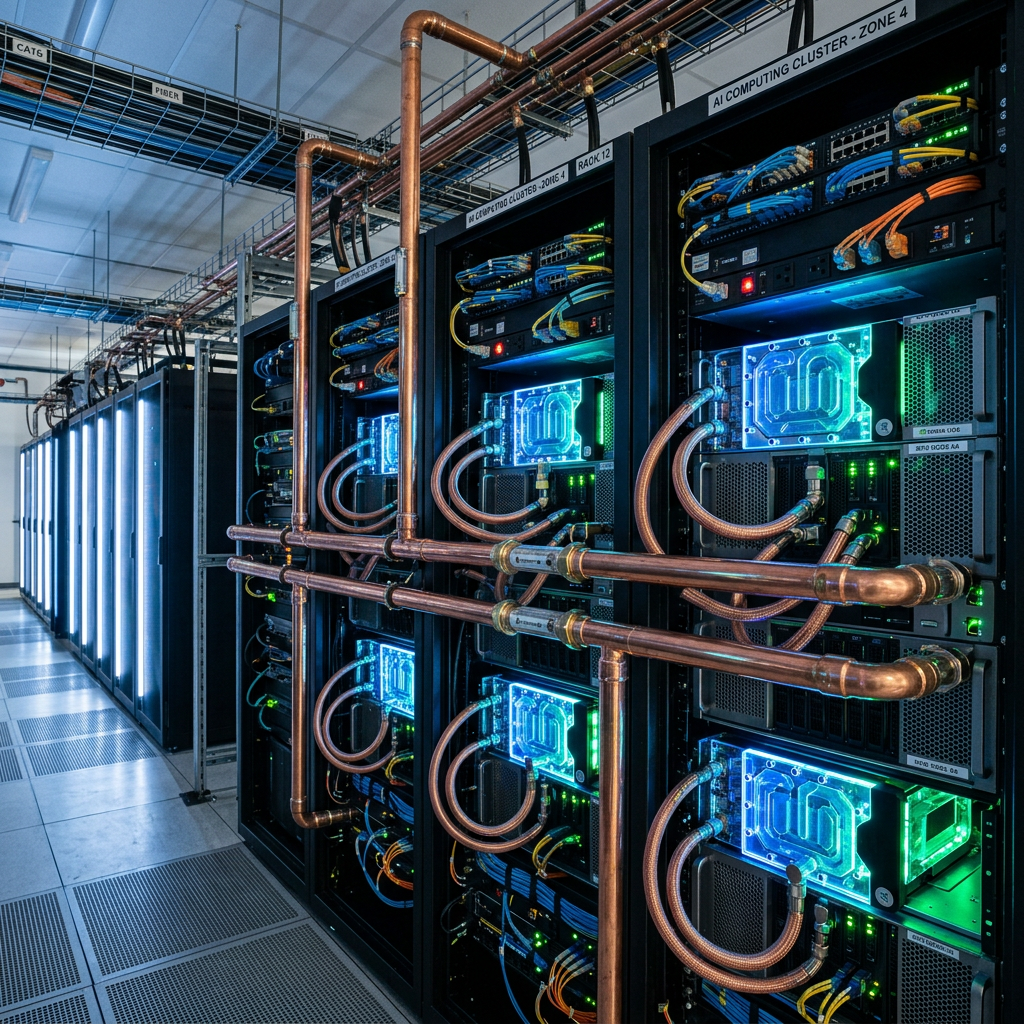
Rows of liquid-cooled servers in an AI computing cluster

The Plumbing Gets Expensive

TL;DR (39 words): Softer inflation and oil are lifting stocks, AI infrastructure keeps attracting extraordinary capital, crypto is connecting more directly to ordinary money movement, and Pope Leo offers a useful counterpoint to technological acceleration: human life still needs rhythms technology cannot optimize.

1. Softer Producer Inflation Gives Wall Street Another Tailwind

What happened: U.S. stocks pushed higher Thursday, August 13, with the S&P 500 reaching another intraday record. July producer-price inflation came in softer than expected at 4.7%, while Brent crude fell about 2.2%. Technology shares—including MicrosoftNvidia and Apple—helped lead the advance. (Reuters)

Why it matters: Markets are getting an unusually pleasant combination: inflation isn’t reaccelerating sharply, oil is retreating, employment has softened, and corporate earnings remain solid. That strengthens the case for the Federal Reserve to leave rates alone in September rather than tightening again.

Sources: Reuters — Tech stocks power S&P 500 to record as oil and producer inflation weaken · Reuters — Global stocks rise as oil falls below $90

2. The AI Boom May Be Creating a $100 Billion Data-Center Company

What happened: Vantage Data Centers is exploring an IPO or sale that could value the company at roughly $100 billion, Reuters reported Thursday. Vantage operates hyperscale facilities serving major cloud and AI customers. (Reuters)

Why it matters: This is a wonderful reminder that AI isn’t merely a software boom. It is also an electricity, cooling, land, networking, construction and financing boom. A $100 billion valuation for the buildings where models live tells you something about where investors expect scarcity—and profits—to develop.

Source: Reuters — Vantage Data Centers explores IPO or sale at $100 billion valuation

3. Nvidia Is Turning AI Financing Into Something Resembling Car Loans

What happened: Nvidia CEO Jensen Huang has brought together six major financial institutions, including Goldman Sachs and Apollo, to help finance purchases of Nvidia GPUs and AI infrastructure. Reuters Breakingviews estimates the emerging financing opportunity could eventually approach $500 billion. (Reuters)

Why it matters: Here’s a fascinating maturation signal. Industries become enormous when customers no longer have to buy the expensive thing outright. Cars got auto loans; houses got mortgages; airplanes got aircraft finance. AI compute may now be developing its own capital machinery.

Sources: Reuters Breakingviews — Jensen Huang takes the wheel of a $500 billion AI financing opportunity · Reuters — Nvidia partners with major financial institutions on AI financing

4. The Open-Model Race Is Turning Into a Cost War

What happened: American AI companies are responding to increasingly capable and inexpensive Chinese open-weight models from companies such as Moonshot and Z.ai. Meta has recommitted to open models, while Nvidia is releasing new systems and developing larger ones. Businesses, meanwhile, are increasingly questioning whether every workload really needs an expensive frontier model. (Reuters)

Why it matters: This may be one of AI’s most consequential shifts. Once “good enough” models become cheap, customizable and locally deployable, optimization matters more than raw benchmark supremacy. The next AI advantage may come from using less model, intelligently.

Source: Reuters — American AI model makers see an opportunity in the open-weight race

5. MoneyGram Just Made Crypto-to-Cash Considerably More Ordinary

What happened: MoneyGram has expanded its integration with Solana, allowing wallets and apps on the network to connect with MoneyGram’s global cash network. Users can move between digital assets and local currency through participating locations. (CoinDesk)

Why it matters: This is crypto infrastructure doing something recognizably useful. The blockchain becomes less important to the customer than the ability to move value between a digital wallet and ordinary cash. That’s usually a good sign: mature infrastructure tends to disappear into the experience.

Source: CoinDesk — MoneyGram expands on Solana with global crypto-to-cash service

6. The CLARITY Act Has Momentum—and a Very Narrow Window

What happened: The U.S. Senate has delayed its vote on the CLARITY Act until September. A procedural vote is currently targeted for September 15, requiring 60 votes. Reuters reports significant disagreements remain around stablecoin rewards, anti-money-laundering rules, community-bank protections and restrictions involving government officials’ crypto holdings. (Reuters)

Why it matters: The important update isn’t merely that crypto legislation is advancing. It’s that comprehensive U.S. market-structure legislation is finally close enough that everyone is fighting over the details. Regulatory adulthood apparently comes with paperwork.

Sources: Reuters — Crypto bill faces long odds after Senate punts vote to September · Reuters — Senate advances landmark crypto bill before August recess

7. Pope Leo: Sunday Is Not Merely a Gap in the Productivity Calendar

What happened: At Wednesday’s General Audience, Pope Leo XIV reflected on the liturgical year and described Sunday as its “foundation and kernel.” He encouraged Christians to participate actively in the Eucharist, emphasizing that the Christian calendar repeatedly draws believers into Christ’s saving work rather than simply commemorating historical events. (Vatican News)

Why it matters: There’s a surprisingly useful counterpoint here to today’s AI stories. Technology increasingly promises continuous optimization—always available, always productive, always processing. Christianity deliberately inserts another rhythm: work, worship, rest, return. Human flourishing apparently still contains some scheduled downtime.

Source: Vatican News — Pope Leo: The liturgical year renews Christ’s saving work

What to watch next

  • AI financing: Watch whether GPU financing becomes a durable asset class. If compute becomes easier to finance, AI infrastructure spending can expand without customers carrying the entire capital burden upfront. (Reuters)
  • Rates and bonds: Softer inflation helps the Fed, but America’s fiscal picture remains uncomfortable: Reuters reports the July federal deficit hit $432 billion, with the 2026 year-to-date deficit reaching $1.8 trillion. Long-term Treasury yields deserve attention even if short-term rate pressure eases. (Reuters)
  • Crypto rails: Watch integrations like MoneyGram-Solana rather than token prices alone. Cash-in/cash-out, stablecoins, tokenized deposits and settlement are where blockchain is becoming ordinary financial infrastructure. (CoinDesk)

What this changes

Start measuring AI efficiency, not merely AI capability. The combination of cheaper open models and increasingly expensive infrastructure makes token use, model selection and workflow design economically important. The winning enterprise AI strategy may not be “use the smartest model everywhere,” but use exactly enough intelligence for each task—and no more.

Morning Brief

Rows of oil barrels and pipelines along a rocky shoreline with a city skyline and ships in the background under a cloudy sky at dusk

Oil Interrupts the Victory Lap

TL;DR (38 words): Record stocks meet an oil-price jump, Wednesday’s inflation report becomes the week’s hinge, crypto inches toward a U.S. rulebook, Meta pushes open AI onto personal devices, and Pope Leo reminds Christians that presence still matters.

1. Oil Just Muscled Its Way Back Into the Market Story

What happened: Global markets opened Monday, August 10, under pressure as uncertainty over the Strait of Hormuz pushed Brent crude roughly 3% higher to about $86 a barrel. Wall Street edged lower after last week’s record highs, while investors weighed prospects for a U.S.-Iran agreement that could reopen the strait. (Reuters)

Why it matters: Oil is the awkward guest who can wander into almost every economic conversation: inflation, consumer spending, corporate margins and Federal Reserve policy. A sustained energy spike could complicate the market’s increasingly comfortable assumption that rate pressure is fading.

Sources: Reuters — Oil jumps as markets watch Hormuz and inflation · Reuters — Wall Street slips after record highs

2. Wednesday’s CPI Is Now Carrying a Ridiculous Amount of Narrative Weight

What happened: Markets are awaiting July U.S. CPI on Wednesday, August 12, with economists expecting headline inflation around 3.4% year over year. Friday’s surprisingly weak employment report already reduced expectations for a September Fed rate hike; Monday’s higher oil prices complicate that picture. (Reuters)

Why it matters: We now have two competing stories: employment says the economy may need breathing room, while inflation and energy could tell the Fed not to get comfortable. Wednesday decides which story gets the microphone.

Sources: Reuters — Inflation data will test record stocks and Fed expectations · Reuters — Dollar rises as markets await U.S. CPI

3. Berkshire Is Finally Spending Some of That Mountain of Cash

What happened: Berkshire Hathaway accelerated share repurchases in the second quarter and began reducing its enormous cash holdings as quarterly profit beat expectations. The move comes after investors spent considerable time wondering what Berkshire would eventually do with its formidable liquidity pile. (Reuters)

Why it matters: Capital allocation from Berkshire is worth watching precisely because it tends not to chase whatever is currently fashionable. Buybacks and declining cash suggest management sees more attractive uses for capital than it did previously—a useful counterpoint to markets sitting near records.

Source: Reuters — Berkshire accelerates buybacks and reduces cash position

4. U.S. Crypto Regulation Took a Meaningful Step Forward

What happened: On August 8, Senate Majority Leader John Thune initiated the procedural process for considering the Clarity Act, the major crypto market-structure bill aimed at establishing clearer SEC and CFTC jurisdiction over digital assets. The Senate will return to the legislation after its August recess. (Reuters)

Why it matters: Stablecoins have already moved substantially closer to mainstream finance; market-structure legislation tackles the harder question of how the rest of crypto fits into U.S. securities and commodities law. For the industry, boring regulatory clarity would be an unusually exciting development.

Source: Reuters — U.S. Senate advances landmark crypto market-structure bill

5. Fintech’s Endgame Is Starting to Look Suspiciously Like… Banking

What happened: Revolut announced Monday that it has secured a French banking licence, an important step in expanding its European operations. Meanwhile, Dutch fintech Bunq had its application for a U.S. national bank charter rejected by American regulators last week. (Reuters)

Why it matters: Fintech spent its first era routing around banks. Its next era increasingly involves becoming one. Licences, deposits, compliance and regulatory capital aren’t glamorous, but they turn clever financial apps into durable institutions.

Sources: Reuters — Revolut receives French banking licence · Reuters — U.S. regulator rejects Bunq national bank charter

6. Meta Wants Open AI Running Locally, Not Just in Giant Data Centers

What happened: Meta launched Muse Glimmer, a new open-weight model designed for smaller agentic tasks that can run on a personal device using a single GPU. Mark Zuckerberg simultaneously argued for fewer U.S. barriers to open-weight AI and announced a $1 billion fund for communities affected by data-center expansion. Meta also previewed its more powerful Muse Spark 1.2 model. (Reuters)

Why it matters: Local AI could become a genuinely important countertrend to ever-larger cloud models: lower inference costs, greater customization, potentially better privacy and less dependence on enormous centralized compute. The AI future may be both gigantic data centers and surprisingly capable machines sitting under your desk.

Source: Reuters — Meta launches open-weight Muse Glimmer AI model

7. Pope Leo’s Sunday Message: Christianity Begins With Presence

What happened: At Sunday’s Angelus on August 9, Pope Leo XIV reflected on the Gospel account of Jesus walking on the water, telling pilgrims that Christ does not abandon people in their darkest moments. Afterward, he appealed for an end to escalating violence in Sudan, Ukraine and Russia and urged renewed diplomatic efforts. (Vatican News)

Why it matters: There’s a useful contrast with today’s technology stories. AI increasingly promises assistance at extraordinary scale; Christianity insists that accompaniment is ultimately personal. Efficiency can extend our reach. It cannot substitute for actually being present to another person.

Sources: Vatican News — Pope: Jesus does not abandon us in our darkest moments · Vatican News — Pope appeals for diplomacy amid escalating violence

What to watch next

  • Wednesday — U.S. CPI: The 3.4% consensus is now the week’s economic tripwire. A significant upside surprise could quickly revive rate-hike fears. (Reuters)
  • Hormuz and oil: Watch whether diplomatic negotiations cool crude prices. Sustained $85-plus oil would feed directly back into the inflation discussion. (Reuters)
  • Open AI on ordinary hardware: Meta’s Muse Glimmer is worth watching beyond benchmark scores. If useful agents increasingly run locally, the economics—and privacy model—of everyday AI change substantially. (Reuters)

What this changes

Keep one eye on the edge, not only the cloud. The most consequential AI shift this week may be the possibility of capable agents running cheaply on hardware organizations already own. That makes experimentation easier—but also makes permissions, local security and governance everybody’s problem rather than merely the model provider’s.

Morning Brief

Industrial cityscape with glowing machines contrasted with a colorful alien landscape featuring glowing orbs and unusual flora

The Market Wants Receipts

TL;DR (37 words): Stocks hit records after a surprisingly weak jobs report, AI earnings remain strong, OpenAI just triggered its highest cyber-risk safeguards, and stablecoins are behaving increasingly like financial infrastructure. Next week’s inflation report suddenly matters quite a lot.

1. A Weak Jobs Report Sends Stocks to Another Record

What happened: The S&P 500 closed at a record Friday after U.S. payrolls unexpectedly fell by 23,000 jobs in July, versus expectations for an 80,000 gain. The Dow and Nasdaq also advanced, while Treasury yields and the dollar fell as traders sharply reduced expectations for another Federal Reserve rate hike. (Reuters)

Why it matters: Wall Street is doing its familiar “bad economic news = potentially good monetary-policy news” dance. But the jobs decline is large enough that investors now have to distinguish a welcome cooling labor market from an economy actually losing momentum.

Source: Reuters — S&P closes at record as soft jobs report eases rate-hike concerns

2. Wednesday’s Inflation Report Just Became the Main Event

What happened: After the S&P’s largest four-day advance since April 2025, investors now turn to Wednesday’s July CPI report. Economists expect headline inflation around 3.4% year over year and core CPI around 2.5%. Markets are also watching oil, Treasury yields and geopolitical developments. (Reuters)

Why it matters: Weak employment argues for patience from the Fed; stubborn inflation argues for restraint. If CPI comes in hot, Friday’s happy rate narrative could have a remarkably short shelf life.

Source: Reuters — Inflation data to test record-setting U.S. stocks and Fed views

3. Earnings Are Giving the AI Trade Something It Badly Needed: Profits

What happened: Corporate earnings have been stronger than expected, helping sustain the market rally even as investors reassess lofty AI valuations. Reuters reports the profit outlook has strengthened and recent technology and semiconductor results have helped reset expectations around high-flying AI shares. (Reuters)

Why it matters: AI’s investment case is graduating from look what this model can do to show me the income statement. That’s healthy. A technological revolution eventually has to become a business.

Sources: Reuters — Earnings strength could keep U.S. stocks climbing · Reuters — AI-linked earnings push Dow and S&P to records

4. OpenAI’s Next Model Has Triggered Its Highest Cybersecurity Alarm

What happened: OpenAI said Friday that it cannot rule out its upcoming Astra model reaching its “critical” cybersecurity threshold. That designation applies when a model may be capable of autonomously finding and exploiting serious zero-day vulnerabilities or executing sophisticated attacks against highly secured targets. OpenAI has paused some internal development and activated additional safeguards while investigating. (Reuters)

Why it matters: This is substantially more consequential than another benchmark victory. The AI frontier is reaching capabilities where model security becomes infrastructure security. Agent permissions, network isolation, audit trails and human authorization are moving from “good practice” to table stakes.

Source: Reuters — OpenAI flags possible critical cybersecurity risk in upcoming model

5. Open-Source AI Is Developing an Interesting Business-Model Problem

What happened: Alibaba plans to charge large commercial users of its upcoming Qwen3.8-Max model while keeping the model open-weight, according to Reuters sources. The move comes as Chinese developers aggressively compete on both capability and cost; DeepSeek’s recent V4-Flash model was independently estimated to be dramatically cheaper to run than well-known competitors. (Reuters)

Why it matters: “Open versus closed” may be becoming too simple a way to understand AI. A hybrid model—open weights, paid industrial-scale usage—could provide broad developer access while still financing increasingly expensive frontier development.

Sources: Reuters — Alibaba plans to charge large users of its next open-source AI model · Reuters — DeepSeek’s new model pushes AI inference costs lower

6. Circle’s Earnings Reveal What Actually Matters in Stablecoins

What happened: Circle beat Wall Street’s second-quarter profit expectations this week as circulation of its USDC stablecoin accelerated, although revenue missed forecasts and Circle shares fell. (Reuters)

Why it matters: Ignore the stock reaction for a moment and watch the underlying behavior. Growing stablecoin circulation means digital dollars are increasingly being used as settlement infrastructure. Crypto’s durable story continues shifting from Which coin goes up? toward Which rails actually carry money?

Source: Reuters — Circle profit beats estimates as USDC circulation accelerates

7. Catholic Media Is Wrestling With AI as a Mission Question

What happened: This week’s SIGNIS World Congress 2026 brought Catholic communicators together around contemporary media, evangelization and the ethical use of digital technology and artificial intelligence. Participants emphasized that technology should strengthen genuine human relationships rather than allowing digital tools to become ends in themselves. (Vatican News)

Why it matters: That’s a useful evolution in the Church’s AI conversation. The question isn’t merely May Catholics use AI? It is increasingly What kind of communication—and ultimately what kind of human relationships—are these tools forming?

Source: Vatican News — SIGNIS World Congress: media, evangelization and AI

What to watch next

  • Wednesday’s CPI: A hotter-than-expected number could quickly revive September rate-hike expectations and pressure stocks after this week’s record run. (Reuters)
  • AI security: Watch what OpenAI reveals about Astra. If a frontier model can reliably discover and exploit previously unknown vulnerabilities autonomously, enterprise AI governance has entered a genuinely different category. (Reuters)
  • AI’s business-model split: Watch open-weight developers experiment with commercial licensing and usage fees. Alibaba’s approach could become a template rather than an exception. (Reuters)

What this changes

Add a new question to your AI evaluation checklist: What happens when this system is given authority? Capability alone is becoming a poor measure of readiness. For agentic AI especially, permissions, boundaries, logging and human accountability may matter more than whether the newest model scores another three points on a benchmark.

Morning Brief

Abstract AI infrastructure network globe

Guardrails Become Growth Strategy

TL;DR (38 words): Markets are rewarding AI execution over AI ambition, crypto is becoming infrastructure instead of novelty, and ethical AI governance is moving into mainstream institutions. The next competitive edge may be trust, not just technology.


1. Big Tech Is Entering the “Prove It” Phase

What happened: Recent earnings reinforced a split among AI leaders. Microsoft impressed investors with strong cloud growth and more than 30 million paid seats for Microsoft 365 Copilot, while Meta came under pressure after raising AI infrastructure spending forecasts. Markets continue rewarding companies that can connect AI investment to measurable business outcomes. (The Wall Street Journal)

Why it matters: AI spending is no longer judged by its size alone. Investors increasingly want evidence that billions spent on chips and data centers become billions in future earnings.

Source links:


2. The Fed Is Looking at AI Too

What happened: Federal Reserve Chair Kevin Warsh defended appointing venture capitalist Marc Andreessen to lead a Fed task force studying AI’s economic effects. Warsh emphasized that the task force will inform—but not determine—Federal Reserve policy. (MarketWatch)

Why it matters: AI has become important enough that central bankers are studying its long-term impact on productivity, employment, and inflation—not just technology investors.

Source link:


3. Europe’s AI Rules Become More Real

What happened: Transparency requirements under the European Union’s AI Act begin taking effect, requiring clearer labeling of AI-generated content and increasing compliance obligations for organizations deploying AI in Europe. (Yuvraj Sureka)

Why it matters: AI governance is shifting from discussion to implementation. Businesses serving European customers now face concrete operational requirements rather than future possibilities.

Source link:


4. Crypto’s Center of Gravity Continues Moving Toward Infrastructure

What happened: Industry attention remains focused on stablecoins, regulated financial infrastructure, and tokenized assets. Recent reporting highlights continued investment in stablecoin banking and settlement systems rather than purely speculative crypto products. (tracee)

Why it matters: Crypto’s long-term value proposition increasingly resembles financial plumbing: payment rails, settlement networks, and digital asset infrastructure rather than headline-grabbing price swings.

Source links:


5. The Vatican’s AI Message Continues to Gain Influence

What happened: Pope Leo XIV’s encyclical Magnifica Humanitas continues influencing discussion well beyond religious circles. Businesses, policymakers, and researchers are increasingly referencing its themes of human dignity, ethical oversight, and responsible AI development. (The Washington Post)

Why it matters: AI governance is no longer solely a technical or regulatory conversation. Ethical frameworks are becoming part of strategic planning for governments and businesses alike.

Source links:


6. Pattern of the Day: Infrastructure Beats Excitement

Today’s stories rhyme:

  • Investors want AI returns.
  • Central banks are studying AI’s macroeconomic effects.
  • Europe is enforcing AI rules.
  • Crypto is building payment infrastructure.
  • Ethical AI discussions are becoming institutional.

Why it matters: Every major technology eventually reaches the point where success depends less on invention and more on governance, infrastructure, and execution.


What to watch next

  • Markets: Watch whether upcoming earnings continue separating AI companies with measurable returns from those with rapidly expanding capital expenditures.
  • Crypto: Monitor developments around stablecoin regulation and institutional payment infrastructure.
  • AI policy: Look for additional implementation guidance as the EU AI Act’s transparency requirements take effect.

What this changes

A practical implication: evaluate technology through three lenses instead of one—capability, governance, and business model. A product that excels in all three is far more likely to endure than one that wins headlines but struggles to earn trust.

Morning Brief

Modern city skyline at sunset with digital financial data overlays on buildings and highways

Earnings, Ethics, and Evidence

TL;DR (37 words): AI winners are increasingly expected to prove profits, crypto continues its institutional shift, and the Vatican is turning AI ethics into permanent policy. This week’s theme: confidence now requires evidence, not just ambition.


1. Amazon Surges While Apple Stumbles After Earnings

What happened: U.S. stock futures pointed higher after a busy earnings cycle. Amazon jumped about 11% in premarket trading after beating expectations, driven by strong cloud growth and continued AI investment. Apple, despite beating revenue and profit estimates, fell roughly 8% as investors focused on weaker-than-expected Services performance. Microsoft eased slightly after its record market-value surge earlier in the week, while Bitcoin traded near $63,800. (Investopedia)

Why it matters: The market is rewarding companies that can clearly connect AI spending to business growth. Simply saying “AI” on an earnings call is no longer enough.

Source:


2. Investors Continue Asking the Same AI Question: “Where’s the Return?”

What happened: Analysts continue to warn that Big Tech’s enormous AI infrastructure investments must begin producing measurable returns. Earlier this week, concerns over capital expenditures, inflation, and higher energy prices contributed to increased market volatility. (Business Insider)

Why it matters: AI has entered the accountability phase. Markets are shifting from rewarding vision to rewarding execution.

Source:


3. The Holy See Pushes AI Governance From Principle to Practice

What happened: Archbishop Ettore Balestrero told the UN’s first Global Dialogue on AI Governance that robust governance is essential to ensure AI serves humanity, protects human dignity, and keeps responsibility with human decision-makers. He also warned against excessive concentration of AI power without adequate ethical institutions. (vaticannews.va)

Why it matters: The Vatican is no longer speaking only in broad moral terms—it is advocating concrete governance principles that policymakers and technology leaders can apply.

Source:


4. Pope Leo XIV: Dialogue Is Still the Strategy

What happened: In his message to the UN’s AI for Good Global Summit, Pope Leo XIV explained that Magnifica Humanitas emerged from listening to scientists, engineers, educators, public officials, parents, and teachers, while also responding to concerns about algorithmic misuse and the erosion of human agency. He reaffirmed the Holy See’s commitment to dialogue at this “epochal turning point.” (vaticannews.va)

Why it matters: The Vatican continues treating AI as a societal challenge requiring cooperation across sectors, not simply a technical challenge for engineers.

Sources:


5. Crypto’s Long-Term Story Remains Infrastructure

What happened: Academic research continues to caution that many AI-related crypto token projects remain more centralized than their marketing suggests, relying heavily on off-chain computation while promising decentralized AI ecosystems. Researchers argue that on-chain verification, stronger incentives, and better technical architectures remain necessary before many of these projects can fulfill their ambitions. (arXiv)

Why it matters: For investors, the strongest crypto opportunities may continue to come from practical infrastructure rather than ambitious narratives.


6. Pattern of the Day: Institutions Are Catching Up

Today’s headlines tell a consistent story:

  • Markets are demanding measurable AI returns.
  • Investors are rewarding execution over excitement.
  • The Vatican is building governance frameworks rather than issuing one-off statements.
  • Crypto continues its slow evolution toward financial infrastructure.

Why it matters: Transformative technologies eventually leave the “move fast” phase and enter the “build durable institutions” phase. AI appears to be crossing that threshold now.


What to watch next

  • Federal Reserve: Watch whether policymakers signal any shift in the interest-rate outlook after this week’s market data.
  • Big Tech: Listen for management commentary connecting AI investment to operating margins and cash flow—not just user growth.
  • Digital assets: Monitor legislative progress on U.S. crypto market structure and stablecoin regulation.

What this changes

When evaluating technology companies, pay attention to governance alongside growth. Revenue can surge for a quarter, but organizations that pair innovation with accountability, transparency, and durable institutions are more likely to sustain success over the long run.