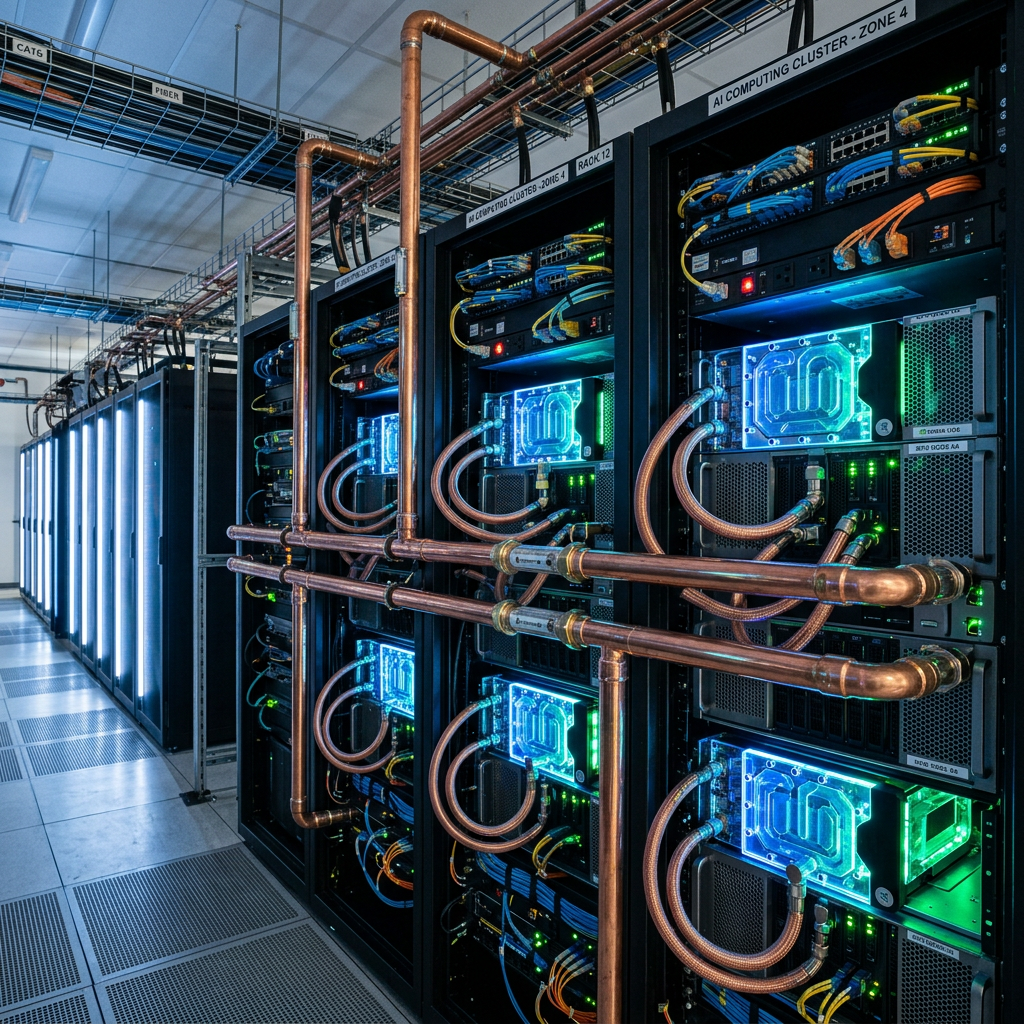
The Plumbing Gets Expensive
TL;DR (39 words): Softer inflation and oil are lifting stocks, AI infrastructure keeps attracting extraordinary capital, crypto is connecting more directly to ordinary money movement, and Pope Leo offers a useful counterpoint to technological acceleration: human life still needs rhythms technology cannot optimize.
1. Softer Producer Inflation Gives Wall Street Another Tailwind
What happened: U.S. stocks pushed higher Thursday, August 13, with the S&P 500 reaching another intraday record. July producer-price inflation came in softer than expected at 4.7%, while Brent crude fell about 2.2%. Technology shares—including Microsoft, Nvidia and Apple—helped lead the advance. (Reuters)
Why it matters: Markets are getting an unusually pleasant combination: inflation isn’t reaccelerating sharply, oil is retreating, employment has softened, and corporate earnings remain solid. That strengthens the case for the Federal Reserve to leave rates alone in September rather than tightening again.
Sources: Reuters — Tech stocks power S&P 500 to record as oil and producer inflation weaken · Reuters — Global stocks rise as oil falls below $90
2. The AI Boom May Be Creating a $100 Billion Data-Center Company
What happened: Vantage Data Centers is exploring an IPO or sale that could value the company at roughly $100 billion, Reuters reported Thursday. Vantage operates hyperscale facilities serving major cloud and AI customers. (Reuters)
Why it matters: This is a wonderful reminder that AI isn’t merely a software boom. It is also an electricity, cooling, land, networking, construction and financing boom. A $100 billion valuation for the buildings where models live tells you something about where investors expect scarcity—and profits—to develop.
Source: Reuters — Vantage Data Centers explores IPO or sale at $100 billion valuation
3. Nvidia Is Turning AI Financing Into Something Resembling Car Loans
What happened: Nvidia CEO Jensen Huang has brought together six major financial institutions, including Goldman Sachs and Apollo, to help finance purchases of Nvidia GPUs and AI infrastructure. Reuters Breakingviews estimates the emerging financing opportunity could eventually approach $500 billion. (Reuters)
Why it matters: Here’s a fascinating maturation signal. Industries become enormous when customers no longer have to buy the expensive thing outright. Cars got auto loans; houses got mortgages; airplanes got aircraft finance. AI compute may now be developing its own capital machinery.
Sources: Reuters Breakingviews — Jensen Huang takes the wheel of a $500 billion AI financing opportunity · Reuters — Nvidia partners with major financial institutions on AI financing
4. The Open-Model Race Is Turning Into a Cost War
What happened: American AI companies are responding to increasingly capable and inexpensive Chinese open-weight models from companies such as Moonshot and Z.ai. Meta has recommitted to open models, while Nvidia is releasing new systems and developing larger ones. Businesses, meanwhile, are increasingly questioning whether every workload really needs an expensive frontier model. (Reuters)
Why it matters: This may be one of AI’s most consequential shifts. Once “good enough” models become cheap, customizable and locally deployable, optimization matters more than raw benchmark supremacy. The next AI advantage may come from using less model, intelligently.
Source: Reuters — American AI model makers see an opportunity in the open-weight race
5. MoneyGram Just Made Crypto-to-Cash Considerably More Ordinary
What happened: MoneyGram has expanded its integration with Solana, allowing wallets and apps on the network to connect with MoneyGram’s global cash network. Users can move between digital assets and local currency through participating locations. (CoinDesk)
Why it matters: This is crypto infrastructure doing something recognizably useful. The blockchain becomes less important to the customer than the ability to move value between a digital wallet and ordinary cash. That’s usually a good sign: mature infrastructure tends to disappear into the experience.
Source: CoinDesk — MoneyGram expands on Solana with global crypto-to-cash service
6. The CLARITY Act Has Momentum—and a Very Narrow Window
What happened: The U.S. Senate has delayed its vote on the CLARITY Act until September. A procedural vote is currently targeted for September 15, requiring 60 votes. Reuters reports significant disagreements remain around stablecoin rewards, anti-money-laundering rules, community-bank protections and restrictions involving government officials’ crypto holdings. (Reuters)
Why it matters: The important update isn’t merely that crypto legislation is advancing. It’s that comprehensive U.S. market-structure legislation is finally close enough that everyone is fighting over the details. Regulatory adulthood apparently comes with paperwork.
Sources: Reuters — Crypto bill faces long odds after Senate punts vote to September · Reuters — Senate advances landmark crypto bill before August recess
7. Pope Leo: Sunday Is Not Merely a Gap in the Productivity Calendar
What happened: At Wednesday’s General Audience, Pope Leo XIV reflected on the liturgical year and described Sunday as its “foundation and kernel.” He encouraged Christians to participate actively in the Eucharist, emphasizing that the Christian calendar repeatedly draws believers into Christ’s saving work rather than simply commemorating historical events. (Vatican News)
Why it matters: There’s a surprisingly useful counterpoint here to today’s AI stories. Technology increasingly promises continuous optimization—always available, always productive, always processing. Christianity deliberately inserts another rhythm: work, worship, rest, return. Human flourishing apparently still contains some scheduled downtime.
Source: Vatican News — Pope Leo: The liturgical year renews Christ’s saving work
What to watch next
- AI financing: Watch whether GPU financing becomes a durable asset class. If compute becomes easier to finance, AI infrastructure spending can expand without customers carrying the entire capital burden upfront. (Reuters)
- Rates and bonds: Softer inflation helps the Fed, but America’s fiscal picture remains uncomfortable: Reuters reports the July federal deficit hit $432 billion, with the 2026 year-to-date deficit reaching $1.8 trillion. Long-term Treasury yields deserve attention even if short-term rate pressure eases. (Reuters)
- Crypto rails: Watch integrations like MoneyGram-Solana rather than token prices alone. Cash-in/cash-out, stablecoins, tokenized deposits and settlement are where blockchain is becoming ordinary financial infrastructure. (CoinDesk)
What this changes
Start measuring AI efficiency, not merely AI capability. The combination of cheaper open models and increasingly expensive infrastructure makes token use, model selection and workflow design economically important. The winning enterprise AI strategy may not be “use the smartest model everywhere,” but use exactly enough intelligence for each task—and no more.