Staying Awake: The Enduring Faith of Saint Monica

Open prayer book, rosary, and candle on a stone table overlooking a village

Memorial of Saint Monica

First Reading: 1 Corinthians 1:1-9

Responsorial Psalm: Psalm 145:2-3, 4-5, 6-7

Gospel: Matthew 24:42-51

Daily readings: https://bible.usccb.org/bible/readings/082726.cfm

Jesus tells his disciples: stay awake. You do not know on which day your Lord will come. The faithful servant is the one found doing his work when the master returns — giving the household their food at the proper time. The unfaithful servant is the one who decides the master is delayed and starts cutting corners, treating people carelessly, living as if no one is watching and nothing matters. The question underneath the parable is simple: what are you doing while you wait?

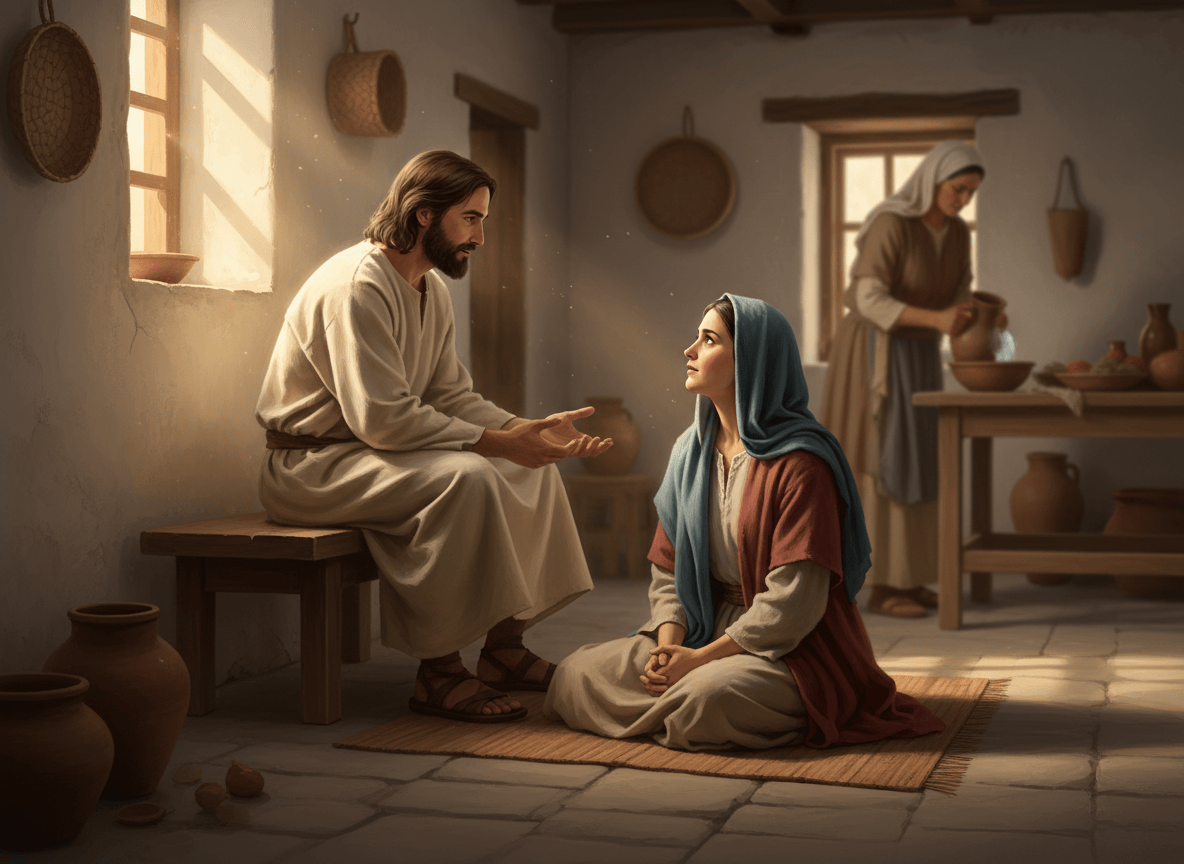
Today the Church remembers Monica, the mother of Augustine — and no one in the history of Christianity has answered that question more quietly or more completely than she did. Monica waited seventeen years for her son’s conversion. She watched him leave the faith, take a mistress, join a heretical sect, pursue worldly ambition through Carthage and Rome and Milan. And she prayed. She wept. A bishop told her: the child of those tears shall never perish. She held on to those words. She did not stop giving the household their food at the proper time. She was found doing exactly that — faithfully, without seeing the end from the middle — when the Lord finally came.

Paul writes to the Corinthians: you are not lacking in any spiritual gift as you wait for the revelation of our Lord Jesus Christ. He will keep you firm to the end. God is faithful, and by him you were called to fellowship with his Son. Monica believed that. She believed it when Augustine was not living it. She believed it when she could not see the evidence. That is what staying awake looks like in real life — not high drama, but faithful presence, patient prayer, love that does not give up on the people we are waiting with.

A few questions to sit with today:

1. What am I doing while I wait — for an answer to a prayer, for someone I love to come around, for something in my own life to change? Am I staying awake and faithful, or have I quietly started to drift?

2. Monica prayed for seventeen years without seeing the fruit. Is there someone in my family or my life I have been praying for — and am I tempted to give up? What would it look like to keep going?

3. The faithful servant gives the household their food at the proper time. What is my household — family, friends, people in my care — and am I giving them what they need from me right now?

4. God is faithful, and by him you were called to fellowship with his Son. Do I actually trust that God is faithful even in the season I am in right now, even without visible evidence?

One small thing for tomorrow:

Think of one person you have been carrying in prayer for a long time — someone whose situation has not changed yet. Tomorrow, say a brief prayer for them by name, and tell God: I am still here. I am not giving up. That is Monica’s prayer. It is enough.

Lord Jesus, Monica stayed awake for seventeen years, giving her household their food at the proper time, faithful in a season that showed her nothing but closed doors. I want to be that kind of faithful — not because I can see the outcome, but because I trust you are working even when I cannot see it. Help me not to drift when the waiting is long. Help me to keep praying for the people I love who have not come home yet. May Saint Monica’s intercession keep me patient, and may your faithfulness carry me to the end. Amen.

If you would like to share: is there someone you have been praying for through a long wait — someone whose story is still unfinished?

Cleaning the Inside First: A Spiritual Reflection

Glowing cup of tea on a wooden coaster beside a candle

Tuesday of the Twenty-first Week in Ordinary Time

First Reading: 2 Thessalonians 2:1-3a, 14-17

Responsorial Psalm: Psalm 96:10, 11-12, 13

Gospel: Matthew 23:23-26

Daily readings: https://bible.usccb.org/bible/readings/082526.cfm

Jesus is still talking to the crowds about the scribes and Pharisees, and today he zeroes in on something specific: the cup. You clean the outside of the cup and the dish, he says, but inside they are full of extortion and self-indulgence. You tithe mint and dill and cumin — the small precise things, the ones that are easy to measure and verify — but you have neglected justice, mercy, and faith. The weightier things. The ones that cost something. He does not say stop tithing the herbs. He says: clean the inside first. Then the outside will be clean too.

Most of us know this tension from the inside. We can manage our appearance — what we post, what we say at Mass, how we come across to people at work or at a family dinner — while carrying something quite different in our interior. Resentment we have not dealt with. A habit we keep quiet. A hardness toward someone that we dress up as principle. It is not hypocrisy in the dramatic sense. It is just the ordinary human gap between the face we show and the life we are actually living inside. Jesus is not condemning that gap with cruelty. He is naming it with clarity, and pointing toward the solution: let me clean the inside.

Paul writes to the Thessalonians: God has loved us and given us everlasting encouragement and good hope through grace. Stand firm. Hold to what you were taught. The good news underneath Jesus’s challenge today is not that we have to fix ourselves before we come to him — it is that he comes to us with love and grace precisely so he can do the cleaning. The Psalm sings it: let the heavens rejoice, let the earth be glad, let the trees of the forest sing for joy. The Lord comes. And when he comes to judge, he comes to the inside first.

A few questions to sit with today:

1. Is there a place in my life right now where I am keeping the outside clean but the inside has gone unattended? A relationship, a habit, an attitude — something I would not want Jesus to look at too closely?

2. Jesus says: you have neglected the weightier things — justice, mercy, faith. Which of those three feels most neglected in my daily life right now?

3. God has loved me and given me everlasting encouragement and good hope through grace. Do I actually believe that about myself today? What makes it hard to receive?

4. Is there a small precise thing I do religiously — a practice, a routine, a rule — that has become more important to me than the relationship with Jesus it was supposed to serve?

One small thing for tomorrow:

Before you start tomorrow, take one quiet minute — not to plan or review or check a phone — and just ask Jesus: what is going on inside me right now that I have not brought to you? Then listen. That is enough.

Lord Jesus, you see the inside of the cup. You see past the face I present and into the places I have not cleaned in a while. I do not want to hide from you. Help me to be less concerned with how I appear and more willing to let you work on the inside — the resentments, the fears, the habits that have quietly taken up space. You loved me before I had any of it sorted out, and you offer encouragement and hope through grace, not through performance. Come and clean what needs cleaning. I trust you with what is inside. Amen.

If you would like to share: is there a small precise practice in your faith life that has helped you keep the inside of the cup clean?

Understanding Nathanael: From Skepticism to Faith

Man in robes sitting beneath a fig tree in a rural landscape

Feast of Saint Bartholomew, Apostle

First Reading: Revelation 21:9b-14

Responsorial Psalm: Psalm 145:10-11, 12-13, 17-18

Gospel: John 1:45-51

Daily readings: https://bible.usccb.org/bible/readings/082426.cfm

Philip finds his friend Nathanael — the man we celebrate today as Saint Bartholomew — and tells him they have found the one Moses and the prophets wrote about. Jesus of Nazareth. And Nathanael, being an honest man, says what he thinks: Can anything good come from Nazareth? It is not a hostile question. It is a real one. He is not pretending. Philip does not argue with him. He just says: come and see. And that is enough. Nathanael comes.

Jesus sees him walking over and says something remarkable before Nathanael has said a word. Here is a true child of Israel. There is no duplicity in him. Nathanael is startled. How do you know me? And Jesus answers: before Philip called you, I saw you under the fig tree. Something in that lands. Not an explanation, not a proof — just the fact that Jesus saw him before he came, before he said a word, before he made any decision. Nathanael answers the only way he can: Rabbi, you are the Son of God; you are the King of Israel. His skepticism dissolved not by argument but by being known. Jesus tells him: you will see greater things than this.

Bartholomew went on to see them. Tradition says he carried the Gospel to India, to Armenia, through Mesopotamia and Parthia. He gave his whole life — and at the end, in Armenia, tradition says he gave his body too, martyred for the faith he received the afternoon Philip brought him to see. He had gone from Can anything good come from Nazareth to the ends of the earth, because one day Jesus saw him under a tree and called him by name. Today’s first reading gives us the vision he spent his life moving toward: the holy city Jerusalem coming down out of heaven, its foundation walls inscribed with the names of the twelve apostles of the Lamb. His name is there.

A few questions to sit with today:

1. Philip said “come and see” — no long argument, just an invitation. Is there someone in my life who might need a simple invitation from me rather than a persuasive case? What is one small “come and see” I could offer?

2. Jesus said to Nathanael: there is no duplicity in you. If Jesus said something like that about me today — naming the thing he sees as true in me — what do I think he would say? Can I sit with that without dismissing it?

3. Nathanael’s doubt was honest, not hostile. Are there honest doubts or questions I have been carrying about my faith that I have not brought to Jesus yet? What would it look like to bring them, the way Nathanael did?

4. Jesus saw Bartholomew before he arrived. Is there a place in my life right now where I feel unseen — at work, at home, in my own prayer — and need to hear that Jesus already sees me there?

One small thing for tomorrow:

Think of one person in your life who might be on the outside of faith — skeptical, indifferent, or just distant. Tomorrow, say one word of gentle invitation to them. Not a sermon. Just a “come and see.”

Lord Jesus, you saw Bartholomew under the fig tree before he even knew your name. You see me now, in whatever ordinary place I am sitting, with whatever doubts or questions I am carrying. Thank you for not waiting until I have it all figured out before you call me by name. Make me more like Bartholomew — honest enough to ask real questions, and open enough to come when someone says come and see. May his example give me courage to carry your name into places that seem unlikely, without knowing where the road leads, trusting that you already see me there. Amen.

If you would like to share: is there a doubt or question about faith you once had that Jesus met in an unexpected way?

Who Do You Say Jesus Is? A Reflection

Antique keys and wooden staff on a stone ledge above ancient ruins

Twenty-first Sunday in Ordinary Time

First Reading: Isaiah 22:19-23

Responsorial Psalm: Psalm 138:1-2, 2-3, 6, 8

Second Reading: Romans 11:33-36

Gospel: Matthew 16:13-20

Daily readings: https://bible.usccb.org/bible/readings/082326.cfm

Jesus is in the region of Caesarea Philippi, far from Jerusalem, and he asks his disciples a question. Who do people say that the Son of Man is? They give the crowd’s answers: John the Baptist, Elijah, Jeremiah, one of the prophets. Good answers. Respectful answers. The kind of answer you give when you have observed something from a safe distance and formed an opinion. Then Jesus asks the question that changes everything. But who do you say that I am? That single word — you — shifts the whole weight of the conversation. Not what they are saying. What do you say? What have you, who have been with me, who have eaten at my table, who have watched me in the storms, who have heard me at night in prayer — what have you concluded?

Peter answers. You are the Christ, the Son of the living God. And Jesus responds in a way he rarely does — with blessing. Blessed are you, Simon son of Jonah. He does not just accept the confession; he marvels at it. Because flesh and blood has not revealed this to you. Peter did not think his way there. The Father showed him. The knowing of Jesus is always, underneath everything, a gift. It is received before it is declared. And Jesus builds on it anyway — this impulsive, sometimes-failing fisherman becomes the rock, receives the keys, is fixed like a peg in a sure spot.

Paul writes in Romans: oh, the depth of the riches and wisdom and knowledge of God. How inscrutable his judgments, how unsearchable his ways. Who has known the mind of the Lord? No one. And yet here is Peter, a fisherman, confessing the Son of the living God because the Father chose to show him. This is how the Church is built — not on the brightest minds or the most accomplished people, but on the ones to whom the Father reveals his Son. On ordinary people who, in one graced moment, see clearly and say what they see.

A few questions to sit with today:

1. Jesus asks: but who do you say that I am? If I had to answer that question honestly today — not the Sunday school answer, but what I actually believe in my gut — what would I say?

2. Peter’s confession was a gift, not an achievement. Is there a moment in my own life when I knew something about Jesus that I could not have figured out on my own? When the Father just showed me?

3. Jesus called Peter a rock even knowing Peter would deny him three times. Is there a way I have been disqualifying myself from being useful to God because of my failures? What would it mean to let him fix me like a peg in a sure spot anyway?

4. Paul says: from him and through him and for him are all things. Is there a corner of my life that I have not yet handed over to that — that I am still running for myself rather than for him?

One small thing for tomorrow:

At some point tomorrow, ask Jesus the question Peter answered — not out loud, but in your heart. Who do I say you are? Sit with whatever comes. You do not have to have a polished answer. Just be honest with him about where you are.

Lord Jesus, you asked the question that matters most: who do I say you are? I want to answer it honestly, from the inside out, not just from habit or formula. Help me to know you the way Peter knew you — not because I figured it out, but because the Father showed me. Build something on whatever rock I have to offer, even if it is small and unsteady. Your love is eternal; do not forsake the work of your hands. From you and through you and for you are all things, including me. Amen.

If you would like to share: who do you say Jesus is — in your own words, from your own experience?

Saint Pius X and the Promise of New Life in Faith

Flower-lined stone path through a village at sunset

Memorial of Saint Pius X, Pope

First Reading: Ezekiel 37:1-14

Responsorial Psalm: Psalm 107:2-3, 4-5, 6-7, 8-9

Gospel: Matthew 22:34-40

Daily readings: https://bible.usccb.org/bible/readings/082126.cfm

Ezekiel is set down in the middle of a valley filled with dry bones. Not recently dead — these bones are very dry. All hope of life long past. God asks him: son of man, can these bones come to life? And Ezekiel gives the only honest answer possible: Lord, you alone know that. Then God tells him to prophesy over them. To speak to the bones. And as he speaks, there is a noise, a rattling, and the bones come together, bone joining bone, sinews and flesh and skin assembling — but there is no breath in them yet. Then God says: prophesy to the spirit. Come from the four winds, O spirit, and breathe into these slain. And the breath came into them, and they stood upright. A vast army.

God tells Ezekiel what this means: these bones are the whole house of Israel. They have been saying: our bones are dried up, our hope is lost, we are cut off. But God has not finished with them. I will open your graves and have you rise from them. I will put my spirit in you that you may live. The reading is about a nation, but it speaks to every person who has ever looked at some area of their life — a marriage, a faith, a hope they carried for years — and thought: that is gone. Too dry. Too long dead. Can these bones come to life? Lord, you alone know that. And God says: I have promised, and I will do it.

Today is the memorial of Saint Pius X, who became pope in 1903 and saw his own version of a valley of dry bones — a Church that needed renewal, children cut off from the Eucharist until they were twelve or older, a world he watched slide toward the war that would kill him with grief. He lowered the age for First Communion to seven, walked the streets of Rome with candy in his pockets to teach catechism to children, and lived his whole life by one sentence he left in his will: I was born poor, I have lived in poverty, and I wish to die poor. His motto was: restore all things in Christ. The Gospel today is how he understood that restoration: you shall love the Lord your God with all your heart, soul, and mind — and you shall love your neighbor as yourself. That is what a valley of dry bones looks like when it finally stands up.

A few questions to sit with tonight:

1. Is there an area of my life — a relationship, a hope, a part of my faith — that feels like dry bones right now? Can I bring it to God tonight and say: Lord, you alone know if these can come to life?

2. God told Ezekiel to prophesy — to speak to the dry bones. Is there someone in my life who needs someone to speak life into them today? What would that look like from me?

3. Jesus says the whole law and the prophets depend on love of God and love of neighbor. When I look at my actual week — how I spent my time and attention — does it reflect those two things?

4. Pius X chose to stay poor his whole life, even as pope. Is there any area where I am letting my comfort or my possessions limit how much I love my neighbor?

One small thing for tomorrow:

Think of one person in your life who might be in a valley of dry bones right now — discouraged, depleted, feeling cut off. Send them one message tomorrow. Not advice. Just: I was thinking of you. That is the breath.

Lord Jesus, you are the one who breathes life into dry places. There are parts of my life I have given up on, places I have stopped praying over because they seemed too far gone. Help me to trust that you have not stopped. Give me the courage to prophesy — to speak faith into the dry bones in my own life and in the lives of the people around me. May Saint Pius X’s prayer be mine today: restore all things in Christ. Beginning with me. Amen.

If you’d like to share: is there something in your life that felt like dry bones for a long time, and then — somehow — came back to life?

Saint Bernard’s Teachings on Love and Heart Transformation

An anatomical heart fused with a weathered stone sculpture on a workbench

Memorial of Saint Bernard, Abbot and Doctor of the Church

First Reading: Ezekiel 36:23-28

Responsorial Psalm: Psalm 51:12-13, 14-15, 18-19

Gospel: Matthew 22:1-14

Daily readings: https://bible.usccb.org/bible/readings/082026.cfm

God says through Ezekiel: I will give you a new heart and place a new spirit within you, taking from your bodies your stony hearts and giving you natural hearts. That is not a demand — it is a promise. God is not telling the people to work harder at having better hearts. He is saying that he will do this himself. I will sprinkle clean water upon you. I will put my spirit within you. The transformation is his work. The Psalm today is Psalm 51 — Create in me a clean heart, O God — which is the human side of the same prayer, the soul asking for what Ezekiel says God has already promised to do.

Then the Gospel gives us the wedding banquet. A king throws a great feast for his son, sends servants to invite the guests, and they refuse to come. He sends again — everything is ready, come — and some ignore it, go back to their farms and businesses, and some turn violent. So the king opens the doors to everyone: go out into the streets and invite whoever you find. Bad and good alike. The hall is filled. But when the king enters, he sees one man without a wedding garment. He does not dress up in the costume of the feast but shows up unchanged, as he was in the streets. And this costs him everything.

Today is the memorial of Saint Bernard of Clairvaux, the twelfth-century monk who said that the measure of love is love without measure, and who wrote that what we love, we shall grow to resemble. That is the wedding garment. It is not a set of rules you follow at the door — it is what happens to you when you have stayed long enough at the feast, let the host’s love actually enter you, and found yourself slowly becoming someone different. Everyone is invited. Bad and good alike. But the invitation is also a transformation, not just a ticket.

A few questions to sit with tonight:

1. God promises through Ezekiel to replace my stony heart with a natural one. Is there a part of my heart that still feels stony — closed off, hard, not moving? Can I bring that to God tonight and ask him to work on it?

2. The man without the wedding garment came to the feast but stayed unchanged. Am I showing up to my faith life — Mass, prayer, this daily reflection — but remaining mostly unchanged? What would it look like to let it actually transform something?

3. Bernard said: what we love, we shall grow to resemble. What am I actually spending my time loving — what am I becoming because of it?

4. Psalm 51 asks: create in me a clean heart. What is one area of my heart that I know needs cleaning, but I have been avoiding handing over to God?

One small thing for tomorrow:

Pray Psalm 51:12 slowly, once, first thing in the morning before you pick up your phone: Create in me a clean heart, O God, and renew a steadfast spirit within me. That is the whole prayer. Let it go before you into the day.

Lord Jesus, you invite everyone to the feast — bad and good alike — and you do not wait until we are worthy to come in. But you do ask us to be changed by the feast, not just attended it. Help me to let your love do its work on me. Take the stony parts of my heart and soften them. Give me the spirit within that Ezekiel promises — the one that makes me live, not out of obligation, but out of love. May Saint Bernard’s words be true for me today: let the measure of my love for you be no measure at all. Amen.

If you’d like to share: is there a part of your heart that you feel God slowly softening over the years — something that used to be hard that is not quite as hard anymore?

Finding God in the Eleventh Hour

Workers harvesting grapes in a sunlit vineyard near a Tuscan village

Wednesday of the Twentieth Week in Ordinary Time

Optional Memorial of Saint John Eudes, Priest

First Reading: Ezekiel 34:1-11

Responsorial Psalm: Psalm 23:1-3a, 3b-4, 5, 6

Gospel: Matthew 20:1-16

Daily readings: https://bible.usccb.org/bible/readings/081926.cfm

God speaks through Ezekiel in one of the most direct indictments in the Old Testament. Woe to the shepherds who have been pasturing themselves. You fed off the milk and wore the wool but did not pasture the sheep. You did not strengthen the weak or heal the sick or bind up the injured. You did not bring back the strayed or seek the lost. And so they were scattered, wandering over all the mountains and high hills, with no one to look after them. And then God turns the oracle on its own axis: Therefore I myself will look after and tend my sheep. The people who had been abandoned by the ones supposed to care for them will be cared for by God directly. That promise becomes Psalm 23 — the most beloved psalm in Scripture, the one people reach for at bedsides and gravesites and in the middle of the night. The Lord is my shepherd. I shall not want.

The Gospel takes that same God and shows us how he works. A landowner goes out at dawn and hires workers. Then goes out again at nine. Again at noon. Again at three. And then at five o’clock — the eleventh hour, when the workday is nearly done — he finds more people standing idle in the marketplace. Why have you been standing here idle all day? Because no one has hired us. And he says: you go into my vineyard too. At the end of the day he pays everyone the same full wage, starting with the last. The ones who worked all day grumble. And the landowner says something that stops you cold: Are you envious because I am generous?

That is the question that lands on an ordinary Wednesday. Not just about the parable — about today. About the colleague who seems to get credit without the effort. The person in line who gets served first. The family member who wandered far and came back and got the celebration. Something in us keeps very careful accounts. And God says: I am not cheating you. But I am also free to be generous with others. Can you let me be?

A few questions to sit with tonight:

1. God says through Ezekiel: I myself will look after and tend my sheep. Is there a place in my life where I have been trying to be my own shepherd — managing everything myself — instead of letting God do that?

2. The landowner kept going out all day looking for workers no one else had hired. Has God found me at an unlikely hour — an unexpected moment of grace? When?

3. Am I envious because God is generous with someone else? Is there a person in my life whose good fortune I find hard to celebrate?

4. The psalm says: even though I walk in the dark valley, I fear no evil, for you are at my side. Is there a dark valley I am walking through right now? Have I told God about it honestly?

One small thing for tomorrow:

The next time you feel the sting of someone else’s good fortune — a promotion, recognition, a relationship, anything — pause before the reaction hardens. Say quietly: God is generous. Let him be generous with me too.

Lord Jesus, you are the Good Shepherd Ezekiel promised — the one who comes after the lost ones personally, who binds up the injured, who does not lord it over the flock but lays down his life for it. I have been that lost sheep more times than I can count. And you went looking. Help me to trust your generosity instead of measuring it against what others receive. Help me to walk through the dark valley without pretending it is not dark — but also without forgetting you are at my side. I want to live in the house of the Lord a long, long time. Amen.

If you’d like to share: has there been a moment when God found you at the eleventh hour — when you felt it was almost too late but he showed up anyway?

Lessons from the Rich Young Man: What Are You Holding Onto?

Mountain trail at sunset with coins, jewelry, goblet, and jeweled dagger

Monday of the Twentieth Week in Ordinary Time

First Reading: Ezekiel 24:15-23

Responsorial Psalm: Deuteronomy 32:18-19, 20, 21

Gospel: Matthew 19:16-22

Daily readings: https://bible.usccb.org/bible/readings/081726.cfm

The rich young man is not a villain. That is what makes this Gospel so hard to sit with. He came to Jesus — that already says something. He ran up and knelt, according to the other Gospel accounts. He was earnest. He asked the right question: what good must I do to gain eternal life? And when Jesus listed the commandments, he said with what sounds like genuine honesty: all of these I have observed. What do I still lack? He wanted more. He was not satisfied. And Jesus, looking at him, loved him — Mark’s version says that plainly. And then Jesus named the one thing. And the young man went away sad, because he had many possessions.

He did not argue. He did not get angry. He did not try to negotiate. He just went away sad. And there is something very familiar about that. Most of us do not walk away from Jesus in defiance. We walk away slowly, sadly, not quite ready to let go of the thing we are holding. We come back to the edge of the conversation and drift away again. The possessions do not have to be money — they can be control, comfort, a grudge we have carried so long it has become part of our identity, a habit we know is not helping us but feels like ours. Jesus names the one thing and we go quiet.

Ezekiel’s reading today is strange and severe — God tells him his wife is about to die and he is not to mourn publicly. He is to be a living sign to a people who are about to lose everything and will be too stunned to grieve. What holds us together, says God, is something other than the things we thought were keeping us safe. Ezekiel lost the delight of his eyes and kept walking. The rich young man could not put down his possessions. We are usually somewhere between the two.

A few questions to sit with tonight:

1. Jesus looked at the young man and loved him — and still let him walk away. Is there something Jesus is asking of me that I have been walking away from, not with anger, but just with sadness and not yet?

2. What is my version of many possessions — the thing I hold onto that makes Jesus’ invitation feel like it costs too much?

3. The young man asked: what do I still lack? Am I willing to ask that question honestly? What might Jesus name if I did?

4. Ezekiel lost the delight of his eyes and did not stop. Is there something I have lost, or am afraid to lose, that I have not yet brought to God?

One small thing for tomorrow:

Sit for a few minutes and ask Jesus quietly: what is the one thing I still lack? Do not rush to answer. Let the question sit. You do not have to resolve it — just be willing to hear it.

Lord Jesus, you loved that young man and let him go. You do not force the one thing from our hands. You name it and wait. I know there are things I am holding that keep me from following you more freely — habits, comforts, fears disguised as good sense. I do not always know what they are until you name them. Give me the courage not to walk away when you do. Help me to trust that what you offer in exchange is better than what I am carrying. And when I drift toward the door, call me back — not with judgment, but with the same love you showed him. Amen.

If you’d like to share: what is something you have gradually let go of that turned out to cost less than you feared?

Forgiveness Lessons from Saints Pontian and Hippolytus

Broken chain exploding with sparks above ocean water at dusk

Thursday of the Nineteenth Week in Ordinary Time

Optional Memorial of Saints Pontian, Pope and Martyr, and Hippolytus, Priest and Martyr

First Reading: Ezekiel 12:1-12

Responsorial Psalm: Psalm 78:56-57, 58-59, 61-62

Gospel: Matthew 18:21 — 19:1

Daily readings: https://bible.usccb.org/bible/readings/081326.cfm

God tells Ezekiel to perform a pantomime in front of the whole city. Pack your bags in the middle of the day while everyone watches. At evening, dig through the wall with your hands and crawl through it in the dark, shouldering your burden, covering your face. When people ask what you are doing, tell them: this is a sign. This is what it looks like to be carried into exile. They have eyes to see but do not see. So God gives them a picture so simple and so strange that they cannot look away. He makes Ezekiel into a walking parable.

Peter asks the question that every human being eventually asks about forgiveness: how many times is enough? Seven times, Lord? That is already generous. Jesus says no — seventy-seven times. And then he tells a story. A servant owes his king an amount so enormous it would take a thousand lifetimes to repay. He begs for patience. The king, moved with compassion, forgives the entire debt — wipes it clean, cancels it, lets him go. The servant walks out the door. And immediately grabs a fellow servant by the throat over a debt that is, by comparison, pocket change. That servant begs in exactly the same words: be patient with me, I will pay you back. The first servant refuses. He has already forgotten what just happened to him.

Today the Church also remembers Saints Pontian and Hippolytus — two men who were fierce enemies. Hippolytus had set himself up as an antipope against Pontian, a genuine schism in the early Church. Then the Roman emperor Maximinus exiled them both to the Sardinian mines, where the conditions were so brutal few survived long. In that darkness, shouldering their burden the way Ezekiel described, the two enemies reconciled. They became brothers. Both died as martyrs. They share the same feast day because they share the same ending: forgiveness given, not as a theory, but in the dark of a mine shaft, when there was nothing left to hold on to except each other and Christ.

A few questions to sit with today:

1. The unforgiving servant had just been freed from a debt he could never repay — and walked out and forgot it. Is there a forgiveness I have received — from God, from someone I love — that I have not let change how I treat others?

2. Jesus says forgive from your heart — not just from your behavior, not just from your words. Is there a person I have “forgiven” outwardly but am still holding the debt against inwardly? What would it mean to release it all the way down?

3. Pontian and Hippolytus reconciled in a mine shaft when they had nothing left to protect. Is there a relationship in my life where pride or self-protection has been keeping me from reconciling? What would it take to lay that down?

4. Ezekiel’s people had eyes but could not see. Is there something God has been trying to show me — through circumstances, through other people, through a feeling I keep pushing away — that I have not yet looked at directly?

One small thing for tomorrow:

Think of one person you are carrying some grievance or distance toward — something small or something large — and pray the Lord’s Prayer slowly, paying attention to the line: “forgive us our trespasses as we forgive those who trespass against us.” Let that line land where it needs to.

Lord Jesus, you told Peter seventy-seven times, and I think you knew he would need it, because I need it. I have been forgiven more than I can calculate, and I still find myself gripping small debts like they matter. Help me to see what the unforgiving servant could not see — that the freedom you gave me is supposed to flow through me, not stop with me. And when forgiveness feels impossible, remind me of Pontian and Hippolytus: enemies who reconciled in a mine shaft, who found in the darkness that there was only one thing left — you. Help me to find you in those places too. May they pray for me. Amen.

If you’d like to share: is there someone you have been carrying a grievance toward that you sense God is asking you to release — and what has been making that hard?

Saint Clare of Assisi: Lessons in Faith and Simplicity

Garden courtyard with blooming white lilies, stone pathways, and illuminated arched windows in an old monastery

Memorial of Saint Clare of Assisi, Virgin

First Reading: Ezekiel 2:8 — 3:4

Responsorial Psalm: Psalm 119:14, 24, 72, 103, 111, 131

Gospel: Matthew 18:1-5, 10, 12-14

Daily readings: https://bible.usccb.org/bible/readings/081126.cfm

God reaches out a hand to Ezekiel and gives him a scroll to eat. Eat what is before you, he says. Feed your belly and fill your stomach with this scroll. Ezekiel eats it — and it is as sweet as honey in his mouth. Then go, God says. Go speak my words to them. This is not the usual order. Usually we learn, then act, then integrate over years. God says: take it in first. Let it be food. Let it be sweet. And then go.

The Psalm picks up the same thread and runs it all the way through: your decrees are my delight, my counselors. Your instructions are my heritage. Your words are sweeter than honey to my mouth. This is not a person who reads Scripture as obligation. This is a person who has tasted something and cannot stop going back to the source.

Then Jesus places a child in the middle of the room. The disciples had been asking who is the greatest in the Kingdom — a very adult question, about rank and recognition. Jesus does not answer it directly. He shows them. A child cannot strategize her way to greatness. A child cannot impress her way in. A child just comes. Open hands. No agenda. Trusting that what is needed will be given. “Unless you turn and become like children, you will not enter the Kingdom of heaven.” And then the shepherd who leaves the ninety-nine to find the one lost sheep — because not one of these little ones is to be lost. They matter that much. You matter that much.

Today is the memorial of Saint Clare of Assisi, who heard Francis preach when she was seventeen and recognized something she had been hungry for her entire life. She left her family’s palace in the middle of the night at eighteen, knelt before Francis, and let him cut her hair. She founded the Poor Clares on an almost audacious simplicity: own nothing, control nothing, trust everything to Providence. When the pope himself tried to soften her rule of poverty, Clare replied: “I need to be absolved from my sins. But I do not wish to be absolved from the obligation of following Jesus Christ.” A child’s answer. Completely direct. No negotiation with the world.

She also left this counsel on contemplation: “Gaze upon Him, consider Him, contemplate Him — as you desire to imitate Him.” Not just read about him. Gaze.

A few questions to sit with tonight:

1. Ezekiel was told to eat the scroll — to take God’s word inside, not just process it. Is there a passage of Scripture, a prayer, a phrase that has been following me lately that I have not yet let become food? What would it mean to eat it?

2. Jesus says become like a child. What part of my approach to God is still too adult — too strategic, too performance-oriented, too careful about how I look? What would it feel like to just come?

3. Clare said: I do not wish to be absolved from the obligation of following Jesus Christ. Is there an obligation I have been quietly trying to get out of — a call, a commitment, a truth I have been softening?

4. The shepherd leaves the ninety-nine to find the one. Do I actually believe I am the one he would leave them for? What would change in my day if I did?

One small thing for tomorrow:

Take one line of Scripture — any line, even just “Do not be afraid” — and carry it through the day. Say it to yourself in traffic, before a hard conversation, at lunch. Let it be food, not just information.

Lord Jesus, you placed a child in the middle of the room and said this is greatness. Clare heard that and spent forty-one years living it — no possessions, no security, just open hands before you. I want to come to you more like that. Help me to eat your word the way Ezekiel ate the scroll — all the way down, until it is sweet, until it is food, until it changes how I move through my day. And when I lose my way, go looking for me the way the shepherd goes looking for the one — because you said not one of these little ones is to be lost, and I want to believe that means me. May Saint Clare pray for me as I learn, slowly, to gaze. Amen.

If you’d like to share: what word or phrase from Scripture has been following you lately — and have you let it become food yet?