Clearing the Thorns: Saturday Reflection Before Sunday Mass

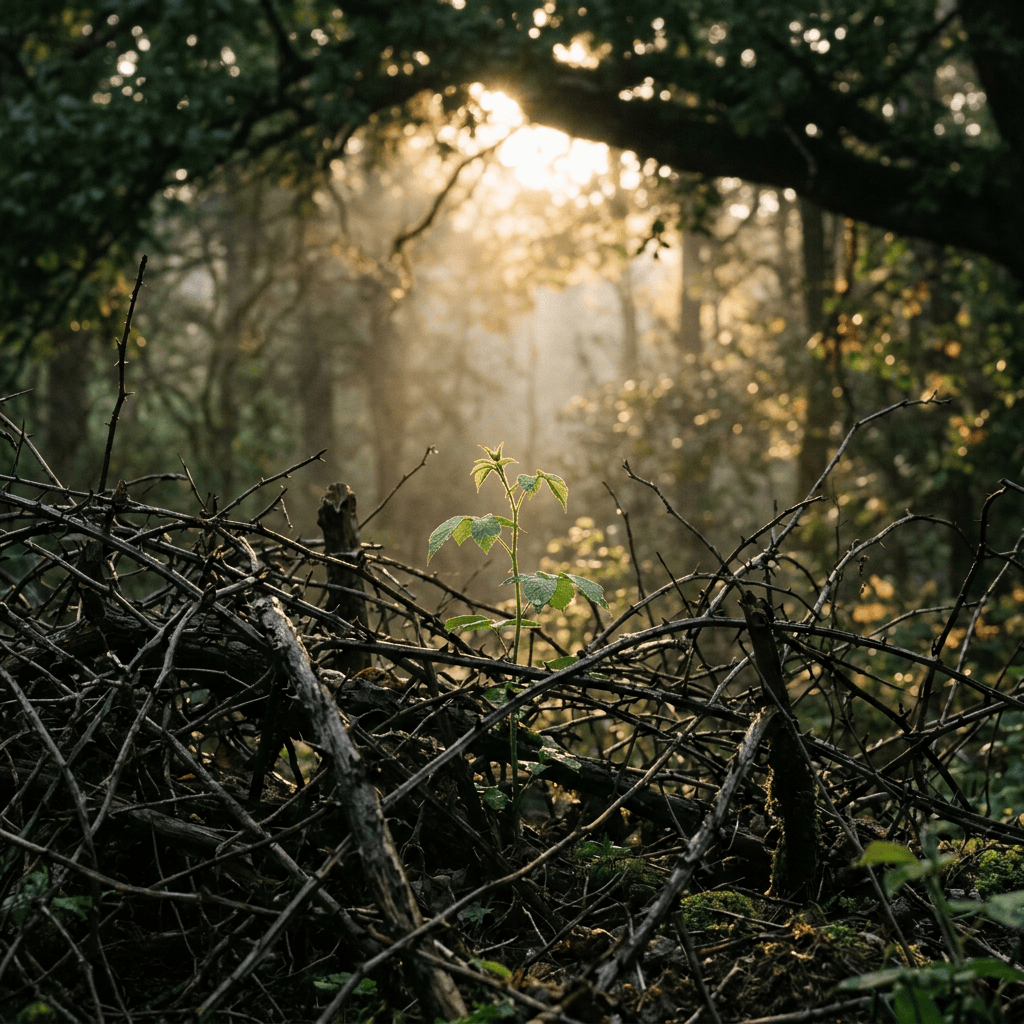
Young green plant growing among tangled branches in a sunlit forest

Saturday of the Twenty-fourth Week in Ordinary Time

First Reading: 1 Corinthians 15:35-37, 42-49

Responsorial Psalm: Psalm 56:10c-12, 13-14

Gospel: Luke 8:4-15

Daily readings: https://bible.usccb.org/bible/readings/091926.cfm

The sower goes out and scatters seed everywhere — on the path, on rocky ground, among thorns, on good soil. The same seed. The same sower. Wildly different outcomes, and Jesus explains exactly why. The path: the word is taken before it can take root. The rocky ground: received with joy, but no depth — it falls away under pressure. The thorns: choked by the anxieties and riches and pleasures of life, and it never matures. The good soil: those who hear the word, embrace it with a generous and good heart, and bear fruit through perseverance. Four kinds of soil, and only one produces anything. The seed does not change. The question is always the condition of the ground.

The thorns are the one that most of us live closest to. Not attacked. Not dramatically fallen. Just slowly choked. The word is real. The faith is genuine. But the anxieties of work pile up, the calendar fills, the screens take the silence, and weeks go by without the word having any room to breathe. It does not fail dramatically — it just never quite matures. Paul’s image from the first reading sits underneath all of this: what you sow is not brought to life unless it dies. The kernel has to go into the ground. There has to be space — quiet, surrender, waiting — for something to grow.

Today is Saturday, the day before Sunday, the day before resurrection. It is a day for preparing the soil. Good soil is not accidental. It is made through the small choices of the week: the prayer that happened even briefly, the Scripture read even a few verses, the moment of quiet before the phone was picked up. None of those feel dramatic. But they are the tilling. And Paul reminds us what is being prepared for: sown weak, raised powerful. Sown dishonorable, raised glorious. We shall bear the image of the heavenly one. That is what the word, given room, is working toward.

A few questions to sit with today:

1. Which of the four soils do I most recognize in my life right now — the path, the rocky ground, the thorns, or the good soil? Is that hard to look at honestly?

2. Jesus names anxieties and riches and pleasures of life as the thorns that choke the word. Which of those is most active in my life right now? What is crowding out the silence?

3. The good soil embraces the word with a generous and good heart and bears fruit through perseverance — not brilliance, not intensity, just perseverance. Where am I being asked to simply keep going?

4. Paul says we shall bear the image of the heavenly one. What would it mean to live today, this Saturday, with that destination in view?

One small thing for tomorrow:

Before Mass or your Sunday prayer, take two minutes to read one short passage from Scripture. Let it be the seed going into prepared ground before the day begins.

Lord Jesus, you scatter the word generously, without counting the soil. You do not wait for perfect conditions. Help me to do the work of the good soil — to clear out some of the thorns, to let the word have a little more room this week. I know which thorns are choking things in my life. I need your help to pull them, not just name them. Prepare me for Sunday. Prepare me for the life that is coming. Amen.

If you would like to share: which thorns have been crowding out the word in your life lately — and what would it look like to clear a little space?

Fifteenth Sunday Reflections: The Parable of the Sower

Seedling sprouting from soil with seed coat still attached
Fifteenth Sunday in Ordinary Time

First Reading: Isaiah 55:10-11
Responsorial Psalm: Psalm 65:10, 11, 12-13, 14
Second Reading: Romans 8:18-23
Gospel: Matthew 13:1-23
Daily readings: https://bible.usccb.org/bible/readings/071226.cfm

Isaiah opens with one of the most quietly confident images in Scripture. Rain and snow fall from the sky. They do not go back until they have done their work — watered the earth, made it fertile, given seed to the sower and bread to the one who eats. And then: so shall my word be. It goes out from God's mouth. It does not return void. It does what he sent it to do. The word of God is not fragile. It is patient and certain and productive in ways we often do not see or measure.

Paul fills that out in Romans. Creation is groaning, waiting, straining forward like a woman in labor — not in despair, but in hope. The sufferings of this present time are real. But they are not the final word. Creation itself is waiting for the children of God to be revealed. We too groan, even with the firstfruits of the Spirit already in us, waiting for the full redemption of our bodies. It is a strange kind of hope — held in the groaning, not in spite of it.

Then Jesus tells the parable of the sower. The same seed. Four kinds of soil. Path — the word never gets in. Rocky ground — it gets in but has no roots and scorches when heat comes. Thorns — it gets in but worldly anxiety and the lure of riches choke it before it bears fruit. And rich soil — it gets in, takes root, and yields a hundredfold. The question the parable asks is not whether the seed is good. Isaiah already answered that: the word of God does not return void. The question is about the soil. What kind of ground am I?

On a Sunday, walking into Mass, that is a good question to carry in. The word will go out. It will do what God sent it to do. The only variable is whether I am listening, rooted, and uncluttered enough to let it take.


A few questions to sit with today:

1. Which soil do I most recognize in myself right now — the path, the rocky ground, the thorns, or the rich soil? What is making me that kind of ground at this moment in my life?

2. Is there a word God has been speaking to me — in Scripture, in prayer, in the readings at Mass — that worldly anxiety or the pull of other things has been slowly choking? What are the thorns?

3. Paul says creation is groaning in hope. Is there a place in my life where I am groaning — where the waiting is real and hard — and have I brought that groaning honestly before God as a form of hope rather than defeat?

4. "Blessed are your eyes, because they see, and your ears, because they hear." Do I take that seriously — that I have access to something prophets and righteous people longed to see? Does my prayer life reflect that privilege?


One small thing for tomorrow:

Before you open your phone tomorrow morning, read one short passage of Scripture — even just the two verses of today's First Reading (Isaiah 55:10-11). Let the word go in before the noise starts. That is the whole practice. Good soil starts with actually receiving the seed.


Lord Jesus, your word does not return to you void. It goes out, it waters, it makes things grow in ways I cannot always see or measure. Help me to be good soil today. Help me to pull out the thorns — the anxieties, the lures, the noise — that keep your word from taking root and bearing fruit. And where I am groaning, Lord, help me to trust that the groaning itself is part of a movement toward something. Creation is straining forward. I want to strain forward with it, waiting in hope for what you have promised. Thank you for this Sunday, this word, this Mass. May Mary, who kept your word and let it bear fruit in her, teach me the same receptivity. Amen.


If you'd like to share: which soil do you most recognize in yourself right now — and what do you think is making you that kind of ground?