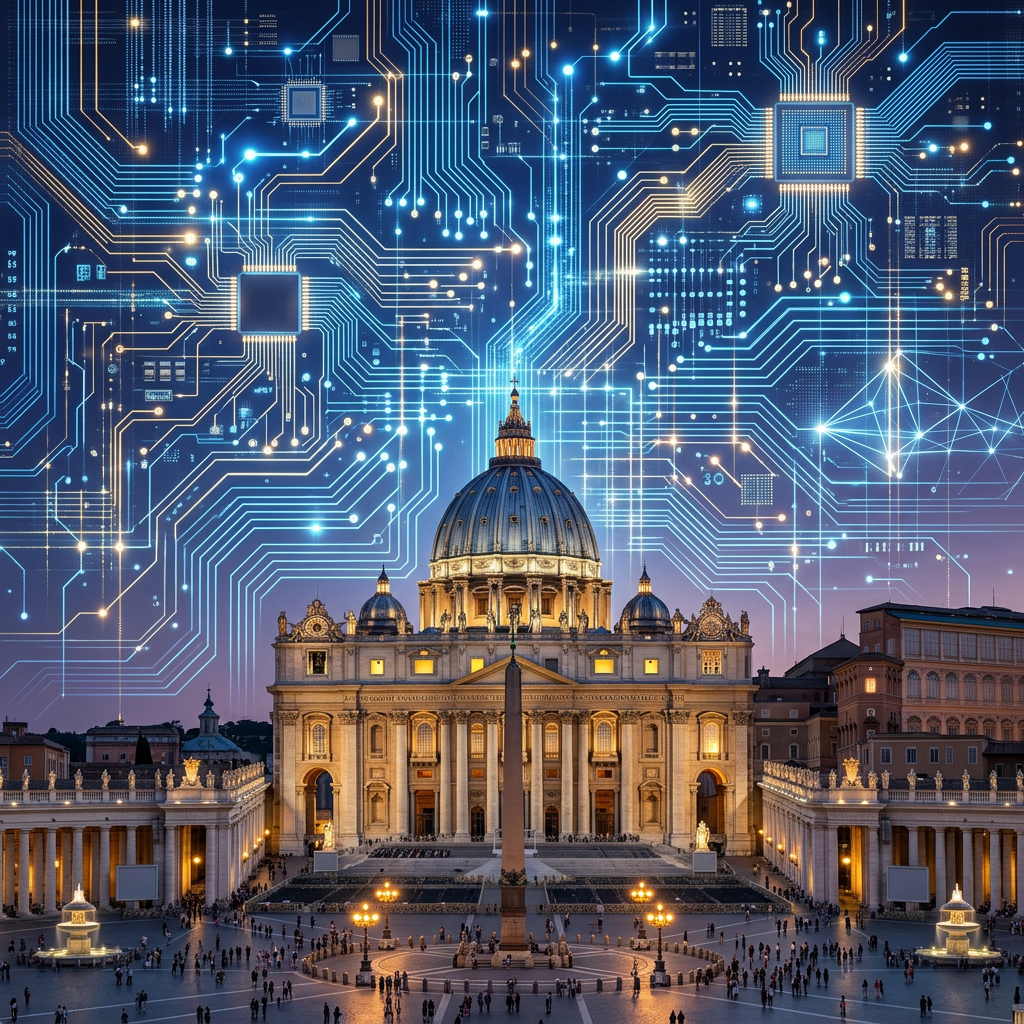
Morning Brief — The Ethics Premium
TL;DR (38 words): AI’s next competitive edge may be trust rather than intelligence. Markets are still funding infrastructure, crypto continues its institutional transition, and Catholic leaders are sharpening the case that governance—not just innovation—will shape the next decade.
1. A Philosopher Explains Why She Turned Down Anthropic
What happened: Philosopher and theologian Carmody Grey declined an invitation to collaborate with Anthropic, arguing that AI companies risk treating the humanities as a branding exercise rather than engaging seriously with questions of power, human agency, and social impact. She praised Pope Leo XIV’s Magnifica Humanitas for shifting the discussion away from AI itself and back toward the dignity and purpose of human beings. (Financial Times)
Why it matters: As AI matures, credibility may depend less on model benchmarks and more on whether companies demonstrate genuine accountability. The ethics conversation is becoming harder to outsource.
Source:
2. The Holy See Pushes for Robust AI Governance
What happened: At the UN’s first Global Dialogue on AI Governance, Archbishop Ettore Balestrero, the Holy See’s Permanent Observer in Geneva, argued that AI requires robust governance to ensure it serves humanity, protects human dignity, and preserves human accountability. He warned against concentrating technological power in the hands of a few corporations without adequate ethical frameworks. (Vatican News)
Why it matters: The Vatican continues moving from broad ethical principles toward concrete policy positions on transparency, responsibility, and international cooperation.
Source:
3. Pope Leo XIV Keeps Returning to One Theme: Dialogue
What happened: Pope Leo XIV’s message to the AI for Good Global Summit emphasized that Magnifica Humanitasemerged from listening to scientists, engineers, educators, public officials, parents, and teachers, while also responding to AI misuse and the erosion of human agency. He reaffirmed the Holy See’s commitment to dialogue during what he called an “epochal turning point.” (Vatican News)
Why it matters: Rather than approaching AI as an adversary, the Vatican is positioning itself as a long-term participant in shaping its future.
Sources:
4. Human Authorship Is Becoming a Feature, Not a Footnote
What happened: An Australian verification company certified that a collection of Pope Leo XIV’s speeches and writings was entirely human-authored. The project, conducted with academic and Vatican collaboration, reflects growing interest in verifying whether published work is created by people or generated by AI. (The Guardian)
Why it matters: Authenticity is becoming marketable. In an AI-saturated world, “made by a human” may increasingly resemble labels such as “organic” or “fair trade.”
Source:
5. Crypto’s Long-Term Story Still Looks Like Infrastructure
What happened: While there are no dominant market-moving crypto headlines today, the broader trend remains unchanged: institutional attention continues to center on regulated digital assets, tokenization, and financial infrastructure rather than speculative trading. Research into AI-assisted portfolio management also continues to expand, highlighting how AI is increasingly being applied to investment processes. (arXiv)
Why it matters: Quiet infrastructure work rarely trends on social media—but it often determines what becomes mainstream five years later.
6. Pattern of the Day: Trust Is Becoming an Asset Class
Today’s stories fit together remarkably well:
- AI companies are being asked tougher ethical questions.
- The Vatican is advocating governance rather than fear.
- Human-created content is being independently verified.
- Financial infrastructure continues to mature behind the scenes.
Why it matters: We often think AI competes on speed and intelligence. Increasingly, it may compete on something slower to build: trust.
What to watch next
- Big Tech earnings: Watch whether companies justify continued AI capital spending with measurable business returns.
- AI governance: Look for follow-up proposals from the UN’s Global Dialogue on AI Governance and the Vatican’s ongoing initiatives.
- Digital assets: Monitor U.S. legislative developments affecting stablecoins and broader crypto market structure.
What this changes
One practical lens for the coming week: pay attention to organizations investing in credibility as aggressively as they invest in capability. Faster models can be copied. Public trust, transparent governance, and durable institutions are much harder to replicate—and may prove to be the more valuable competitive advantage.
 10 Minutes For God