Epiphany of the Lord

The Magi have come to see Jesus and pay homage to Him.

Matthew 2:1-12 tells the story of the Magi who come from the East, following a mysterious star, searching for “the newborn king of the Jews.” They arrive first in Jerusalem, which is exactly where you would expect a king of the Jews to be—but the real King is not in the palace with Herod, he is in hidden poverty in Bethlehem. Right from the start, Matthew is showing that God’s ways quietly overturn our expectations and that the true King is humble and vulnerable, yet worthy of adoration.thesoutherncross+2

When Herod hears about this child, he is frightened, and “all Jerusalem with him,” because a rival king threatens the fragile balance of his power. He gathers the chief priests and scribes, and they correctly identify Bethlehem as the place where the Messiah is to be born, quoting the prophecy that a ruler will come from Bethlehem who will shepherd God’s people. It is striking that the religious experts know the Scriptures but do not move an inch to seek the child, while pagan seekers from far away are willing to leave everything behind and follow the light God gives them.crs+2

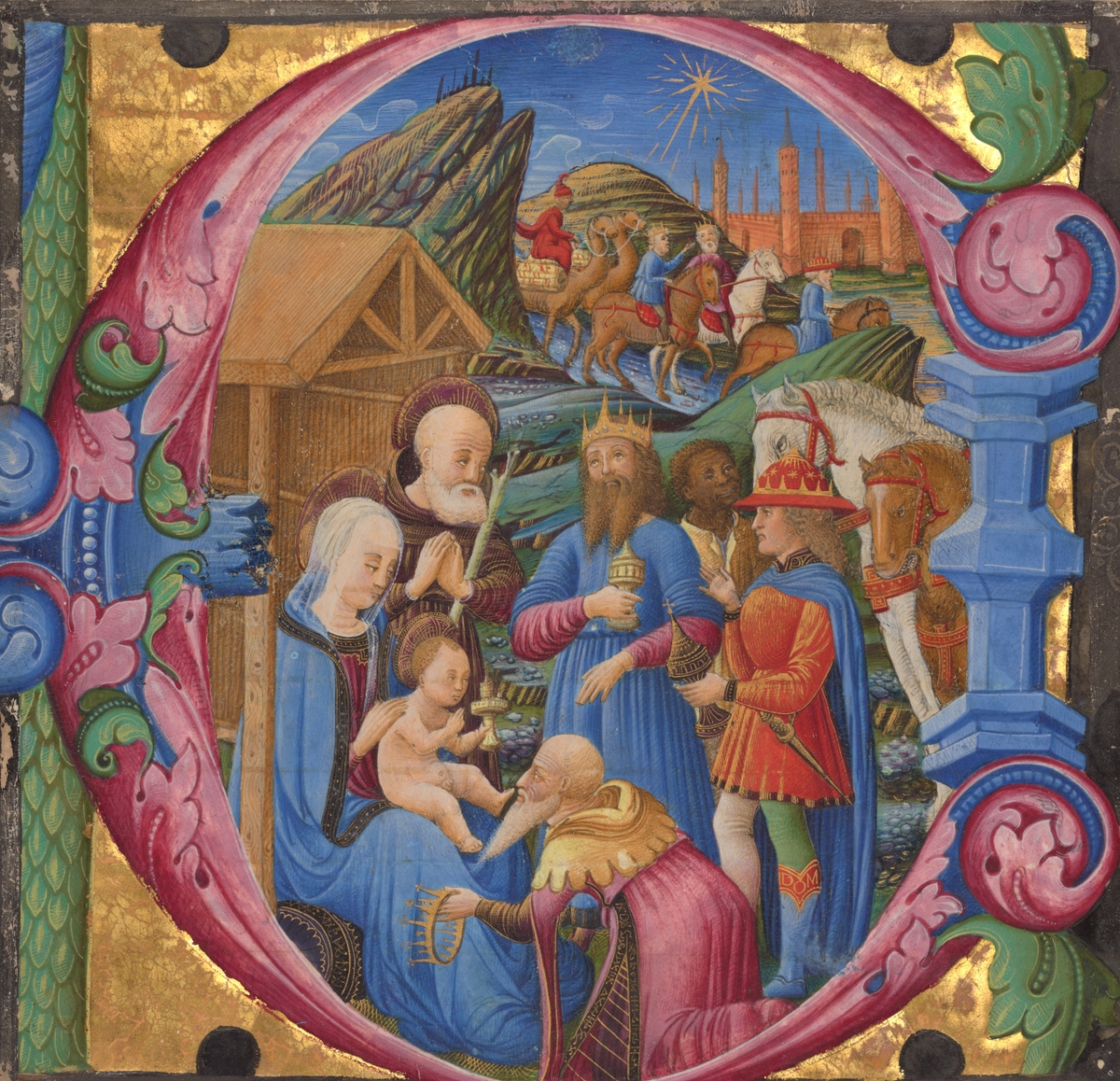
The star reappears and guides the Magi to the exact place where the child is, and Matthew tells us they are “overjoyed” at seeing it. When they enter the house, they see “the child with Mary his mother,” and they fall to the ground in adoration, a gesture of worship that the Gospel reserves for God. Then they open their treasures and offer gold, frankincense, and myrrh—gifts that Catholic tradition reads as a kind of small creed in action: gold for Christ’s kingship, frankincense for his divinity, and myrrh for his future suffering and death. The same child who lies in his Mother’s arms will reign as King, receive our worship as God, and freely give his life on the Cross.catholic+2

The conclusion of the passage is quiet but important: having been warned in a dream not to return to Herod, the Magi go back to their own country “by another way.” On the surface this protects the child from Herod’s plans, but spiritually it also suggests that a real encounter with Christ changes a person’s path; after worshiping him, they cannot simply go back the way they came. The God who drew them by a star now directs their conscience and their choices, and they respond with obedience and trust.missions.ewtn+1

In the Catholic Church, this Gospel is proclaimed on the Solemnity of the Epiphany, which is one of the great feasts of the Christmas cycle. “Epiphany” means manifestation or revelation: in Bethlehem, Christ is revealed not only to Israel, but to the nations, represented by these learned Gentile visitors who adore him. In many older traditions, Epiphany was seen as the crowning feast of Christmas, and in the current Roman Rite the broader Christmas season concludes with the Baptism of the Lord, which is closely linked to Epiphany as another moment when Jesus is manifested publicly.nationalshrine+3

The Church has also kept some beautiful customs to remember this event. In many places, Epiphany is known as “Three Kings Day,” reflecting the long-standing tradition that there were three wise men, often named Caspar, Melchior, and Balthasar, who brought three royal gifts. One especially meaningful practice is the Epiphany house blessing, or “chalking the door”: the family uses blessed chalk to write something like “20 + C + M + B + 26” above the main entrance, with the numbers marking the year and the letters standing both for the names of the Magi and for the Latin prayer “Christus mansionem benedicat” – “May Christ bless this house.” It is a simple way of saying that, just as the Magi entered the house of the Holy Family and found Christ, we want our own home to be a place where Christ is welcomed, honored, and allowed to guide everything that happens inside.detroitcatholic+3

For a family reading this passage together at the close of the Christmas season, the story of the Magi raises gentle but serious questions. Amid school, work, and all the noise of ordinary life, are we more like Herod, defending our own plans, or like the Magi, willing to be interrupted and led by God, even when it means taking “another way” than we expected? The gifts of gold, frankincense, and myrrh can become a pattern for what each of you might offer Christ this year: the “gold” of your talents and achievements, the “frankincense” of your prayer and worship, and the “myrrh” of your sacrifices and hidden sufferings, freely given to him in love. In that sense, Epiphany is not only the conclusion of Christmas, but also a beginning—a moment to step into the new year with the same attitude as the Magi: eyes fixed on Christ, hearts open, and ready, if needed, to go home by a different road.mycatholic+2

​With Jesus’s birth, I have experienced a rebirth of my own in my career life. Directions I once took were redirected, and newer callings led me in ways I thought went astray, but later I would discover that there was greater purpose in store for me. In your reflections today, consider how in ways you have resisted God’s subtle guidance past our stubborness. Then think about the epiphany you experienced when you finally submitted and let it happen. The effect in my situations were eye opening and fulfilling. We do not know until God has revealed “by another way” that we realize our potential, and His mercy and grace at work in our lives.

Photo Credit, Painting:
Initial E: The Adoration of the Magi by Franco dei Russi
Original public domain image from Getty Museum

  1. https://www.thesoutherncross.org/news/unpacking-faith-gifts-of-epiphany/
  2. https://www.nationalshrine.org/blog/what-the-gifts-of-the-magi-tell-us-about-jesus/
  3. https://mycatholic.life/saints/saints-of-the-liturgical-year/january-6-epiphany/
  4. https://www.crs.org/five-facts-about-three-wise-men-epiphany-and-gift-you
  5. https://www.catholic.com/tract/three-kings-day-2026-catholic-answers-guide
  6. https://missions.ewtn.com/seasonsandfeastdays/epiphany/
  7. https://www.catholicnewsagency.com/news/250028/christmas-when-does-it-end
  8. https://portlanddiocese.org/solemnity-epiphany-lord
  9. https://en.wikipedia.org/wiki/Feast_of_the_Baptism_of_the_Lord
  10. https://www.detroitcatholic.com/news/20-c-m-b-19-epiphany-tradition-of-door-marking-evokes-magi-asks-gods-blessings-in-new-year
  11. https://www.stmarybrush.org/epiphany-blessing.html
  12. https://en.wikipedia.org/wiki/Biblical_Magi
  13. https://ppl-ai-file-upload.s3.amazonaws.com/web/direct-files/collection_c85d4bee-5b69-44a4-a53d-e4d82ffb7afe/26307aff-d78d-4ea0-bf17-1719e5066aca/help-me-write-a-journal-entry-oGxh_zxPTouFxXUv5iWBNg.md
  14. https://www.facebook.com/groups/298549307726102/posts/2120766275504387/
  15. https://www.newliturgicalmovement.org/2018/01/when-does-christmas-season-end.html
  16. https://www.northjersey.com/story/news/2025/01/05/20-cmb-25-why-nj-christians-are-chalking-the-door-for-epiphany/77410825007/
  17. https://www.ewtn.com/catholicism/library/baptism-of-the-lord-and-ordinary-time-4506
  18. https://ourladygc.org/resources/epiphany-house-blessing
  19. https://www.catholicculture.org/commentary/christmas-to-candlemas-when-is-real-end-christmas-season/
  20. https://bustedhalo.com/ministry-resources/chalk-it-up-bless-your-door-this-epiphany
  21. https://crosscatholic.org/blogs/2025/08/how-to-chalk-your-house-door-for-epiphany/

Stormy Weather

Read a wonderful post titled: Surviving Storms today. It was a synopsis of a Sunday sermon witnessed by the author. The blogger begins: “We all have to endure storms. They show up in the form of financial, occupational, and/or personal crises.”; She uses Acts 27:19-41 to illustrate a story of Paul and others who were sailing to Rome when they got caught in a terrible storm.

The points of weathering a terrible storm was illustrated by their visiting pastor based on this reading including the following challenges:

  1. What is God asking you to throw overboard so you can survive the storm?
  2. What simple step is God asking you to do to move out of the storm?
  3. What opportunity does God want you to see right now?

I liked point #1: what kind of burdens do you carry now that keeps you from staying afloat? What are the most important things that will help us survive and stay afloat? Check out the passage and read the original blog entry; the discussion is as encouraging as it is wonderfully metaphorical. Remember that “It doesn’t matter how big your sail is… it matters how much wind is behind your sail. If you rely on God’s grace, you will always survive the storm.

What kind of storms and hardships have you lived through in your life? What did you do to survive? What helped you to survive and see a future that is worthwhile?

For me, my job has been a daily source of pressure and unmitigated stress. I still wake up in the wee hours of the morning, every morning, from worry or doubt related to the previous day’s work. Though the conditions weighed me down, I was never expected to get rid of any of it. I had many grievances against my managers from past incidents – a past that was already set in a long ago time frame. Should I continue to address what angers me, or should I focus my energies on the new, future opportunities that were made available by God for me to grow.

It’s Good to Ask God

Verse for the Day: 1 Samuel 15:22

What Items would you like to pray about each day? How might you create a time to pray regularly?

Daily prayer, is all about preparing our needs and routinely asking for our intentions and guidance. When fitted into a daily schedule it may seem like just a routine, like brushing teeth, preparing breakfast or shaving, but programmed into this practice is a sense of duty. It is that sense of duty that brings us closer to God because within it is obedience… as in today’s verse, “to obey is better than sacrifice” when it comes to our choice in how to serve the Lord.

Stumbling Along

Recognize

Everyone who comes to know Jesus stumbles because of him. He fails to meet our wrong expectations. He calls us to do impossible things or to become something we think we could never become. This is his way of teaching us how much we need Him. He breaks us to pieces so that he can put us back together in His image. -Michael Card

Renew

The rule is this: Christians are people who remember their own weaknesses and failure. They are under reconstruction. So they offer hope and forgiveness to people who fall and who need Jesus’ healing grace and hope. -Donald M. Joy

Revive

1 Corinthians 1:20-31
2 Corinthians 4:1-12

Commentary

1 Corinthians 1:20-31 – I found this passage oddly confusing, but the last part gelled it together: “…For this world in its present form is passing away.” It’s all temporary. To remember the way we were when Jesus calls us is important because that status (no matter how terrible or difficult it may have been) holds a key to the hope of our future: For all that we have, reflect as if we do not have it. For all that we lack, think not of our deprivation. Whatever status we are in is only temporary in the grander picture of eternity.

2 Corinthians 4:1-12 – A nice passage about how our own resurrection is through our dependency and our tie to Jesus Christ. We are in need of Jesus’ saving grace and hope. We are totally and completely dependent on Him for salvation.

The Prayer of Jabez

I recently picked up a Christian devotional entitled “The Prayer of Jabez” and I was overwhelmed with the sheer enthusiasm of its message. This devotional sparked a whole series of books, devotionals and publications all centered around a little-known man from the Bible. He wasn’t anyone as famous or well known as David or Noah; in fact, this man: Jabez is only mentioned once in the Bible and then only for two sentences. But what he has to say in prayer has phoenomenal impact and meaning on our life as God-fearing (revering) individuals. In fact, Jabez’s prayer has inspired me to write a series of articles on exactly what he has to say and how it can help you build your relationship with God.

From the first book of Chronicles:

Jabez was more honorable than his brothers. His mother had named him Jabez, saying, “I gave birth to him in pain.” Jabez cried out to the God of Israel, “Oh, that you would bless me and enlarge my territory! Let your hand be with me, and keep me from harm so that I will be free from pain.” And God granted his request. (1 Chronicles 4:9-10, NIV)

The prayer goes so quickly, you almost miss it. Truly, this is one gem that anyone can fit into their schedule in just 10 minutes. As a recap, Jabez did something remarkable in prayer that changed his life compared to the rest of the people referenced and mentioned in the same chapter. Jabez’s four requests:

  1. “Please bless me indeed!”
  2. “Please enlarge my territory!”
  3. “Please put Your hand on me!”
  4. “Please keep me from evil!”

And God granted his requests to him… The book, “The Prayer of Jabez” by Bruce Wilkinson tells of testimonials and anecdotes of answered prayers and requests just by changing one’s mindset to think and act along the lines of this four part prayer. Without giving away too much about the book itself, I’d like to share a series of blog articles just about Jabez’s prayer and ways to interpret its meaningfulness in our lives as Christians.

As a little background, back in the times of the ancient Hebrews (about 1200 B.C.) Jabez was born to the tribe of Judah… the same tribe that David and Jesus came from later… in Bible times, a person’s name defined his future. For example, Solomon means “peace,” and sure enough, he became the first king of Israel to reign without going to war. As history would have it, Jabez’s entry into the world was not the most auspicious one. Jabez bore a heavy burden with his name, meaning “pain” – what kind of future would be in store for him with an awful name like that?

Jabez was desperate. He was already predestined by his culture to have a miserable, poor, simple life… perhaps his family and tribe even treated him as such. In his desperation, instead of lamenting his situation or cursing his mother’s cruelty, he began to pray to God in earnest and he starts by asking for His blessing.

The devotional made a good point that the Biblical sense of “blessing” isn’t the watered down, every day expression we use when people sneeze… we ask God to bless everything: our parents, our day at work, the food we eat; however in the Biblical meaning, to request a “blessing” is to ask for a “supernatural” favor.

When we ask for God’s blessing, we’re not asking for more of what we could get for ourselves. We’re sincerely asking for the kind of good things only God has the power to know about or give. That’s why the Bible says, “The Lord’s blessing is our greatest wealth. All our work adds nothing to it!” (Proverbs 10:22, TLB)

The Lord has many blessings to bear upon each of us as well. But the catch is, we have to ask. If you’ve never prayed and asked God for His blessings, you’ve missed out on a gift that keeps giving, and giving, and gving. Don’t miss out on this opportunity of your lifetime! As the Bible says:

You do not have because you do not ask. The Bible also says (James 4:2) Ask, promised Jesus, and it will be given to you… What man is there among you who, if his son asks for bead, will give him a stone? If you then, being evil, know how to give good gifts to your children, how much more will your Father who is in heaven give good things to those who ask him!” (Matthew 7:7,9,11)

And that’s the catch. there is no limit to God’s blessings in our lives. They are only limited by us and our forgetfulness or ignorance to ask, not by His resources, his power or willingness to give.

The Tree

A Passage on Trees

From one of my reading sessions, I found a nice life-parable to share from the works of Australian author and inspirational speaker, Matthew Kelley. In his book The Rhythm of Life: Living Every Day with Passion & Purpose, he remarked an observation of a tall, old tree on the grounds of the monastary where he was staying, that “despite its imperfect forms and crooked branches, it had a perfection of its own.” Kelley admired the great tree and went on to remark on its significance.

Later in the year, Kelley writes of an experience on a nature walk after a storm that revealed a meaningful metaphor for him and his spiritual growth. The violent storm had uprooted and destroyed many of the trees in the surrounding area, but this large, lone tree was virtually unaffected. He observed that

A tree with strong roots grows strong. A tree with strong roots bears much fruit. A tree with strong roots bears good fruit. A tree with strong roots can weather any storm. If a tree is uprooted and replanted often, it will not be able to sink its roots deep into the earth and therefore will not grow strong or be fruitful.

Likewise, for people, these tree roots are a metaphor for our intellectual and spiritual growth. The things that we do to grow and to establish these roots affects our strength to weather overpowering challenges and strife, as well as the quality of our existence through the fruits that we bear on our branches.

Meditations as a Tree

Another reflection on trees comes from Eastern Asian philosophy (I’m not sure exactly which one though) which I learned a long time ago as a teenager from a family acquaintance. It’s a meditation that also involves thinking of trees – its thought processes gives you the opportunity to relax and expel negative energies from the body.

Imagine your body as a tree. Your leaves and your branches on top pull in the pollution, carbon dioxide and negative energies from the atmosphere. These toxins pass through your branches, down your trunk and into your roots. As a tree, your body processes these negative energies and converts them to basic, life-giving ingredients to put back into the earth: oxygen, water and nutrients.

Imagine your tree-like body as a part of this earthly cycle. Absorbing, processing, releasing. Whatever problems or strife you have experienced and “absorbed” into your self, let it pass through your branches, down your trunk and out of your body into the ground.

Close your eyes and focus on your breathing. Each breath pulls in more from the atmosphere, then pushes it down and releases it into the ground. Know that you are a part of a cycle – not an ending point in the absorption of those negative energies. Whatever you’ve endured to this point in the day is just as easily released back into the earth. Think and feel yourself through several cycles of breathing, allowing yourself to relax.

I like to think of life’s daily events as generators of energy (both good and bad). We can choose to react – which catches and holds on to the energy,  or we can simply let it pass. Over the years, I have managed stress and stress relief very well with this simple visualization. Give it a try and see if it works for you!