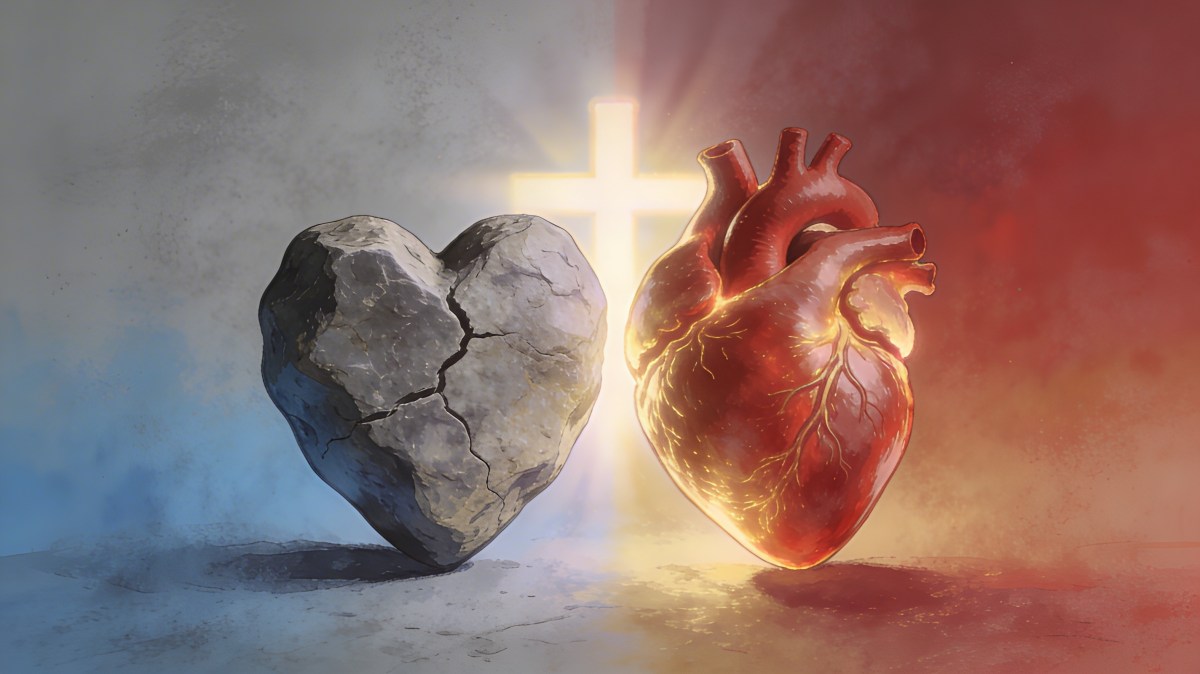
Finding Your One True Priority in Life

Lately the word “priority” has been sticking with me. I learned that when it first entered English in the 1400s, it was singular—there was just one “priority,” the first and most important thing. Only in the 1900s did we start talking about “priorities,” as if we could have many “most important” things at the same time.

As a Catholic, that little language shift makes me pause. If everything is a priority, then nothing really is—and for me, it raises the question: who or what actually comes first in my life? In my faith, God is meant to be that one priority, the One everything else flows from and returns to.

Another word that has been on my heart is “consecrated,” which means something set apart, made holy, reserved for a special purpose. In Catholic theology, to be consecrated is to belong to God in a particular way, to be given over to Him in love. The ancient burnt offerings in the Old Testament were a symbol of this: something given completely, not partly, to God.

Christians believe that Jesus is the “Lamb of God,” offered not as a thing, but as a living person who gives Himself totally for us, for our forgiveness and healing. In Jesus, God is not distant or abstract; He draws close and offers His whole self so that we can live in friendship and union with Him. Even if you do not share that belief, there is something moving about the idea of a love that holds nothing back.

What encourages me is that God does not just give words, but also gives a language of actions, symbols, and even our everyday choices to communicate with us. The way we order our time, our energy, and our “one priority” becomes its own kind of prayer—a way of saying, “This is who I belong to, and this is what I’m living for.” That feels like good news in a scattered world: we are invited into a simpler, deeper center.

A Scripture that captures this for me is Romans 12:1: “Offer your bodies as a living sacrifice, holy and pleasing to God—this is your true and proper worship.” It speaks of life, not destruction: offering our ordinary selves—work, family, struggles, hopes—as something set apart for good, for love, for God. Whether or not you share my faith, it is an invitation to ask: what is my one true priority, and what am I willing to give myself to, wholeheartedly, in love?

As we close this reflection, please join me in prayer:

Lord Jesus Christ,
You are the one true priority and the Lamb of God, consecrated and given for our salvation.
Teach us to set our hearts on You above all things.
Gather our scattered desires into a single yes to Your will.
Consecrate our minds, our work, our relationships, and our rest,
so that all we are and all we do may be set apart for Your glory.
By Your Holy Spirit, make our lives a living sacrifice,
holy and pleasing to the Father, our true and spiritual worship.
Mary, Mother of God, and all the saints,
pray for us as we learn to live with one heart and one priority in Christ.
Amen.

Purging Religious Yeast

The first book of Corinthians writes in a figurative sense about “yeast” when it says:

Get rid of the old yeast that you may be a new batch without yeast – as you really are. For Christ, our passover lamb, has been sacrificed. – 1 Corinthians 5:7

From an old post on the blog “Finding the Motherlode” the author poses a theological discussion on the nature of religion. Religion (religious thoughts, rules, ways and means), the author writes, is selfish. It stems from self and revolves around self. This selfish sense of “religion” is present in all of us and like a speck of yeast, it is very difficult to spot and remove. Some examples of this sense of “religion” that we should be warned of:

  • Religion is when I try to make something happen before God has ordained it.
  • Religion is doing all the right things for all the wrong reasons.
  • Religion is saying Hallelujah before having the faith to say Amen.
  • Religion is saying “Yes” to God without saying “No” to ungodliness.

I think I have a sense from where the author is coming from and I offer up an example from another blog which studies the works of James and the warning “Faith Without Works is Dead.” This selfish notion of religion is in saying and doing things that are biblically advisable but not really making the effort to make it happen. That in itself is a contradiction. It’s in the contradiction that we find the “yeast” in our lives.

But if a brother or sister is naked and may be lacking in daily food and any one of you say to them, Go in peace, be warmed and filled, but does not give them the things the body needs, what gain [is it]? – James 2:14-15

This is a tough brand of yeast for me to purge from myself as I am faced daily with many homeless and poor individuals on the streets, all of whom are begging for their meager living. I usually pass them up knowing that a smile or a good word is not enough to fulfill their bodily needs, as the Bible demands. Finding ways of fulfilling my obligations to the poor is a lifelong challenge that faces me and possibly many others.

Like I said, once you recognize what yeast is in your life, it’s really, really hard to figure out how to remove it. It takes work and it takes sacrifice. As in the promise of salvation through Christ, we are challenged by Corinthians to prepare and make ourselves “new” (a new batch without yeast) to meet Christ’s sacrifice.

Fatherhood in Tough Times

Today’s reflection comes from Purpose for Everyday Living for Fathers, which really speaks to this current life and times facing families today. It talks about the nature of unpredictable change and the anxiousness that some fathers may feel about factors affecting their families that seem so far out of their control.

Our world is in a state of constant change. God is not. At times, the world seems to be trembling beneath our feet. But we can be comforted in the knowledge that our Heavenly Father is the rock that cannot be shaken. His word promises, “I am the Lord, I do not change” (Malachi 3:6 NKJV)

The author reminds any father facing difficult circumstances that God is far bigger than any of those problems that you may face.

By putting your faith in the Father and His only begotten son: “Jesus Christ is the same yesterday, today and forever” (Hebrews 13:8 NKJV) Because the savior does not change “you can face your challenges with courage for today and hope for tomorrow.”

I myself as a father experience this anxiousness each day as I prepare my children for their day, struggle to pay the bills and expenses or hear about yet another violent crime happening in my community. Sometimes the number of troubles at my feet seem insurmountable and the pressure that comes from having a family count on me introduces a whole new level of change and uncertainty.

With God there is certainty. God will protect you if you ask Him. So ask Him and trust in Him to handle the many things that seem out of your control.

“For we walk by faith, not by sight.” – 2 Corinthians 5:7 NKJV

Corinthians reminds us that we are meant to be beings of faith. If we succumb to what we see before us, it is certain that we will be overcome and overrun with the multitude of problems that face us. By walking with faith we look beyond and towards the Lord instead. With faith, we trust in Him to handle what seems out of our control allowing us to serve Him instead of the problems before us.

Getting What You Need

Like the Rolling Stones song that goes: “You can’t always get what you want…” We have to remember daily through our disappointments and shortcomings that

Faith in God will not get for you everything you want, but it will get for you what God wants you to have. The unbeliever does not need what he wants; the Christian should want only what he needs. – Vance Havner

This rings some truth in many ways. We don’t always have what we want, which contrary to common wisdom, is a good thing. The trick is in paying close enough attention to the things we do have. These are our blessings. This is what the saying “count your blessings” is all about. All our needs are laid out before us for the asking. All the needs for the moment have already been provided for us. It is up to us to be thankful and to recognize this throughout our moments of disappointment and want.

Perhaps you may want a better job, or a bigger pay raise. Maybe you want more recognition for your labors at the office. Maybe you want to win big money in the lottery or in a casino. The important question is however, what will become of your life if these moments or events never come into your life? Chances are very good that you will still go on living and breathing. The important thing is that you don’t imprison yourself in the cycle of “wants”.

There is a parable I recall from Max Lucado’s book: “Traveling Light”, about a man who in a bad turn of the stock market lost overnight his entire fortune and savings. When asked of his situation, he replied: “I lost everything“. A colleague and close friend of his then asked “Have you lost your faith?”; “No,” he replied. “Have you lost your character?”; “No,” he replied again. “Have you lost your salvation?” his colleague quizzed once more. “Why, no.” To which his friend replied: “Then it appears to me that you have lost none of the things that matter.”

The friend is a wise one. Indeed, when you think about it, what really matters in this life? God doesn’t look at the number of cars you own, the brand name labels on the clothing on your back, the money in your wallet or bank accounts and assets or even the fanciness of the home you live in. God looks at your heart.

1 Samuel 16:7 – “The Lord does not look at the things man looks at. Man looks at the outward appearance, but the Lord looks at the heart.”

That is where all of us should begin to look… at the inside and all of the needs that originate from that place within. When we look there, we circumvent the slavery of “wants” and materialism that takes us places, but eventually takes us nowhere. Having better things, more things or any things doesn’t increase the value or the worth of our inner being. Take some time to focus on the needs that we have to make our inner beauty shine and pray for them.

“Casting the whole of your care [all your anxieties, all your worries, all your concerns, once and for all] on Him, for He cares for you affectionately and cares about you watchfully.” – 1 Peter 5:7 (AMP)

In the long run, if you focus on putting these anxieties on the Lord, you’ll find that “You can’t always get what you want… but if you try sometimes, you get what you need.” (Rolling Stones) Search through your countless blessings and look for the needs that have been answered… most evidently at the right time, place and situation. You may surprise yourself when you do.

Move Those Mountains

Faith Moves Mountains

Many of us have read the Bible passage in Matthew 17:20 which reads: “If you have faith as a mustard seed, you will say to this mountain, ‘Move from here to there,’ and it will move; and nothing will be impossible for you.”

Indeed, moving mountains is not an easy task. They’re tall. They’re massive. Even all the earth’s forces at work together can only carve out mere inches from a mountainside let alone move it from “here” to “there”. The metaphor is there for a reason. Faith allows us to achieve what may seem to us as “impossible”.

I read this reflection this morning in the book: “Purpose for Everyday Living” and I think it’s a great one:

God did not create you for a life of mediocrity; He created you for far greater things. Reaching for greater things usually requires work and lots of it, which is perfectly fine with God. After all, He knows that  you’re up to the task, and He has big plans for you if you possess a loving heart and willing hands.

We are meant to be up to the challenge: moving mountains and conquering insurmountable challenges… if we have faith. To have faith is to believe that through every problem you face in life, God is with you every step of the way, ready and willing to strengthen you.

The passage also encouraged readers as Christians to “Live Courageously”… and to put fears and disappointments in God’s hands for able handling. When we feel fear or doubt approach us, turn to God.

I am a firm believer that these fears and disappointments in life are meant for us to develop our character and our inner being. How we handle ourselves in times of turmoil is a reflection of that character. Through it all we are not alone. Acknowledging this more in our lives enables us and increases our ability to take on life’s big challenges. “I can do all things through Christ who strengthens me.” (Philippians 4:13). As Christians and followers of the Lord, our ability to move mountains attribute to His glory, inspiration and might.

Be patient. When you feel lonely, stay with your loneliness. Avoid the temptation to let your fearful self run off. Let it teach you its wisdom; let it tell you that you can live instead of just surviving. Gradually you will become one, and you will find that Jesus is living in your heart and offering you all that you need – Henri Nouwen

The lessons of life build our character and with faith they inevitably lead us to Christ:  both for comfort from our fears and for steady endurance and strength to take on the tasks at hand. Author Max Lucado wrote this on fear: “Earthly fears are no fears at all. Answer the big question of eternity, and the little questions of life fall into perspective.” Eternity is your destiny and your salvation. Faith in God leads you there.

I pray that this reflection leaves you feeling encouraged and emboldened to tackling bigger problems and tasks in your life, knowing that through Christ you are strengthened and meant to accomplish many great, amazing things. Now leave your fears at the door and go out and start moving those mountains!

The Butterfly Effect

The “Butterfly Effect” is a metaphor that encapsulates the concept of sensitive dependence on initial conditions in chaos theory; namely a small change at one place in a complex system can have large effects elsewhere. The popular story illustrating this is of a butterfly flapping its wings on one side of the planet triggers a chain of events that eventually contributes to a major weather event elsewhere like a hurricane or a tsunami.

The Butterfly EffectThe closest example I can think of that relates to the “Butterfly Effect” is the concept of “Random Acts of Kindness” or “Pay it Forward”.

In Random Acts of Kindness, one chooses to live their life with accents of acts of kindness towards complete strangers both small and large: paying someone’s parking meter that has run out or when visiting a hospital, spend a few moments with someone who doesn’t have visitors. The acts are usually encouraged to be anonymous or secretively done.

Some additional inspirational examples of acts of kindness can be found at bukisa.com or daretobeanangel.com. A google search for “random acts of kindess ideas” also yields some great results.

The point of this is that things like the “butterfly effect” or “random acts of kindness” are not an example of chaos or randomness in this world at all. Christian faith teaches us that nothing in this world is left to chance or to randomness. All are designed and integrated into a “master plan” managed by God himself.

To every thing there is a season, and a time to every purpose under the heavens (Ecclesiastes 3: 1-8)

The inspiration to do good works and random acts of kindness comes from the Holy Spirit – and from it the machinery of the universe and the wonderful “positive energy generator” continues to move forward in our lives.

There are times where we are privy to witness even a small glimpse of what becomes of random kindnesses when it snowballs forward in the world around us. The concept of “pay if forward” is used to describe the concept of asking that a good turn be repaid by having it done to others instead.

Television and media mogul Oprah Winfrey has on occasion talked about “pay it forward” and has even tracked on her show instances where a second and third generation act of kindness has exploded into something both inspiring and wonderful at the same time. All involved have no idea how they can be related to the initial act of kindness but many will agree and attribute that the unpredictable effects is a wonder and mystery of God’s work in this world.

The movie of the same title, while fictional, also illustrates the concept of how a simple act of kindness can snowball and grow into something more… both positive and of great impact to society at large.

Arguably, the butterfly effect is not chaos at all. It is the product of a higher, divine “order” of the universe that is dictated by an infinite number of complex, tiny and large interactions at work. As humans, we may pretend to understand the wisdom and the machinery of such interactions, but we cannot – it is beyond the scope of our understanding. Faith shows us that by contributing to the energy of acts of kindness and good deeds something positive will eventually become of it whether or not we will be able to observe its outcome. So get busy and pray for your own revelations – so that you will be more observant of God’s plan for your day and your butterfly role in the world around you.

The Prayer of Jabez – Revisited

Read a review and a new perspective on the book “The Prayer of Jabez”. I too feel uneasy with the unbalanced nature of the book’s suggestions. It (the book and its testimonials) seems to indicate that faith is fueled by constant challenges to God to fulfill one’s prayers based on rote prayer and formula. It also inflates expectations that these prayers will always be positively answered… In truth we cannot even begin to assume an understanding of God’s wisdom nor can we expect Him to respond to prayers in the same way that a “genie” in a bottle grants wishes to passerby.

“Wilkinson (the author of The Prayer of Jabez) asserts that praying Jabez’s prayer leads to a life of incredible blessing and ever-increasing ministry opportunities-a life that sounds almost like a fairy-tale. However, little reference is ever made to the reality of genuine difficulties in life, and the necessity of sincere prayer to face those difficulties in a God-honoring way.” I think the review article raises a good point in that ministry for God is rarely a 123-formula approach to success…  there are hardships and also setbacks because it is not the will or the might of the person that answers prayers… but the will and grace of God Himself.

I appreciated the commentary that: Scripture, however, points to the importance of learning to live a life fixed on pleasing God in all the little details in life-attitudes, thoughts, words, and behavior. In the “mundane” aspects of life, God is also there.

There are basic tenets of the Prayer of Jabez that I do see as useful: the demonstration of humility, dependence and expectation of blessing are all good things to model in one’s prayer and pursuit of worship. Overall, good lessons are to be learned from Jabez’s shortly documented, but meaningful life story. Continue to pray for God’s blessings. May all of you find balance in things that you do and the life that you have chosen to pursue.