Feast of Saint Thomas, Apostle

First Reading: Ephesians 2:19-22
Responsorial Psalm: Psalm 117:1bc, 2
Gospel: John 20:24-29
Daily readings: https://bible.usccb.org/bible/readings/070326.cfm

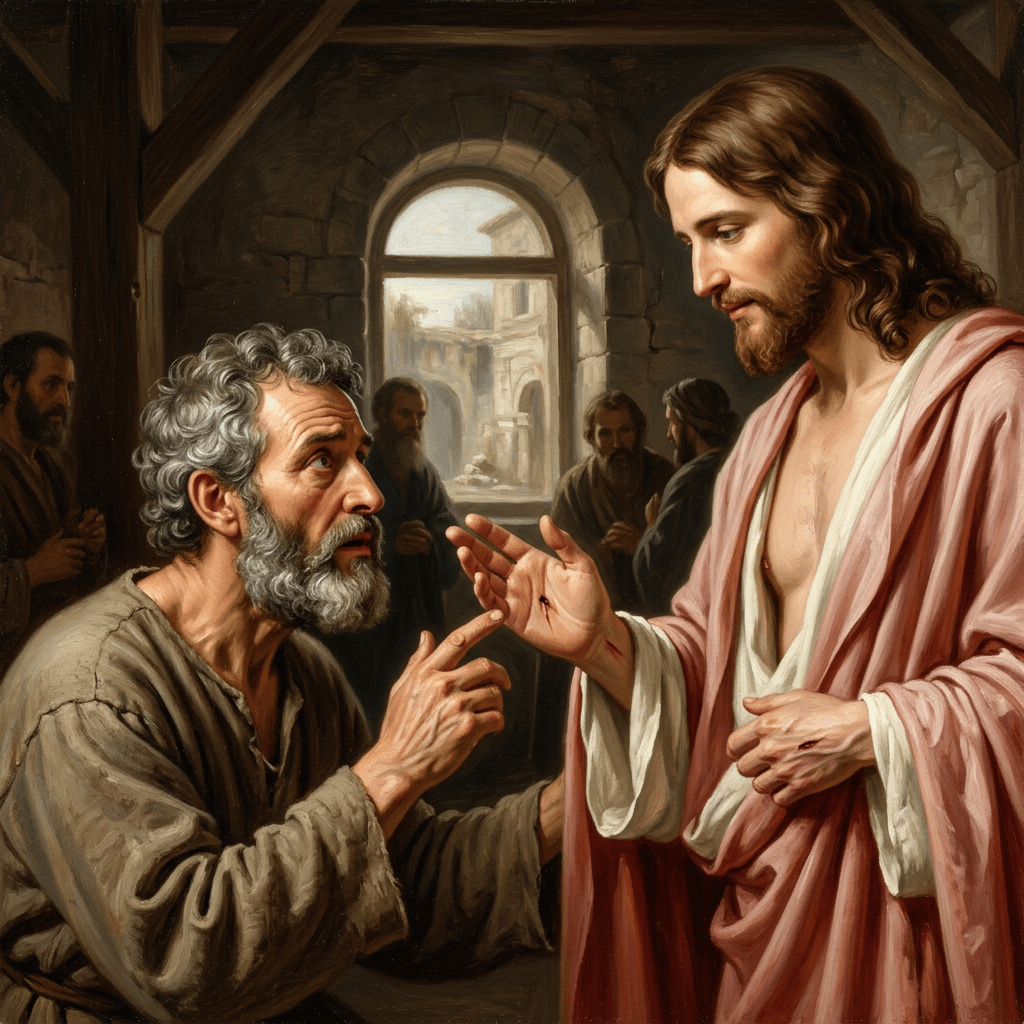
Thomas was not there. We do not know why — the Gospel does not say. But while the other ten were locked in a room together, seeing the risen Lord, Thomas was somewhere else. And when they told him, he said: I will not believe unless I see for myself. It is easy to read that as stubbornness or failure. But there is something honest about it. Thomas did not pretend. He did not nod along to something he had not yet experienced. He said plainly what he needed.

And Jesus came back. A week later, doors locked again, and this time Thomas was there. Jesus did not scold him. He did not announce his disappointment. He walked straight to Thomas and offered exactly what Thomas had asked for: "Put your finger here. See my hands. Bring your hand and put it into my side." He met Thomas in the exact place of his doubt, with the exact evidence Thomas had named. And Thomas, in a breath, went further than any of the others had: "My Lord and my God." Not just teacher. Not just rabbi. My Lord. My God.

Then Jesus says the line that reaches across two thousand years to us: "Blessed are those who have not seen and have believed." That is us. We were not in that room. We have not touched the wounds. We believe on the testimony of Thomas and the others, carried forward through the Church, the Scripture, the Eucharist, the lives of the saints. Paul says it in the First Reading: we are built on the foundation of the apostles and prophets, with Christ as the capstone, growing into a temple, a dwelling place of God in the Spirit. Thomas's honest doubt — and the encounter that answered it — is part of what we are built on.


A few questions to sit with today:

1. Is there a doubt I have been carrying that I have not said out loud — to God, to a trusted friend, in honest prayer? What would it feel like to name it plainly, the way Thomas did?

2. Has Jesus ever met me in the exact place of my doubt — not scolding me, but showing up with exactly what I needed? When was that?

3. Do I experience my faith as something I am building on — a foundation laid by the apostles, alive in the Church — or does it feel more isolated and personal?

4. What would it mean for me, today, to say with Thomas: "My Lord and my God"? Not as a formula, but as something I actually mean?


One small thing for tomorrow:

Tomorrow, at some ordinary moment in the day — driving, washing dishes, between tasks — say Thomas's words out loud, slowly: "My Lord and my God." Say them like you mean them. Let that be your prayer. Just those five words.


Lord Jesus, thank you for going back for Thomas. Thank you for not leaving him in his doubt, for not requiring him to fake certainty he did not have. You met him where he was, showed him exactly what he needed, and received the most complete confession of faith in the Gospels. I want that kind of encounter. I have doubts too — things I have not seen, questions I carry quietly. Come through the locked doors of whatever is keeping me closed. Meet me there. Show me your hands. Help me to move from whatever I am uncertain about to the place Thomas arrived: not just belief, but belonging — my Lord, my God. Through the intercession of Saint Thomas, patron of those who need to see before they believe, draw me deeper into you. Amen.


If you'd like to share: is there a doubt you have been carrying in silence — and has Jesus ever shown up in the middle of it in a way that surprised you?