Faith and Technology News

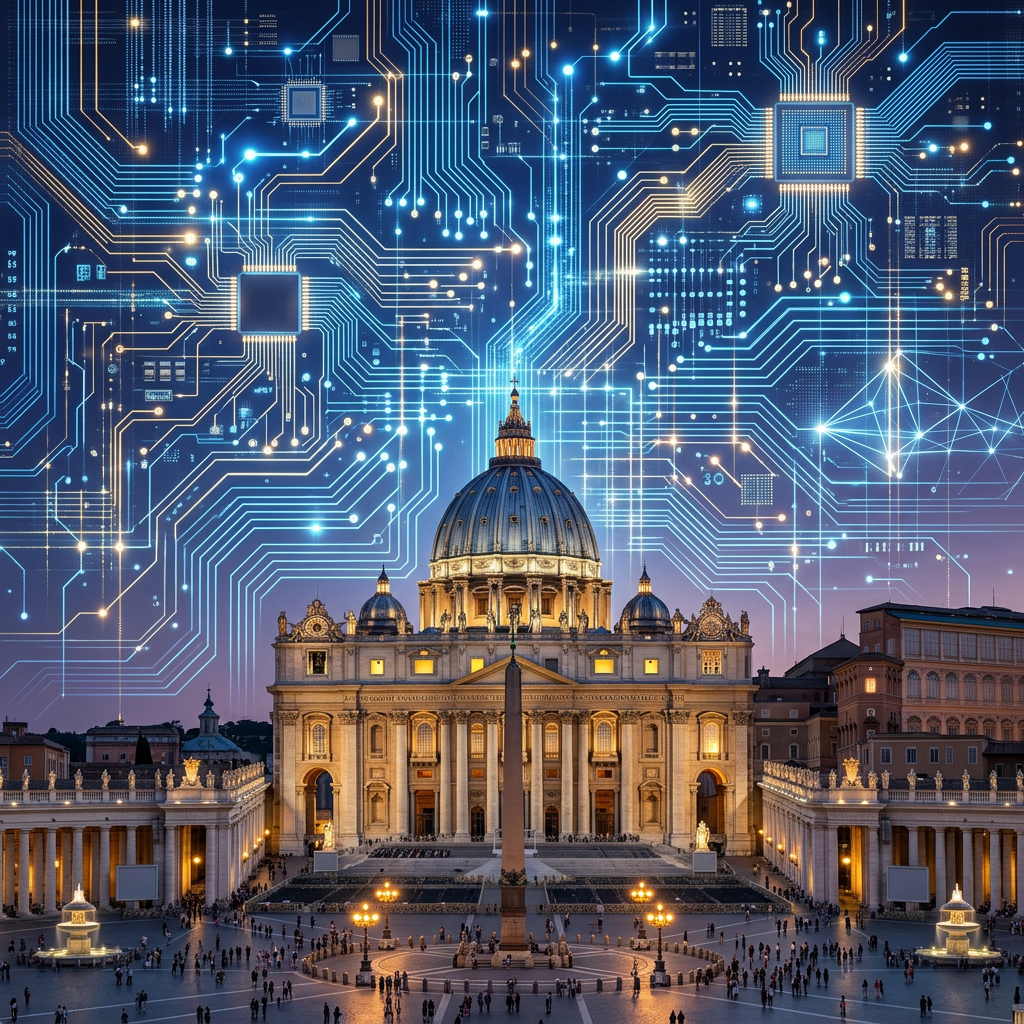
City skyline at night with blockchain network and cryptocurrency charts overlay

Morning Brief — The Long Game Is Showing

TL;DR (38 words): Markets are rewarding infrastructure over hype, crypto’s next chapter is increasingly institutional, and the Vatican continues making AI governance a priority. The biggest stories today are about building durable systems rather than chasing the next headline.


1. AI Is Becoming a Governance Story, Not Just a Technology Story

What happened: Pope Leo XIV reiterated that Magnifica Humanitas grew out of conversations with scientists, engineers, educators, policymakers, parents, and teachers, while also responding to concerns over AI misuse and the erosion of human agency. He reaffirmed the Holy See’s commitment to dialogue at what he called an “epochal turning point.” (Vatican News)

Why it matters: AI policy is increasingly being shaped by governments, international organizations, academia, and faith communities—not just technology companies. Governance is becoming part of the technology stack.

Source links:


2. The Vatican Is Building Permanent AI Institutions

What happened: The Vatican’s Interdicasterial Commission on Artificial Intelligence held its first meeting, bringing together multiple Holy See departments to coordinate AI initiatives. Initial priorities include internal AI guidelines, collaboration with bishops’ conferences, engagement with academia and business, and eventually a dedicated AI information portal. (Vatican News)

Why it matters: Rather than issuing one-off statements, the Vatican is investing in structures that can respond as AI evolves over the coming years.

Source link:


3. Crypto’s Next Six Months May Matter More Than Its Last Six

What happened: Industry analysts argue that the most important crypto trends are no longer speculative tokens but the expansion of stablecoins, tokenized real-world assets, and AI-enabled financial systems. The report also highlights Google’s Agent Payments Protocol as an example of AI and payments beginning to converge. (The Economic Times)

Why it matters: Crypto is steadily becoming financial infrastructure. The most durable opportunities may come from payment rails and asset tokenization rather than short-lived market excitement.

Source link:


4. AI and Finance Continue Moving Together

What happened: Recent research into agent-based AI portfolio management suggests multi-agent systems can improve risk-adjusted crypto portfolio performance by dynamically adapting to changing market conditions. While still primarily academic, the work illustrates how AI is increasingly being applied to investment management rather than just content generation. (arXiv)

Why it matters: The next wave of AI adoption may happen quietly inside financial systems, where automation, auditability, and disciplined execution matter more than flashy chatbots.


5. Business Strategy Is Shifting Toward Responsible AI

What happened: Ongoing research into AI regulation and innovation ecosystems argues that businesses benefit when governments provide clear, adaptable regulatory frameworks—such as regulatory sandboxes—that encourage responsible innovation while reducing uncertainty. (arXiv)

Why it matters: For investors and business leaders alike, predictable rules can be as valuable as technological breakthroughs. Good governance often attracts capital.


6. Pattern of the Day: Institutions Are Catching Up

Today’s stories point in the same direction:

  • The Vatican is building permanent AI governance.
  • Financial firms are investing in infrastructure.
  • Researchers are improving AI-driven financial tools.
  • Policymakers are exploring frameworks that balance innovation with accountability.

Why it matters: Every transformative technology eventually leaves the “move fast” phase and enters the “build institutions” phase. AI and crypto appear to be making that transition.


What to watch next

  • Big Tech earnings: Watch whether companies continue justifying heavy AI infrastructure spending with measurable business results.
  • Digital assets: Look for progress on stablecoin regulation and tokenized asset initiatives, particularly in the U.S.
  • Global AI governance: Monitor outcomes from Vatican-led and UN-backed discussions on international AI standards.

What this changes

When evaluating new technologies, pay as much attention to institutions as to inventions. Product launches generate excitement, but regulatory frameworks, governance bodies, and financial infrastructure often determine which innovations become lasting parts of everyday life.

Vatican Advocates for Strong AI Governance

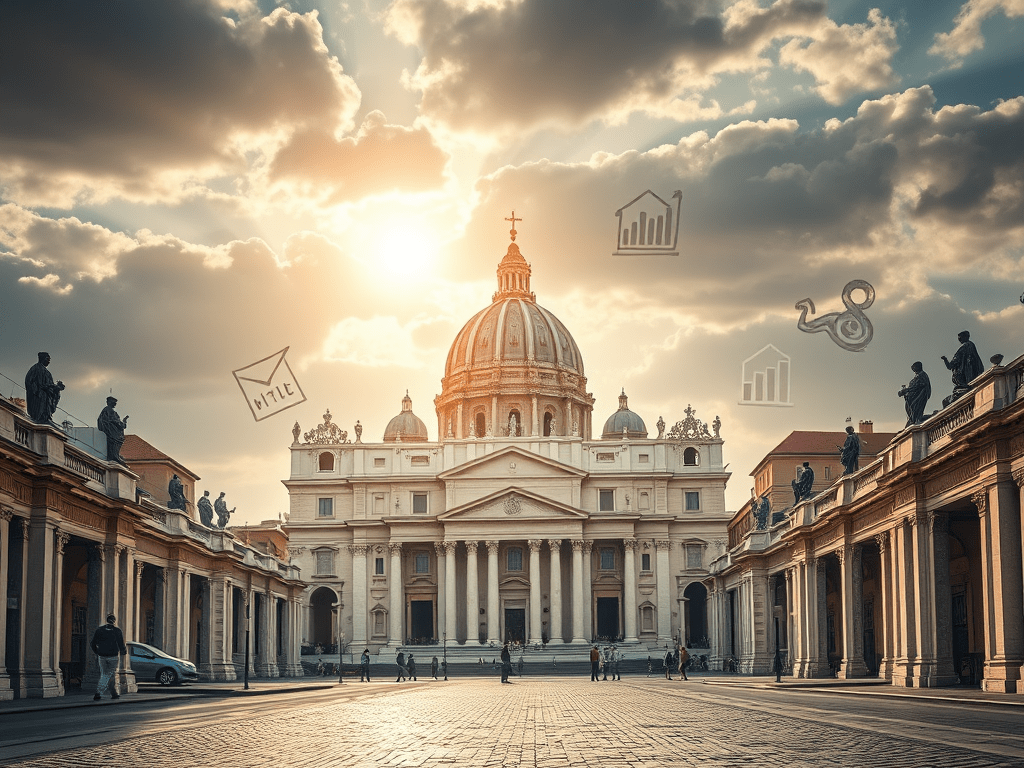
St. Peter's Basilica at dusk with digital circuit patterns overlaying the sky

Morning Brief — The Ethics Premium

TL;DR (38 words): AI’s next competitive edge may be trust rather than intelligence. Markets are still funding infrastructure, crypto continues its institutional transition, and Catholic leaders are sharpening the case that governance—not just innovation—will shape the next decade.


1. A Philosopher Explains Why She Turned Down Anthropic

What happened: Philosopher and theologian Carmody Grey declined an invitation to collaborate with Anthropic, arguing that AI companies risk treating the humanities as a branding exercise rather than engaging seriously with questions of power, human agency, and social impact. She praised Pope Leo XIV’s Magnifica Humanitas for shifting the discussion away from AI itself and back toward the dignity and purpose of human beings. (Financial Times)

Why it matters: As AI matures, credibility may depend less on model benchmarks and more on whether companies demonstrate genuine accountability. The ethics conversation is becoming harder to outsource.

Source:


2. The Holy See Pushes for Robust AI Governance

What happened: At the UN’s first Global Dialogue on AI Governance, Archbishop Ettore Balestrero, the Holy See’s Permanent Observer in Geneva, argued that AI requires robust governance to ensure it serves humanity, protects human dignity, and preserves human accountability. He warned against concentrating technological power in the hands of a few corporations without adequate ethical frameworks. (Vatican News)

Why it matters: The Vatican continues moving from broad ethical principles toward concrete policy positions on transparency, responsibility, and international cooperation.

Source:


3. Pope Leo XIV Keeps Returning to One Theme: Dialogue

What happened: Pope Leo XIV’s message to the AI for Good Global Summit emphasized that Magnifica Humanitasemerged from listening to scientists, engineers, educators, public officials, parents, and teachers, while also responding to AI misuse and the erosion of human agency. He reaffirmed the Holy See’s commitment to dialogue during what he called an “epochal turning point.” (Vatican News)

Why it matters: Rather than approaching AI as an adversary, the Vatican is positioning itself as a long-term participant in shaping its future.

Sources:


4. Human Authorship Is Becoming a Feature, Not a Footnote

What happened: An Australian verification company certified that a collection of Pope Leo XIV’s speeches and writings was entirely human-authored. The project, conducted with academic and Vatican collaboration, reflects growing interest in verifying whether published work is created by people or generated by AI. (The Guardian)

Why it matters: Authenticity is becoming marketable. In an AI-saturated world, “made by a human” may increasingly resemble labels such as “organic” or “fair trade.”

Source:


5. Crypto’s Long-Term Story Still Looks Like Infrastructure

What happened: While there are no dominant market-moving crypto headlines today, the broader trend remains unchanged: institutional attention continues to center on regulated digital assets, tokenization, and financial infrastructure rather than speculative trading. Research into AI-assisted portfolio management also continues to expand, highlighting how AI is increasingly being applied to investment processes. (arXiv)

Why it matters: Quiet infrastructure work rarely trends on social media—but it often determines what becomes mainstream five years later.


6. Pattern of the Day: Trust Is Becoming an Asset Class

Today’s stories fit together remarkably well:

  • AI companies are being asked tougher ethical questions.
  • The Vatican is advocating governance rather than fear.
  • Human-created content is being independently verified.
  • Financial infrastructure continues to mature behind the scenes.

Why it matters: We often think AI competes on speed and intelligence. Increasingly, it may compete on something slower to build: trust.


What to watch next

  • Big Tech earnings: Watch whether companies justify continued AI capital spending with measurable business returns.
  • AI governance: Look for follow-up proposals from the UN’s Global Dialogue on AI Governance and the Vatican’s ongoing initiatives.
  • Digital assets: Monitor U.S. legislative developments affecting stablecoins and broader crypto market structure.

What this changes

One practical lens for the coming week: pay attention to organizations investing in credibility as aggressively as they invest in capability. Faster models can be copied. Public trust, transparent governance, and durable institutions are much harder to replicate—and may prove to be the more valuable competitive advantage.