Lessons from Capernaum: Openness to Jesus’ Word

Golden swirling path winding through a star-filled deep blue cosmos

Tuesday of the Twenty-second Week in Ordinary Time

First Reading: 1 Corinthians 2:10b-16

Responsorial Psalm: Psalm 145:8-9, 10-11, 12-13ab, 13cd-14

Gospel: Luke 4:31-37

Daily readings: https://bible.usccb.org/bible/readings/090126.cfm

Yesterday Jesus went to Nazareth and was nearly thrown off a cliff by the people who knew him best. Today he goes to Capernaum, a town with no history with him, and the reception is entirely different. He teaches on the sabbath and they are astonished because he speaks with authority. Then a man with an unclean spirit cries out: what have you to do with us, Jesus of Nazareth? Have you come to destroy us? I know who you are — the Holy One of God. Jesus says: be quiet, come out of him. The demon leaves without harming the man, and the crowd turns to each other and says: what is there about his word? With authority and power he commands unclean spirits, and they come out. News of him spreads everywhere.

There is something worth sitting with in who recognizes Jesus in this story. The people of Nazareth — who watched him grow up, who knew his family — could not see him. The unclean spirit in Capernaum sees him immediately. It does not take a theology degree or a lifetime of practice. It takes openness. The demon was not open, but it was not blind. The people of Nazareth were not exactly closed, but familiarity had quietly filled the space where wonder might have been. The crowd in Capernaum had none of that history, and so when he spoke, they heard something new — authority unlike anything they had encountered before.

Paul writes that the Spirit scrutinizes everything, even the depths of God. We have received not the spirit of the world but the Spirit of God, so that we may understand the things freely given us. The natural person cannot accept what pertains to the Spirit — not because it is hidden, but because it can only be understood from the inside, spiritually. We have the mind of Christ. That is not a credential to boast about. It is a gift that keeps being given, every time we sit still and let the word land rather than filing it away under what we already know.

A few questions to sit with tonight:

1. The crowd in Capernaum heard something in Jesus’s word that left them astonished. Is there a place in my prayer or scripture reading lately where I have felt that kind of astonishment — or has it been a while? What would it take to be that open again?

2. Paul says we have the mind of Christ — not our own wisdom, but his. Is there a decision or a situation I am facing right now where I have been relying mostly on my own understanding instead of asking for his?

3. Jesus said to the unclean spirit: be quiet, come out. Is there a voice in my interior life — anxiety, resentment, a habit of thought — that needs to hear those same words? What would it look like to let Jesus say that to it?

4. The Lord lifts up all who are falling and raises up all who are bowed down. Where am I bowed down right now — in a relationship, at work, in my faith — and have I brought that place to God?

One small thing for tomorrow:

Before you open anything tomorrow — email, news, social media — spend sixty seconds asking the Spirit to give you fresh eyes for the day. Not a long prayer. Just: come, Holy Spirit, help me see what you see today.

Lord Jesus, you spoke with authority and unclean spirits obeyed you. You speak the same word into my life and sometimes I am not sure I hear it over everything else. Quiet what needs to be quieted in me. Help me to receive your word the way the crowd in Capernaum did — with astonishment, with open hands, without the weight of too much familiarity. Give me what I cannot give myself: the mind of Christ, the eyes of the Spirit, the grace to be raised up when I am bowing under the weight of the week. Amen.

If you would like to share: is there a moment when a word from scripture or prayer landed in a way that surprised you — that felt like it had real authority?

How Familiarity Can Hinder Faith: A Reflection

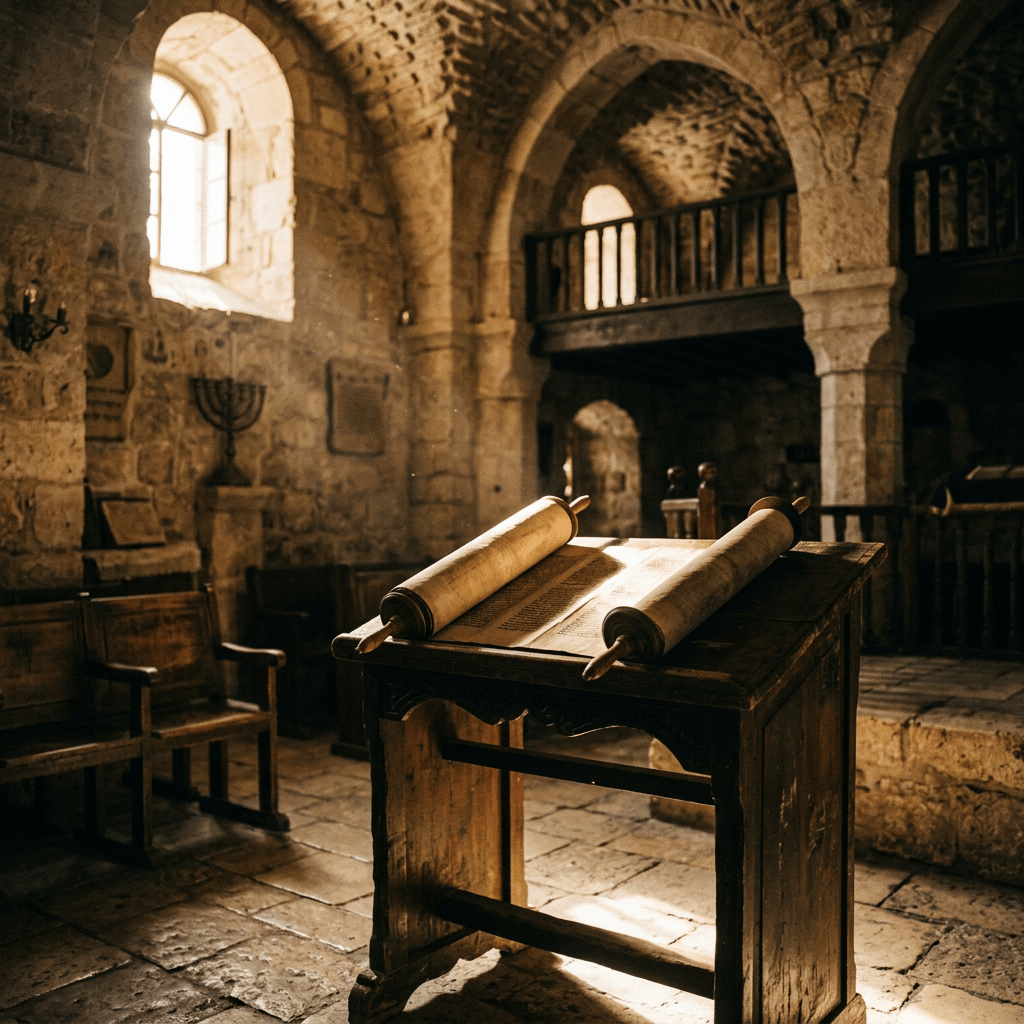
Open Torah scroll on a wooden reading stand inside a historic synagogue

Monday of the Twenty-second Week in Ordinary Time

First Reading: 1 Corinthians 2:1-5

Responsorial Psalm: Psalm 119:97-102

Gospel: Luke 4:16-30

Daily readings: https://bible.usccb.org/bible/readings/083126.cfm

Jesus goes home to Nazareth and reads from Isaiah in the synagogue: the Spirit of the Lord is upon me, because he has anointed me to bring glad tidings to the poor, to proclaim liberty to captives, recovery of sight to the blind, to let the oppressed go free. He rolls up the scroll, sits down, and says: today this scripture passage is fulfilled in your hearing. And at first everyone speaks well of him. They are amazed. And then someone says: is this not Joseph’s son? And that is where it turns. Because they think they know him. They grew up with him. They have a category for him, and the category does not include what he is saying about himself. They go from amazed to furious in a few verses, drive him out of town, and lead him to the edge of a cliff. He passes through their midst and goes away.

There is something quietly painful about this story. The people closest to Jesus physically could not receive him. Familiarity became a wall. They heard the same words as everyone else and their first reaction was to sort him into the box they already had: Joseph’s son, local boy, nothing new here. Jesus names it himself: no prophet is accepted in his native place. And he goes further — he reminds them that Elijah and Elisha were sent not to Israel’s insiders but to a widow in Sidon and a general from Syria. God’s mercy and God’s power move where there is room to receive them.

Paul writes to the Corinthians that when he came to them he resolved to know nothing except Jesus Christ and him crucified. He did not come with impressive words or clever arguments. He came in weakness and fear and much trembling. And he says this was on purpose — so that their faith might rest not on human wisdom but on the power of God. That is the opposite of what blocked Nazareth. They were waiting for something that matched their expectations. Paul offered only the thing that looked weakest.

A few questions to sit with tonight:

1. Is there an area of my faith life where familiarity has made me less open — a prayer I say without really praying it, a scripture I read without really listening to it, a Sunday routine I go through without much interior presence?

2. Jesus passed through the midst of the people trying to harm him and went away. Is there a place in my life right now where I am resisting what God is doing because it does not match the shape I expected?

3. Paul says he came in weakness and fear and much trembling. Is there something God is calling me to that I have been holding back from because I do not feel strong or impressive enough to do it?

4. The people of Nazareth went from amazed to furious very quickly. Is there a person or situation in my life where I moved from open to closed — and do I know why?

One small thing for tomorrow:

Pick one scripture verse you know well — one you have read many times. Tomorrow, read it slowly as if you have never seen it before. Ask God: what are you saying to me in this today? Let yourself be surprised.

Lord Jesus, you went home and they tried to throw you off a cliff. The people who should have known you best could not receive you. Help me not to be like that — closed off by what I think I already know, too comfortable in my categories to be surprised by you. Come to me today not through impressive words or power but in weakness and simplicity, the way Paul came to Corinth, and let my faith rest on you rather than on my own understanding. Open what familiarity has closed in me. I love your commands, Lord — teach me to keep loving them with fresh eyes. Amen.

If you would like to share: is there a scripture passage or prayer that surprised you recently — one you thought you knew but heard differently?

Saint Augustine’s Journey: From Restlessness to Redemption

Open Arabic book and glowing heart-shaped lantern beside a sunset beach

Memorial of Saint Augustine, Bishop and Doctor of the Church

First Reading: 1 Corinthians 1:17-25

Responsorial Psalm: Psalm 33:1-2, 4-5, 10-11

Gospel: Matthew 25:1-13

Daily readings: https://bible.usccb.org/bible/readings/082826.cfm

The parable of the ten virgins is about oil — about whether you have something inside that no one can give you at the last minute. Five of them had it; five did not. They all fell asleep waiting, which is not the problem — the problem was that when the bridegroom finally came at midnight, half of them had nothing left to burn. They ran out to buy oil and came back to a locked door. Lord, Lord, open to us. And the answer: I do not know you. Therefore stay awake, for you know neither the day nor the hour.

Today the Church celebrates Augustine, the man who spent thirty-two years running out of oil. He burned through everything — ambition, pleasure, brilliant ideas, one philosophical system after another — and none of it lasted. He is the most honest writer in the history of Christian faith, and the first line of his Confessions says what all that searching taught him: you have made us for yourself, O Lord, and our heart is restless until it rests in you. He did not find that by being wise. He found it in a garden in Milan, weeping, when a child’s voice seemed to say: take up and read. He opened Paul’s letter at random and the words went straight through him. He stopped running. He let himself be found. Paul writes today: God chose the foolishness of the proclamation to save those who have faith. The cross is foolishness to those perishing, but to those being saved it is the power of God. Augustine — professor of rhetoric, master of human eloquence — was brought home not by argument but by grace.

Most of us know the restlessness Augustine describes. We look for it in the next thing — the next achievement, the next distraction, the next scroll through the phone at 11pm. We are not bad people. We are just people whose hearts are made for something that the world cannot quite give us, no matter how much of it we collect. Augustine’s feast day is an invitation to stop and ask: where am I still running? And is the oil in my lamp the kind that will last?

A few questions to sit with today:

1. Augustine’s heart was restless for decades before he let it rest in God. Is there a restlessness I carry right now — a hunger that I have been trying to fill with things that cannot quite satisfy it?

2. The foolish virgins had lamps but no oil. They had the form but not the interior sustenance. Is there a part of my faith life that is more lamp than oil right now — more form than interior life?

3. Augustine was converted by something small — a voice, a passage of scripture, one moment of grace. Is there a small thing God has been saying to me lately that I have not quite stopped to listen to?

4. He ended his life with the penitential psalms on his wall, praying them in his final days. What would I want at the center of my life at the end — and is it at the center now?

One small thing for tomorrow:

Tomorrow, before sleep, take thirty seconds and say Augustine’s prayer in your own words: Lord, you made me for yourself. My heart is restless. Let it rest in you tonight. That is the whole thing, really.

Lord Jesus, Augustine ran from you for thirty years and you waited. You brought him home through a child’s voice in a garden, through a single passage of Paul, through the tears of a mother who never gave up. I want to stop running from whatever I am running from. Help me to find in you what I have been looking for everywhere else. May my lamp have oil in it — not just the form of faith, but the real interior life that comes from actually being with you. May Saint Augustine’s great restless heart, now finally at rest in you, intercede for all of us who are still searching. Amen.

If you would like to share: what is one thing that has helped you find rest in God when your heart has been restless?

Staying Awake: The Enduring Faith of Saint Monica

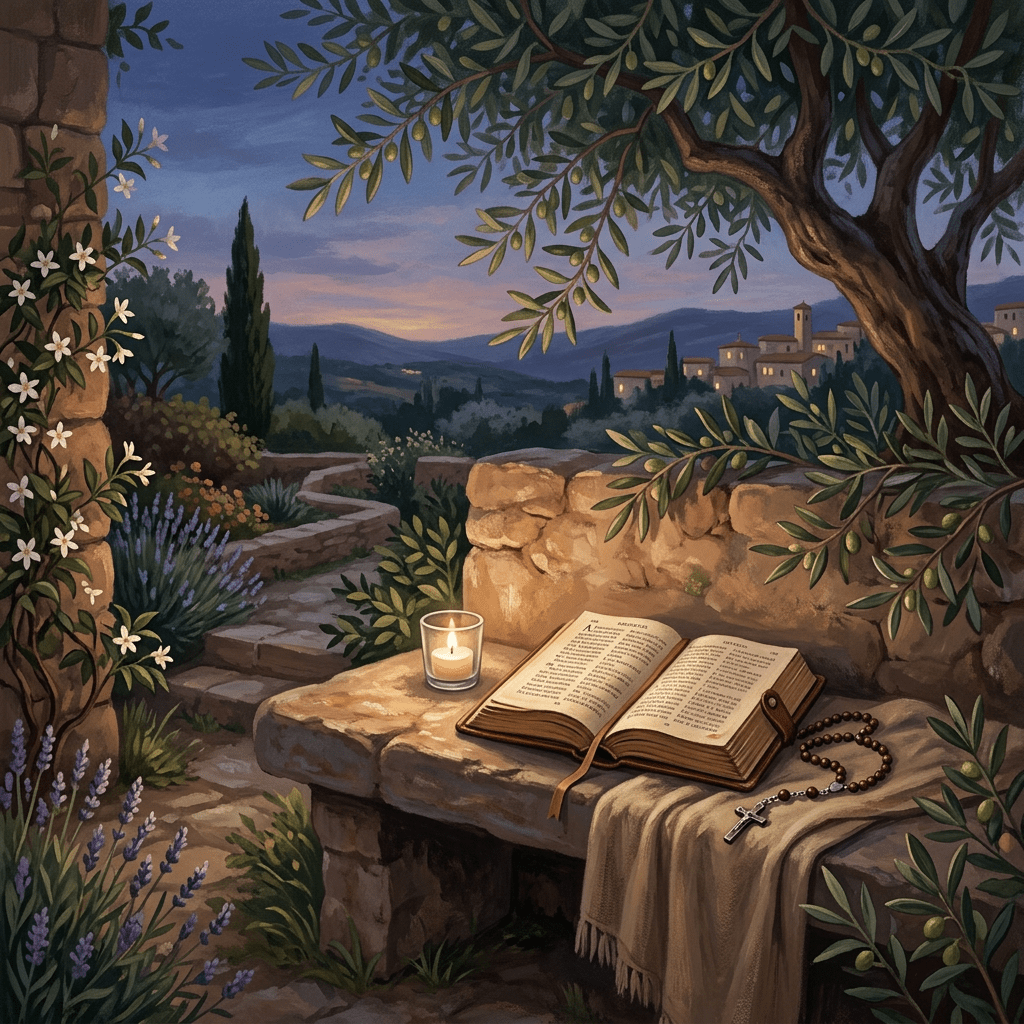
Open prayer book, rosary, and candle on a stone table overlooking a village

Memorial of Saint Monica

First Reading: 1 Corinthians 1:1-9

Responsorial Psalm: Psalm 145:2-3, 4-5, 6-7

Gospel: Matthew 24:42-51

Daily readings: https://bible.usccb.org/bible/readings/082726.cfm

Jesus tells his disciples: stay awake. You do not know on which day your Lord will come. The faithful servant is the one found doing his work when the master returns — giving the household their food at the proper time. The unfaithful servant is the one who decides the master is delayed and starts cutting corners, treating people carelessly, living as if no one is watching and nothing matters. The question underneath the parable is simple: what are you doing while you wait?

Today the Church remembers Monica, the mother of Augustine — and no one in the history of Christianity has answered that question more quietly or more completely than she did. Monica waited seventeen years for her son’s conversion. She watched him leave the faith, take a mistress, join a heretical sect, pursue worldly ambition through Carthage and Rome and Milan. And she prayed. She wept. A bishop told her: the child of those tears shall never perish. She held on to those words. She did not stop giving the household their food at the proper time. She was found doing exactly that — faithfully, without seeing the end from the middle — when the Lord finally came.

Paul writes to the Corinthians: you are not lacking in any spiritual gift as you wait for the revelation of our Lord Jesus Christ. He will keep you firm to the end. God is faithful, and by him you were called to fellowship with his Son. Monica believed that. She believed it when Augustine was not living it. She believed it when she could not see the evidence. That is what staying awake looks like in real life — not high drama, but faithful presence, patient prayer, love that does not give up on the people we are waiting with.

A few questions to sit with today:

1. What am I doing while I wait — for an answer to a prayer, for someone I love to come around, for something in my own life to change? Am I staying awake and faithful, or have I quietly started to drift?

2. Monica prayed for seventeen years without seeing the fruit. Is there someone in my family or my life I have been praying for — and am I tempted to give up? What would it look like to keep going?

3. The faithful servant gives the household their food at the proper time. What is my household — family, friends, people in my care — and am I giving them what they need from me right now?

4. God is faithful, and by him you were called to fellowship with his Son. Do I actually trust that God is faithful even in the season I am in right now, even without visible evidence?

One small thing for tomorrow:

Think of one person you have been carrying in prayer for a long time — someone whose situation has not changed yet. Tomorrow, say a brief prayer for them by name, and tell God: I am still here. I am not giving up. That is Monica’s prayer. It is enough.

Lord Jesus, Monica stayed awake for seventeen years, giving her household their food at the proper time, faithful in a season that showed her nothing but closed doors. I want to be that kind of faithful — not because I can see the outcome, but because I trust you are working even when I cannot see it. Help me not to drift when the waiting is long. Help me to keep praying for the people I love who have not come home yet. May Saint Monica’s intercession keep me patient, and may your faithfulness carry me to the end. Amen.

If you would like to share: is there someone you have been praying for through a long wait — someone whose story is still unfinished?

Cleaning the Inside First: A Spiritual Reflection

Glowing cup of tea on a wooden coaster beside a candle

Tuesday of the Twenty-first Week in Ordinary Time

First Reading: 2 Thessalonians 2:1-3a, 14-17

Responsorial Psalm: Psalm 96:10, 11-12, 13

Gospel: Matthew 23:23-26

Daily readings: https://bible.usccb.org/bible/readings/082526.cfm

Jesus is still talking to the crowds about the scribes and Pharisees, and today he zeroes in on something specific: the cup. You clean the outside of the cup and the dish, he says, but inside they are full of extortion and self-indulgence. You tithe mint and dill and cumin — the small precise things, the ones that are easy to measure and verify — but you have neglected justice, mercy, and faith. The weightier things. The ones that cost something. He does not say stop tithing the herbs. He says: clean the inside first. Then the outside will be clean too.

Most of us know this tension from the inside. We can manage our appearance — what we post, what we say at Mass, how we come across to people at work or at a family dinner — while carrying something quite different in our interior. Resentment we have not dealt with. A habit we keep quiet. A hardness toward someone that we dress up as principle. It is not hypocrisy in the dramatic sense. It is just the ordinary human gap between the face we show and the life we are actually living inside. Jesus is not condemning that gap with cruelty. He is naming it with clarity, and pointing toward the solution: let me clean the inside.

Paul writes to the Thessalonians: God has loved us and given us everlasting encouragement and good hope through grace. Stand firm. Hold to what you were taught. The good news underneath Jesus’s challenge today is not that we have to fix ourselves before we come to him — it is that he comes to us with love and grace precisely so he can do the cleaning. The Psalm sings it: let the heavens rejoice, let the earth be glad, let the trees of the forest sing for joy. The Lord comes. And when he comes to judge, he comes to the inside first.

A few questions to sit with today:

1. Is there a place in my life right now where I am keeping the outside clean but the inside has gone unattended? A relationship, a habit, an attitude — something I would not want Jesus to look at too closely?

2. Jesus says: you have neglected the weightier things — justice, mercy, faith. Which of those three feels most neglected in my daily life right now?

3. God has loved me and given me everlasting encouragement and good hope through grace. Do I actually believe that about myself today? What makes it hard to receive?

4. Is there a small precise thing I do religiously — a practice, a routine, a rule — that has become more important to me than the relationship with Jesus it was supposed to serve?

One small thing for tomorrow:

Before you start tomorrow, take one quiet minute — not to plan or review or check a phone — and just ask Jesus: what is going on inside me right now that I have not brought to you? Then listen. That is enough.

Lord Jesus, you see the inside of the cup. You see past the face I present and into the places I have not cleaned in a while. I do not want to hide from you. Help me to be less concerned with how I appear and more willing to let you work on the inside — the resentments, the fears, the habits that have quietly taken up space. You loved me before I had any of it sorted out, and you offer encouragement and hope through grace, not through performance. Come and clean what needs cleaning. I trust you with what is inside. Amen.

If you would like to share: is there a small precise practice in your faith life that has helped you keep the inside of the cup clean?

Understanding Nathanael: From Skepticism to Faith

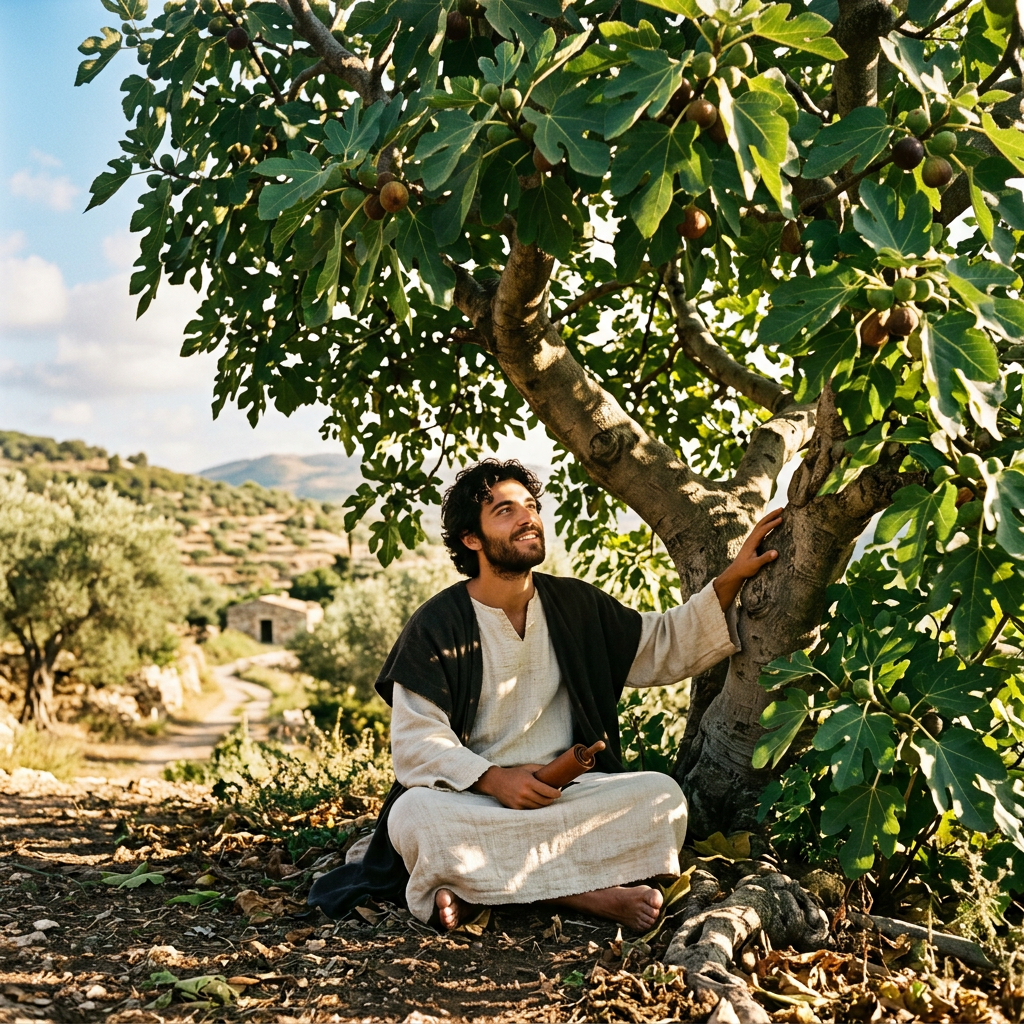
Man in robes sitting beneath a fig tree in a rural landscape

Feast of Saint Bartholomew, Apostle

First Reading: Revelation 21:9b-14

Responsorial Psalm: Psalm 145:10-11, 12-13, 17-18

Gospel: John 1:45-51

Daily readings: https://bible.usccb.org/bible/readings/082426.cfm

Philip finds his friend Nathanael — the man we celebrate today as Saint Bartholomew — and tells him they have found the one Moses and the prophets wrote about. Jesus of Nazareth. And Nathanael, being an honest man, says what he thinks: Can anything good come from Nazareth? It is not a hostile question. It is a real one. He is not pretending. Philip does not argue with him. He just says: come and see. And that is enough. Nathanael comes.

Jesus sees him walking over and says something remarkable before Nathanael has said a word. Here is a true child of Israel. There is no duplicity in him. Nathanael is startled. How do you know me? And Jesus answers: before Philip called you, I saw you under the fig tree. Something in that lands. Not an explanation, not a proof — just the fact that Jesus saw him before he came, before he said a word, before he made any decision. Nathanael answers the only way he can: Rabbi, you are the Son of God; you are the King of Israel. His skepticism dissolved not by argument but by being known. Jesus tells him: you will see greater things than this.

Bartholomew went on to see them. Tradition says he carried the Gospel to India, to Armenia, through Mesopotamia and Parthia. He gave his whole life — and at the end, in Armenia, tradition says he gave his body too, martyred for the faith he received the afternoon Philip brought him to see. He had gone from Can anything good come from Nazareth to the ends of the earth, because one day Jesus saw him under a tree and called him by name. Today’s first reading gives us the vision he spent his life moving toward: the holy city Jerusalem coming down out of heaven, its foundation walls inscribed with the names of the twelve apostles of the Lamb. His name is there.

A few questions to sit with today:

1. Philip said “come and see” — no long argument, just an invitation. Is there someone in my life who might need a simple invitation from me rather than a persuasive case? What is one small “come and see” I could offer?

2. Jesus said to Nathanael: there is no duplicity in you. If Jesus said something like that about me today — naming the thing he sees as true in me — what do I think he would say? Can I sit with that without dismissing it?

3. Nathanael’s doubt was honest, not hostile. Are there honest doubts or questions I have been carrying about my faith that I have not brought to Jesus yet? What would it look like to bring them, the way Nathanael did?

4. Jesus saw Bartholomew before he arrived. Is there a place in my life right now where I feel unseen — at work, at home, in my own prayer — and need to hear that Jesus already sees me there?

One small thing for tomorrow:

Think of one person in your life who might be on the outside of faith — skeptical, indifferent, or just distant. Tomorrow, say one word of gentle invitation to them. Not a sermon. Just a “come and see.”

Lord Jesus, you saw Bartholomew under the fig tree before he even knew your name. You see me now, in whatever ordinary place I am sitting, with whatever doubts or questions I am carrying. Thank you for not waiting until I have it all figured out before you call me by name. Make me more like Bartholomew — honest enough to ask real questions, and open enough to come when someone says come and see. May his example give me courage to carry your name into places that seem unlikely, without knowing where the road leads, trusting that you already see me there. Amen.

If you would like to share: is there a doubt or question about faith you once had that Jesus met in an unexpected way?

Who Do You Say Jesus Is? A Reflection

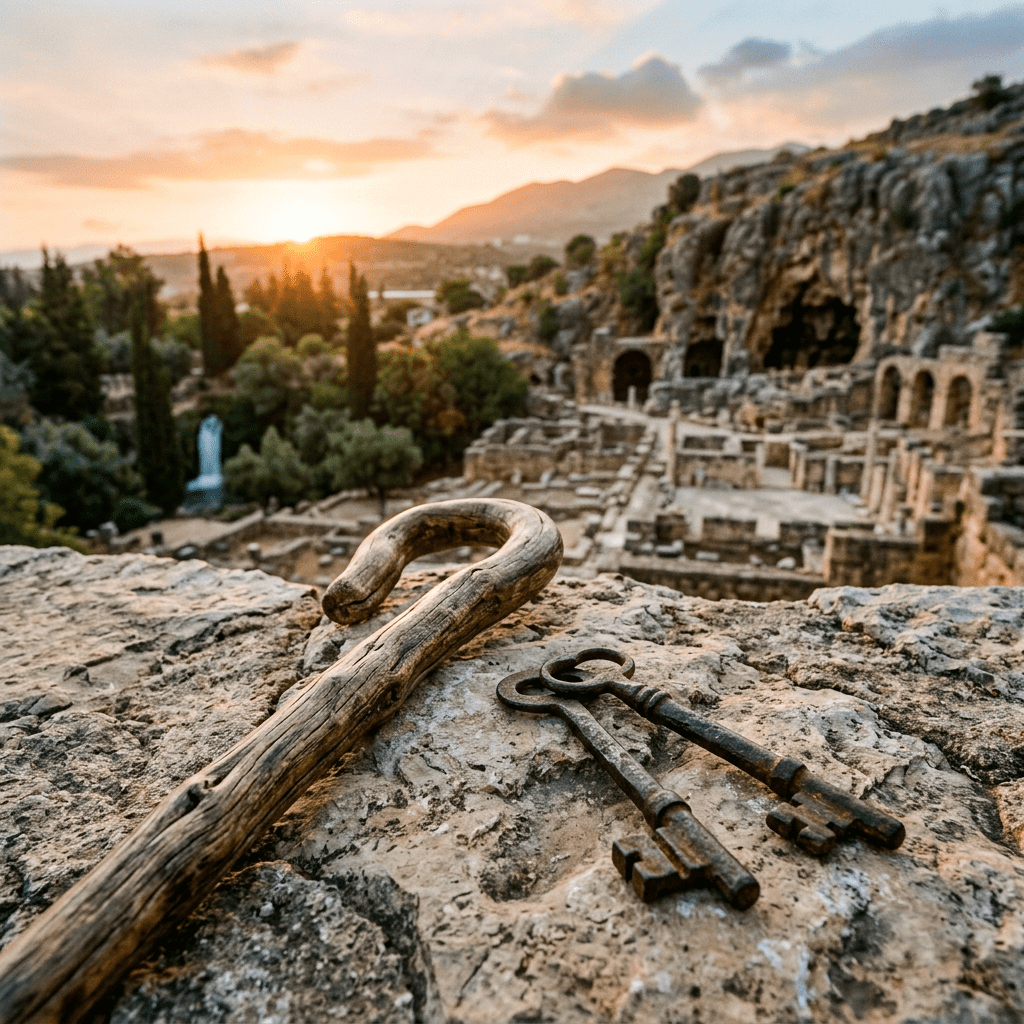
Antique keys and wooden staff on a stone ledge above ancient ruins

Twenty-first Sunday in Ordinary Time

First Reading: Isaiah 22:19-23

Responsorial Psalm: Psalm 138:1-2, 2-3, 6, 8

Second Reading: Romans 11:33-36

Gospel: Matthew 16:13-20

Daily readings: https://bible.usccb.org/bible/readings/082326.cfm

Jesus is in the region of Caesarea Philippi, far from Jerusalem, and he asks his disciples a question. Who do people say that the Son of Man is? They give the crowd’s answers: John the Baptist, Elijah, Jeremiah, one of the prophets. Good answers. Respectful answers. The kind of answer you give when you have observed something from a safe distance and formed an opinion. Then Jesus asks the question that changes everything. But who do you say that I am? That single word — you — shifts the whole weight of the conversation. Not what they are saying. What do you say? What have you, who have been with me, who have eaten at my table, who have watched me in the storms, who have heard me at night in prayer — what have you concluded?

Peter answers. You are the Christ, the Son of the living God. And Jesus responds in a way he rarely does — with blessing. Blessed are you, Simon son of Jonah. He does not just accept the confession; he marvels at it. Because flesh and blood has not revealed this to you. Peter did not think his way there. The Father showed him. The knowing of Jesus is always, underneath everything, a gift. It is received before it is declared. And Jesus builds on it anyway — this impulsive, sometimes-failing fisherman becomes the rock, receives the keys, is fixed like a peg in a sure spot.

Paul writes in Romans: oh, the depth of the riches and wisdom and knowledge of God. How inscrutable his judgments, how unsearchable his ways. Who has known the mind of the Lord? No one. And yet here is Peter, a fisherman, confessing the Son of the living God because the Father chose to show him. This is how the Church is built — not on the brightest minds or the most accomplished people, but on the ones to whom the Father reveals his Son. On ordinary people who, in one graced moment, see clearly and say what they see.

A few questions to sit with today:

1. Jesus asks: but who do you say that I am? If I had to answer that question honestly today — not the Sunday school answer, but what I actually believe in my gut — what would I say?

2. Peter’s confession was a gift, not an achievement. Is there a moment in my own life when I knew something about Jesus that I could not have figured out on my own? When the Father just showed me?

3. Jesus called Peter a rock even knowing Peter would deny him three times. Is there a way I have been disqualifying myself from being useful to God because of my failures? What would it mean to let him fix me like a peg in a sure spot anyway?

4. Paul says: from him and through him and for him are all things. Is there a corner of my life that I have not yet handed over to that — that I am still running for myself rather than for him?

One small thing for tomorrow:

At some point tomorrow, ask Jesus the question Peter answered — not out loud, but in your heart. Who do I say you are? Sit with whatever comes. You do not have to have a polished answer. Just be honest with him about where you are.

Lord Jesus, you asked the question that matters most: who do I say you are? I want to answer it honestly, from the inside out, not just from habit or formula. Help me to know you the way Peter knew you — not because I figured it out, but because the Father showed me. Build something on whatever rock I have to offer, even if it is small and unsteady. Your love is eternal; do not forsake the work of your hands. From you and through you and for you are all things, including me. Amen.

If you would like to share: who do you say Jesus is — in your own words, from your own experience?

Saint Pius X and the Promise of New Life in Faith

Flower-lined stone path through a village at sunset

Memorial of Saint Pius X, Pope

First Reading: Ezekiel 37:1-14

Responsorial Psalm: Psalm 107:2-3, 4-5, 6-7, 8-9

Gospel: Matthew 22:34-40

Daily readings: https://bible.usccb.org/bible/readings/082126.cfm

Ezekiel is set down in the middle of a valley filled with dry bones. Not recently dead — these bones are very dry. All hope of life long past. God asks him: son of man, can these bones come to life? And Ezekiel gives the only honest answer possible: Lord, you alone know that. Then God tells him to prophesy over them. To speak to the bones. And as he speaks, there is a noise, a rattling, and the bones come together, bone joining bone, sinews and flesh and skin assembling — but there is no breath in them yet. Then God says: prophesy to the spirit. Come from the four winds, O spirit, and breathe into these slain. And the breath came into them, and they stood upright. A vast army.

God tells Ezekiel what this means: these bones are the whole house of Israel. They have been saying: our bones are dried up, our hope is lost, we are cut off. But God has not finished with them. I will open your graves and have you rise from them. I will put my spirit in you that you may live. The reading is about a nation, but it speaks to every person who has ever looked at some area of their life — a marriage, a faith, a hope they carried for years — and thought: that is gone. Too dry. Too long dead. Can these bones come to life? Lord, you alone know that. And God says: I have promised, and I will do it.

Today is the memorial of Saint Pius X, who became pope in 1903 and saw his own version of a valley of dry bones — a Church that needed renewal, children cut off from the Eucharist until they were twelve or older, a world he watched slide toward the war that would kill him with grief. He lowered the age for First Communion to seven, walked the streets of Rome with candy in his pockets to teach catechism to children, and lived his whole life by one sentence he left in his will: I was born poor, I have lived in poverty, and I wish to die poor. His motto was: restore all things in Christ. The Gospel today is how he understood that restoration: you shall love the Lord your God with all your heart, soul, and mind — and you shall love your neighbor as yourself. That is what a valley of dry bones looks like when it finally stands up.

A few questions to sit with tonight:

1. Is there an area of my life — a relationship, a hope, a part of my faith — that feels like dry bones right now? Can I bring it to God tonight and say: Lord, you alone know if these can come to life?

2. God told Ezekiel to prophesy — to speak to the dry bones. Is there someone in my life who needs someone to speak life into them today? What would that look like from me?

3. Jesus says the whole law and the prophets depend on love of God and love of neighbor. When I look at my actual week — how I spent my time and attention — does it reflect those two things?

4. Pius X chose to stay poor his whole life, even as pope. Is there any area where I am letting my comfort or my possessions limit how much I love my neighbor?

One small thing for tomorrow:

Think of one person in your life who might be in a valley of dry bones right now — discouraged, depleted, feeling cut off. Send them one message tomorrow. Not advice. Just: I was thinking of you. That is the breath.

Lord Jesus, you are the one who breathes life into dry places. There are parts of my life I have given up on, places I have stopped praying over because they seemed too far gone. Help me to trust that you have not stopped. Give me the courage to prophesy — to speak faith into the dry bones in my own life and in the lives of the people around me. May Saint Pius X’s prayer be mine today: restore all things in Christ. Beginning with me. Amen.

If you’d like to share: is there something in your life that felt like dry bones for a long time, and then — somehow — came back to life?

Saint Bernard’s Teachings on Love and Heart Transformation

An anatomical heart fused with a weathered stone sculpture on a workbench

Memorial of Saint Bernard, Abbot and Doctor of the Church

First Reading: Ezekiel 36:23-28

Responsorial Psalm: Psalm 51:12-13, 14-15, 18-19

Gospel: Matthew 22:1-14

Daily readings: https://bible.usccb.org/bible/readings/082026.cfm

God says through Ezekiel: I will give you a new heart and place a new spirit within you, taking from your bodies your stony hearts and giving you natural hearts. That is not a demand — it is a promise. God is not telling the people to work harder at having better hearts. He is saying that he will do this himself. I will sprinkle clean water upon you. I will put my spirit within you. The transformation is his work. The Psalm today is Psalm 51 — Create in me a clean heart, O God — which is the human side of the same prayer, the soul asking for what Ezekiel says God has already promised to do.

Then the Gospel gives us the wedding banquet. A king throws a great feast for his son, sends servants to invite the guests, and they refuse to come. He sends again — everything is ready, come — and some ignore it, go back to their farms and businesses, and some turn violent. So the king opens the doors to everyone: go out into the streets and invite whoever you find. Bad and good alike. The hall is filled. But when the king enters, he sees one man without a wedding garment. He does not dress up in the costume of the feast but shows up unchanged, as he was in the streets. And this costs him everything.

Today is the memorial of Saint Bernard of Clairvaux, the twelfth-century monk who said that the measure of love is love without measure, and who wrote that what we love, we shall grow to resemble. That is the wedding garment. It is not a set of rules you follow at the door — it is what happens to you when you have stayed long enough at the feast, let the host’s love actually enter you, and found yourself slowly becoming someone different. Everyone is invited. Bad and good alike. But the invitation is also a transformation, not just a ticket.

A few questions to sit with tonight:

1. God promises through Ezekiel to replace my stony heart with a natural one. Is there a part of my heart that still feels stony — closed off, hard, not moving? Can I bring that to God tonight and ask him to work on it?

2. The man without the wedding garment came to the feast but stayed unchanged. Am I showing up to my faith life — Mass, prayer, this daily reflection — but remaining mostly unchanged? What would it look like to let it actually transform something?

3. Bernard said: what we love, we shall grow to resemble. What am I actually spending my time loving — what am I becoming because of it?

4. Psalm 51 asks: create in me a clean heart. What is one area of my heart that I know needs cleaning, but I have been avoiding handing over to God?

One small thing for tomorrow:

Pray Psalm 51:12 slowly, once, first thing in the morning before you pick up your phone: Create in me a clean heart, O God, and renew a steadfast spirit within me. That is the whole prayer. Let it go before you into the day.

Lord Jesus, you invite everyone to the feast — bad and good alike — and you do not wait until we are worthy to come in. But you do ask us to be changed by the feast, not just attended it. Help me to let your love do its work on me. Take the stony parts of my heart and soften them. Give me the spirit within that Ezekiel promises — the one that makes me live, not out of obligation, but out of love. May Saint Bernard’s words be true for me today: let the measure of my love for you be no measure at all. Amen.

If you’d like to share: is there a part of your heart that you feel God slowly softening over the years — something that used to be hard that is not quite as hard anymore?

Finding God in the Eleventh Hour

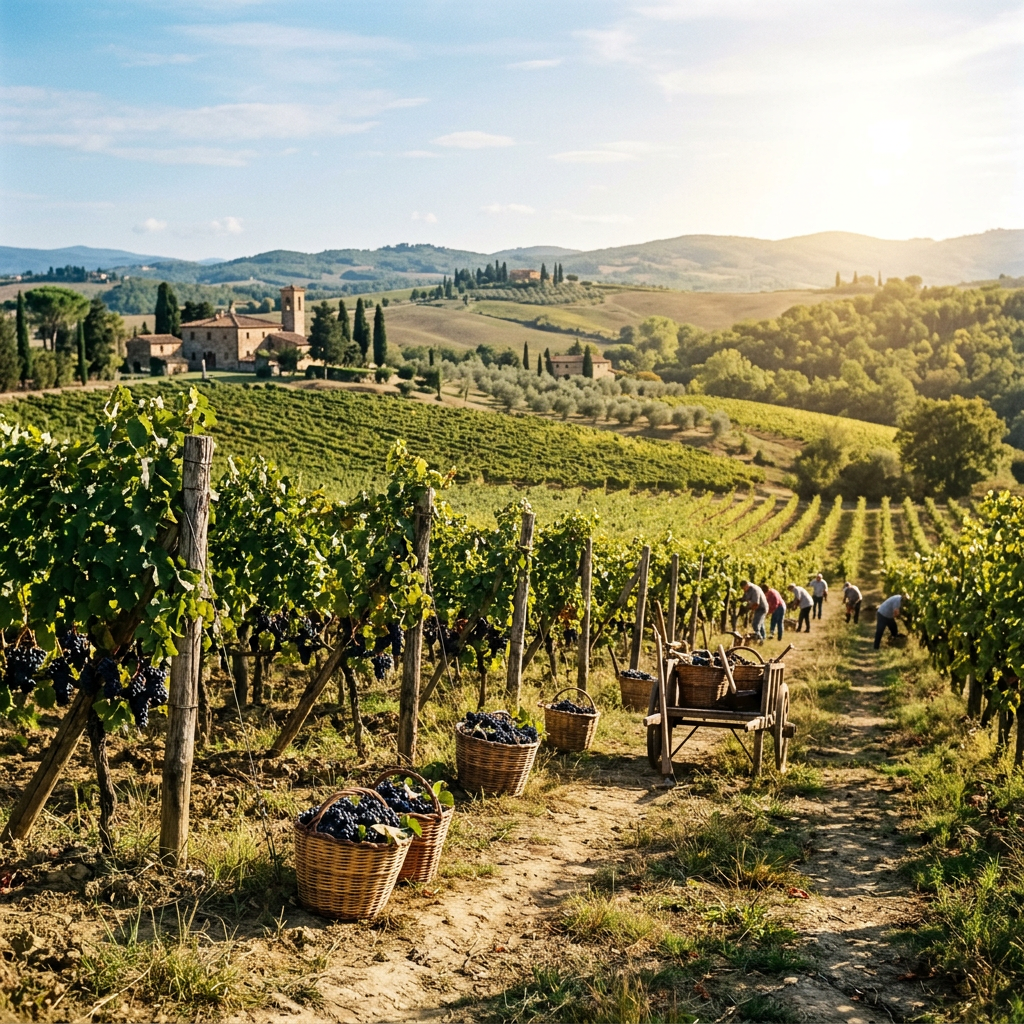
Workers harvesting grapes in a sunlit vineyard near a Tuscan village

Wednesday of the Twentieth Week in Ordinary Time

Optional Memorial of Saint John Eudes, Priest

First Reading: Ezekiel 34:1-11

Responsorial Psalm: Psalm 23:1-3a, 3b-4, 5, 6

Gospel: Matthew 20:1-16

Daily readings: https://bible.usccb.org/bible/readings/081926.cfm

God speaks through Ezekiel in one of the most direct indictments in the Old Testament. Woe to the shepherds who have been pasturing themselves. You fed off the milk and wore the wool but did not pasture the sheep. You did not strengthen the weak or heal the sick or bind up the injured. You did not bring back the strayed or seek the lost. And so they were scattered, wandering over all the mountains and high hills, with no one to look after them. And then God turns the oracle on its own axis: Therefore I myself will look after and tend my sheep. The people who had been abandoned by the ones supposed to care for them will be cared for by God directly. That promise becomes Psalm 23 — the most beloved psalm in Scripture, the one people reach for at bedsides and gravesites and in the middle of the night. The Lord is my shepherd. I shall not want.

The Gospel takes that same God and shows us how he works. A landowner goes out at dawn and hires workers. Then goes out again at nine. Again at noon. Again at three. And then at five o’clock — the eleventh hour, when the workday is nearly done — he finds more people standing idle in the marketplace. Why have you been standing here idle all day? Because no one has hired us. And he says: you go into my vineyard too. At the end of the day he pays everyone the same full wage, starting with the last. The ones who worked all day grumble. And the landowner says something that stops you cold: Are you envious because I am generous?

That is the question that lands on an ordinary Wednesday. Not just about the parable — about today. About the colleague who seems to get credit without the effort. The person in line who gets served first. The family member who wandered far and came back and got the celebration. Something in us keeps very careful accounts. And God says: I am not cheating you. But I am also free to be generous with others. Can you let me be?

A few questions to sit with tonight:

1. God says through Ezekiel: I myself will look after and tend my sheep. Is there a place in my life where I have been trying to be my own shepherd — managing everything myself — instead of letting God do that?

2. The landowner kept going out all day looking for workers no one else had hired. Has God found me at an unlikely hour — an unexpected moment of grace? When?

3. Am I envious because God is generous with someone else? Is there a person in my life whose good fortune I find hard to celebrate?

4. The psalm says: even though I walk in the dark valley, I fear no evil, for you are at my side. Is there a dark valley I am walking through right now? Have I told God about it honestly?

One small thing for tomorrow:

The next time you feel the sting of someone else’s good fortune — a promotion, recognition, a relationship, anything — pause before the reaction hardens. Say quietly: God is generous. Let him be generous with me too.

Lord Jesus, you are the Good Shepherd Ezekiel promised — the one who comes after the lost ones personally, who binds up the injured, who does not lord it over the flock but lays down his life for it. I have been that lost sheep more times than I can count. And you went looking. Help me to trust your generosity instead of measuring it against what others receive. Help me to walk through the dark valley without pretending it is not dark — but also without forgetting you are at my side. I want to live in the house of the Lord a long, long time. Amen.

If you’d like to share: has there been a moment when God found you at the eleventh hour — when you felt it was almost too late but he showed up anyway?