Feast of Saint Lawrence

Feast of Saint Lawrence, Deacon and Martyr

First Reading: 2 Corinthians 9:6-10

Responsorial Psalm: Psalm 112:1-2, 5-6, 7-8, 9

Gospel: John 12:24-26

Daily readings: https://bible.usccb.org/bible/readings/081026.cfm

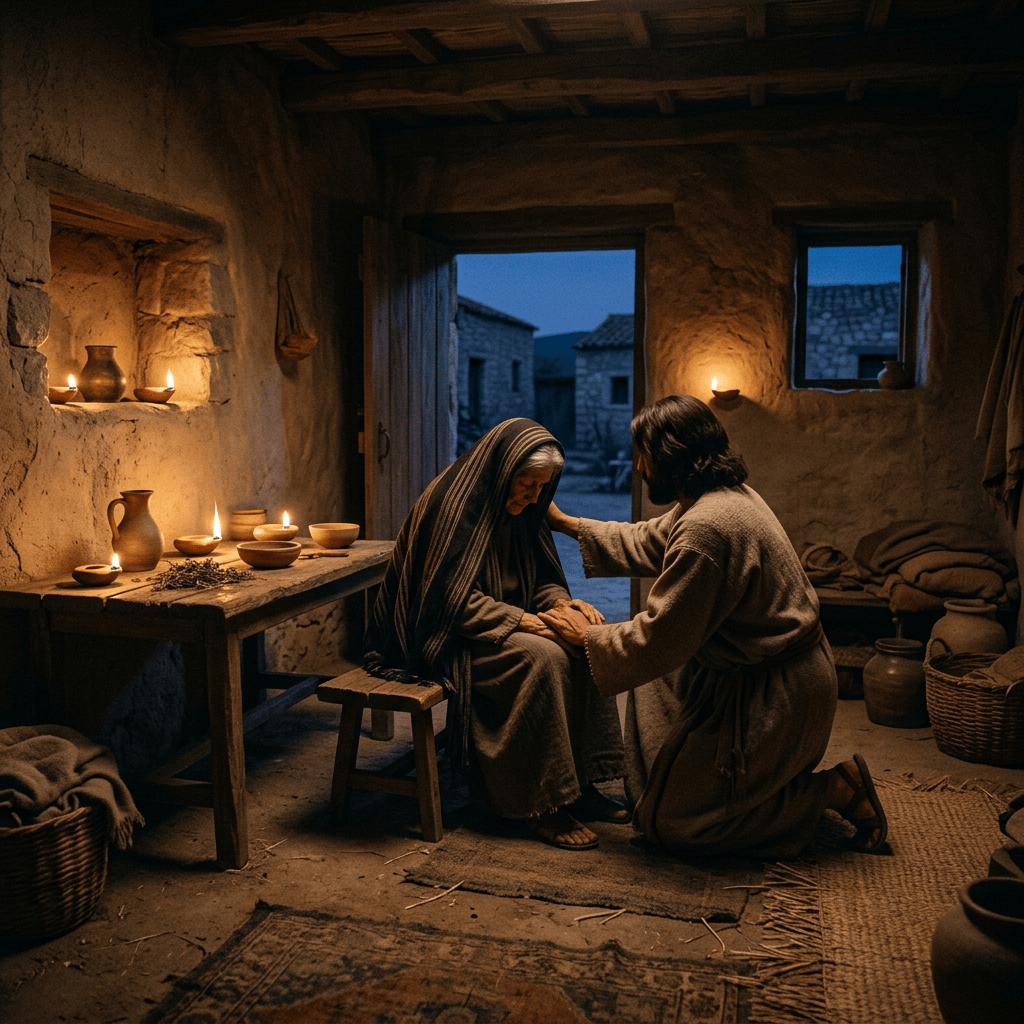
“Unless a grain of wheat falls to the ground and dies, it remains just a grain of wheat; but if it dies, it produces much fruit.” Jesus says this quietly, almost as a footnote, on his way toward Jerusalem. He is talking about himself. But he opens it wider: whoever loves his life loses it, and whoever loses his life in this world will preserve it for eternal life. Whoever serves me must follow me, and where I am, there also will my servant be.

Lawrence, one of the seven deacons of Rome in 258 AD, followed him there. When his spiritual father Pope Sixtus II was being led away to be martyred, Lawrence ran after him weeping, asking: “Father, where are you going without your deacon?” Sixtus turned and said simply: “In three days you will follow me.” In those three days, Lawrence had one job: the prefect of Rome had demanded he hand over the treasures of the Church. So he went through Rome and gathered everything he could find — the poor, the crippled, the blind, the lepers, the widows, the orphans. He brought them to the prefect and presented them in rows. “These are the treasures of the Church.” The prefect was so enraged he had a gridiron prepared over hot coals and had Lawrence roasted alive on it. Paul’s word for today could not be more precise: God loves a cheerful giver. He scatters abroad, he gives to the poor; his righteousness endures forever. Lawrence scattered everything. He gave it all. And his righteousness is still being told seventeen hundred years later.

Most of us will not be called to anything like that. But the question Lawrence poses to a Monday morning is real: what do I actually consider treasure? And am I willing to be the kind of person who gives bountifully, not sparingly — who sees the poor and the broken around me as the actual riches of the Church, not as a problem to manage?

A few questions to sit with tonight:

1. Paul says whoever sows bountifully will reap bountifully, and whoever sows sparingly will reap sparingly. Where have I been sowing sparingly lately — not just with money, but with time, attention, presence, energy?

2. Lawrence had three days between learning he would die and actually dying. He spent them giving everything away. If I knew I had three days, what would I want to have done with them? Does that tell me something about what I should be doing now?

3. He presented the poor as the treasures of the Church. Who are the people in my life — or near my life — who I might be overlooking or minimizing, when they may be exactly where Jesus is asking me to look?

4. Jesus says: where I am, there also will my servant be. Where is Jesus right now, in my ordinary life — and am I willing to follow him there?

One small thing for tomorrow:

Find one person today who is easy to overlook — a coworker, a neighbor, a family member who is going through something hard, someone on the margins of your normal day — and give them your full attention for a few minutes. Not a fix. Just presence. That is what Lawrence did.

Lord Jesus, Lawrence followed you all the way to the gridiron, and even then he had room for a joke — because his heart was not in the things that could be taken from him. He had already given them away. Help me to hold my treasures more loosely today — my time, my comfort, my plans, my sense of how things should go. Give me the courage to scatter abroad and give to the poor, the way Paul describes, the way Lawrence lived. And help me to see what Lawrence saw: that the true treasure of your Church is the people you love most — the ones the world overlooks. May Saint Lawrence pray for me, and may I follow you today wherever you are. Amen.

If you’d like to share: who are the people in your life right now who you would name as a true treasure — the ones who, like Lawrence’s poor, make you rich?

Listening for God Amidst the Noise

Person with backpack and walking stick at cave entrance overlooking desert sunrise

Nineteenth Sunday in Ordinary Time

First Reading: 1 Kings 19:9a, 11-13a

Second Reading: Romans 9:1-5

Responsorial Psalm: Psalm 85:9-14

Gospel: Matthew 14:22-33

Daily readings: https://bible.usccb.org/bible/readings/080926.cfm

God tells Elijah to go out and stand on the mountain, for the Lord is passing by. And then — a strong, heavy wind that tears the mountains apart. The Lord is not in the wind. Then an earthquake. The Lord is not in the earthquake. Then fire. The Lord is not in the fire. And then — a tiny whispering sound. When Elijah hears it, he wraps his face in his cloak and goes to stand at the entrance of the cave. God was there all along. Not in the spectacle. In the whisper.

This is a word for a Sunday morning in August. The storms around us are very loud — the news, the notifications, the demands, the background hum of anxiety that most of us carry without even naming it. And we keep listening for God in the noise, looking for him in the dramatic thing, waiting for the earthquake-level sign. Meanwhile the tiny whispering sound keeps coming, patient and small and easily missed. Paul writes from a place of deep anguish for his own people, holding grief and love together without letting either one go. He does not look away from the sorrow. He stays with it, before God. That is itself a kind of listening.

Then the wind on the lake and Peter stepping out of the boat. He is walking — actually walking on the water — and then he sees how strong the wind is. He takes his eyes off Jesus to look at the storm, and he starts to sink. He cries out: Lord, save me. And Jesus stretches out his hand immediately and catches him. Not after a lecture. Not after Peter proves himself. Immediately. Then he asks the question that is worth sitting with all week: “O you of little faith, why did you doubt?” Not a condemnation. A genuine question. And the wind dies, and the disciples say: Truly, you are the Son of God.

A few questions to sit with today:

1. The Lord was not in the wind, not in the earthquake, not in the fire — but in the tiny whispering sound. Where have I been looking for God lately? Have I been listening for a whisper or waiting for an earthquake?

2. Peter walked on water until he looked at the wind instead of Jesus. What is the “wind” I have been looking at lately — the specific worry, distraction, or fear that keeps pulling my gaze?

3. Paul held great sorrow and love together at the same time, before God, without flinching. Is there a grief or anguish in my life right now that I have not brought fully to prayer? What would it look like to stay with it, the way Paul did, without turning away?

4. Jesus caught Peter immediately. Before Peter could explain, justify, or prove himself — immediately. Do I actually believe he will catch me that fast? What would change in my day if I did?

One small thing for tomorrow:

At some point tomorrow — morning, lunch, evening, whenever — turn off the noise for two minutes. No podcast, no music, no scroll. Just sit in the quiet and listen. You do not have to hear anything. The practice is the listening itself.

Lord Jesus, you went up the mountain by yourself to pray, while the disciples were being tossed about in the dark. You let them struggle for a while before you came. And when you came walking on the water and Peter cried out, you caught him immediately. I want to be the kind of person who stays in that boat with my eyes on you, through the storm, not looking away at the wind. Help me to hear the tiny whispering sound this week — in the quiet before the day begins, in the pause between one task and the next, in the small ordinary moments where you have been speaking all along and I have been too loud to hear. Teach me to listen. And when I sink, stretch out your hand. Amen.

If you’d like to share: where have you been finding it hardest to hear God’s voice lately — and what helps you tune back in?

Saint Dominic’s Legacy: Faith and Action

Monk in brown robe kneeling and praying in a medieval stone chapel

Memorial of Saint Dominic, Priest

First Reading: Habakkuk 1:12 — 2:4

Responsorial Psalm: Psalm 9:8-9, 10-11, 12-13

Gospel: Matthew 17:14-20

Daily readings: https://bible.usccb.org/bible/readings/080826.cfm

Habakkuk is not a patient prophet. He climbs to his watchtower, plants himself on the rampart, and waits — not passively, but with a kind of fierce attentiveness. He has been crying out to God about injustice and getting silence. But he does not walk away. He stays at his post and says: I will stand here and watch. And then God answers. Write the vision down, God says. Make it clear enough that someone can read it running. For the vision has its time. It presses toward fulfillment. If it delays, wait for it. It will surely come. And then the line that Paul would later build an entire theology on: the just man, because of his faith, shall live.

Then a father comes to Jesus carrying a boy who suffers terribly. He had already brought him to the disciples — and they could not cure him. Jesus heals the boy immediately. Afterward, in private, the disciples ask: why couldn’t we? And Jesus gives them an answer that is both humbling and strangely hopeful: because of your little faith. And then: if you have faith the size of a mustard seed, you will say to this mountain, move — and it will move. Nothing will be impossible for you.

Today is the memorial of Saint Dominic, born in Spain in 1170, who spent his life doing exactly what Habakkuk describes — standing at the watchpost of prayer and then moving with what he saw. As a student he sold his books, his most prized possessions, to feed famine victims, saying that he could not study from dead skins while living men were dying of hunger. He founded the Order of Preachers on a single principle he called contemplata tradere — to hand on to others what you have contemplated. Prayer first. Then go. He once said: “Arm yourself with prayer rather than a sword; be clothed with humility rather than fine garments.” His faith was not passive. It was a mustard seed that moved mountains across Europe.

A few questions to sit with tonight:

1. Habakkuk stood at his watchpost and waited for God’s answer — actively, attentively, without walking away. Is there a place in my life where I have stopped waiting for God to answer? Have I left the watchpost?

2. The disciples had little faith. Jesus did not shame them — he told them what would help. Is there an area of my prayer life that has felt small or ineffective lately? What would it mean to bring even that small faith and offer it?

3. Saint Dominic’s motto was: contemplate, then hand on. Do I spend enough time in actual contemplation — sitting with God — before I go and act? Or am I mostly acting without the interior life to sustain it?

4. He sold his books to feed the hungry. What is my equivalent of the books — something I value, something I have been holding on to — that God might be inviting me to give?

One small thing for tomorrow:

Find three minutes to stand at your own watchpost. Before you start your day — before the phone, before the news, before the list — stand still and say: I am here. I am watching. Speak, Lord. Then wait. Even thirty seconds of that is worth more than you think.

Lord Jesus, Habakkuk stood at his post and you answered him. The disciples had little faith and you told them what it could become. Saint Dominic spent his life moving between contemplation and action, between the watchtower and the road, between prayer and the people who needed to hear. I want to live that way — more rooted in you, more attentive, more willing to act from what I have actually received in prayer rather than from my own energy. Give me faith the size of a mustard seed today. Let it be enough. And when the vision is delayed, help me to wait for it, because you have promised it will surely come. Amen.

If you’d like to share: what does your own watchpost look like right now — is there a prayer or a waiting you have been faithful to, or one you have quietly abandoned?

Persistent Faith: Lessons from the Canaanite Woman

Winding dirt path through dense forest with mist and distant hills at dawn
Wednesday of the Eighteenth Week in Ordinary Time
Optional Memorial of the Dedication of the Basilica of Saint Mary Major

First Reading: Jeremiah 31:1-7
Responsorial Psalm: Jeremiah 31:10, 11-12ab, 13
Gospel: Matthew 15:21-28
Daily readings: https://bible.usccb.org/bible/readings/080526.cfm

"With age-old love I have loved you; so I have kept my mercy toward you." That is how Jeremiah opens today — not with a condition, not with a warning, but with a declaration that sounds almost startled by its own tenderness. The people escaped the sword. They wandered in the desert. And God's first word to them on the other side is not "you should have done better." It is: I have always loved you. I kept my mercy. You are going to dance with tambourines again. The image is almost extravagant — vineyards planted on the mountains, merrymakers, watchmen calling out "let us go to Zion." God does not just restore; he restores with joy.

Then comes one of the most striking exchanges in the Gospels. A Canaanite woman — an outsider, not of Israel — comes to Jesus calling out for her daughter who is tormented. Jesus does not answer her. The disciples urge him to send her away. He says he was sent only to the lost sheep of Israel. She kneels before him and says simply: Lord, help me. He pushes back again — with words that sound almost harsh. And she does not flinch, does not leave, does not give up. She finds her footing and answers with a persistence and wit that stops him. "Even the dogs eat the scraps that fall from the table." And Jesus names what he sees in her: great faith. Her daughter is healed from that hour.

Today is also the optional memorial of the Basilica of Saint Mary Major in Rome, one of the oldest Marian shrines in the world. Mary herself was a woman who persisted in faith through silence — through the long years before the public ministry, through the cross, through the tomb. She did not leave. She kept showing up. This Canaanite woman reminds us of that persistence: faith that does not require an immediate answer to stay in the conversation with Jesus.


A few questions to sit with tonight:

1. Jeremiah says: "With age-old love I have loved you." When I am tired, overwhelmed, or discouraged, do I actually believe that about myself? Or do I hear it as something meant for someone else?

2. The Canaanite woman was persistent — she did not walk away when Jesus went silent. Is there a prayer of mine that has gone unanswered for a while? Have I kept asking, or have I quietly given up?

3. She said "Lord, help me" — nothing elaborate, just that. Is there something I need to bring to Jesus today in those exact words? What is the simple request I have been making more complicated than it needs to be?

4. Jesus said "great is your faith." What would it look like for my faith to show up with that kind of persistence and confidence this week?


One small thing for tomorrow:

Bring one prayer you have been holding back — because it felt too small, too repetitive, too unlikely to be answered — and say it again. Out loud if you can. Just: Lord, help me. And mean it.


Lord Jesus, you kept silent and she kept calling. You pushed back and she found her footing. And then you named what you saw in her: great faith. I want that kind of faith — not the kind that only shows up when you seem close, but the kind that stays when you seem far. Jeremiah says you have loved me with an age-old love and kept your mercy toward me. Let me live today as if that is actually true. Where I have quietly given up on a prayer, give me the courage to come back to the table and say again: Lord, help me. May Mary, who persisted in faith when she could not see the whole story, pray for me when I am tempted to walk away. Amen.


If you'd like to share: is there a prayer you have been tempted to give up on — and what has kept you coming back?

Faith Over Comfort: Lessons from Jeremiah and Peter

A person hiking on a dirt trail winding through green hills with morning mist and sunrise
Monday of the Eighteenth Week in Ordinary Time

First Reading: Jeremiah 28:1-17
Responsorial Psalm: Psalm 119:29, 43, 79, 80, 95, 102
Gospel: Matthew 14:22-36
Daily readings: https://bible.usccb.org/bible/readings/080326.cfm

Two prophets stand in the house of the LORD. Hananiah announces what everyone wants to hear: within two years, the exile ends. The yoke breaks. God will bring everyone home. He is confident. The crowd wants to believe him. He even takes the wooden yoke from Jeremiah's neck and snaps it dramatically. And Jeremiah's response is striking — he does not immediately argue. He says: amen, may it be so. I hope you are right. But here is the problem: the prophets who came before both of us foretold war, suffering, pestilence. A prophet who predicts peace is only confirmed as true when it happens. Then God speaks to Jeremiah privately: by breaking the wooden yoke, Hananiah has forged an iron one.

There is a warning in that for a Monday morning. The comfortable word is not always the true word. The voice that tells us everything will resolve quickly and painlessly, that we can avoid the difficult thing, that we do not need to sit with the hard truth — that voice can feel like consolation and still be leading us somewhere worse. The psalm asks for something more demanding: remove from me the way of falsehood. Teach me your statutes. Let my heart be perfect in your decrees, that I not be put to shame.

Then Peter does something extraordinary and something very human in the same thirty seconds. He sees Jesus walking on the water and asks to come. Jesus says one word: come. Peter gets out of the boat — which is itself remarkable — and begins to walk. And then he notices the wind. He looks away from Jesus toward the storm around him. And he sinks. Jesus catches him immediately. "O you of little faith, why did you doubt?" It is not a rebuke so much as a question worth sitting with. The wind was real. The storm was real. But so was Jesus, and Peter was walking toward him. What changed was not the storm. What changed was what Peter was looking at.


A few questions to sit with today:

1. Is there a comfortable voice in my life right now — an easy reassurance I keep choosing — that may be more like Hananiah's word than Jeremiah's? Am I willing to let the psalm's prayer be mine: remove from me the way of falsehood?

2. Peter got out of the boat. That part is easy to skip past. Is there something God has been saying "come" to me about — something that would require stepping out — that I have been staying in the boat to avoid?

3. When did I last take my eyes off Jesus and start looking at the wind instead? What was the wind — the specific anxiety, the specific distraction — and how did it feel when I shifted my gaze?

4. Jesus caught Peter immediately. Not after a speech, not after he proved himself — immediately. Do I believe he will catch me that fast when I am sinking?


One small thing for tomorrow:

When you feel the wind pick up tomorrow — the anxiety, the discouraging news, the voice that says it is not going to work — try looking back at Jesus before you respond. Not away from the storm, but toward him while the storm is still there. One redirect. See what happens.


Lord Jesus, you said come and Peter came — and when he sank you caught him before he went under. I want to get out of the boat more often. I want to notice when I am choosing the comfortable word over the true one, and when I am looking at the wind instead of you. Help me to want what the psalm asks for: not the easy path, but the true one. Remove from me the way of falsehood. Teach me your statutes. And when I start to sink — which I will — stretch out your hand immediately the way you did for Peter. I trust that you will. May Mary, who stepped out of every comfortable ordinary expectation to say yes to you, pray for me when the wind is loud. Amen.


If you'd like to share: what is the wind in your life right now that keeps pulling your eyes away from Jesus — and what would it take to look back toward him?

The Miracle of Sharing: Five Loaves and Two Fish

Round loaf and small rolls on cloth on rock in desert at sunrise
Eighteenth Sunday in Ordinary Time

First Reading: Isaiah 55:1-3
Second Reading: Romans 8:35, 37-39
Responsorial Psalm: Psalm 145:8-9, 15-16, 17-18
Gospel: Matthew 14:13-21
Daily readings: https://bible.usccb.org/bible/readings/080226.cfm

Isaiah opens with one of the most generous invitations in Scripture. All you who are thirsty, come to the water. You who have no money, come, receive grain and eat. Come without paying and without cost. Drink wine and milk. Why spend your money for what is not bread? Your wages for what fails to satisfy? There is something almost exasperated in the invitation — God cannot understand why we keep going to the things that leave us empty when the real thing is available, free, right now.

Then Matthew gives us a moment that is almost unbearable in its tenderness. Jesus has just heard that John the Baptist — his cousin, the one who baptized him, the voice crying in the wilderness — has been killed. He withdraws in a boat to a deserted place by himself. He needs to grieve. But the crowds follow him on foot. He disembarks and sees the vast crowd, and his heart is moved with pity. He does not send them away. He cures their sick. When evening comes and the disciples urge him to dismiss the crowd so they can find food, he says: there is no need for them to go away. Give them some food yourselves.

The disciples have five loaves and two fish. That is all. They know it is not enough. Jesus takes it, looks up to heaven, says the blessing, breaks the loaves, and gives them to the disciples to distribute. The math that should not work, works. Five thousand men, plus women and children, eat and are satisfied. Twelve baskets of fragments remain. All of this flows out of a day when Jesus was grieving. The abundance is not despite the sorrow — it emerges from within it. Paul closes the ring: nothing will separate us from the love of Christ. Not anguish, not distress, not famine, not the sword. Not grief. Not inadequacy. Not five loaves that are not enough. In all these things we conquer overwhelmingly through him who loved us.


A few questions to sit with today:

1. Isaiah asks: why spend your wages on what fails to satisfy? What have I been spending my energy or attention on lately that keeps leaving me empty? And am I going to the water that is actually free?

2. Jesus was grieving when he fed the five thousand. Is there a place in my life where I have told myself I am too empty, too depleted, too sad to be of use — when God might be asking me to bring what little I have and let him bless it?

3. The disciples said: all we have is five loaves and two fish. Have I been holding back from offering what little I have because I already decided it is not enough?

4. Paul says nothing will separate us from the love of Christ — and then lists all the hardest things: anguish, distress, famine, peril, sword. Is there something in my life right now that I have been afraid is making me less loved, less reachable, less held? What would it mean to actually believe Paul's list does not include it?


One small thing for tomorrow:

Find one small thing you have that you have been telling yourself is not enough — a talent, a bit of time, a small kindness — and offer it. Bring it to Jesus and let him bless it. Do not wait until you have more.


Lord Jesus, you withdrew to grieve and the crowd followed you — and instead of sending them away, you fed them. You took what was not enough and made it more than enough. I want to trust you with my not-enough — the five loaves of whatever I have to offer today, on a day when I feel depleted. Take it. Bless it. Break it and give it through me. And let Isaiah's invitation land all the way: why am I spending my wages on what fails to satisfy when you are here, free, available, asking me simply to come? Teach me to come. May Mary, who saw you bless small things and make them feed thousands, pray for me when my hands feel too empty to offer anything. Amen.


If you'd like to share: what is the five loaves and two fish in your life right now — the small, not-enough thing you have been hesitating to bring?

Reflecting on Faith: Insights from Ignatius of Loyola

Open ancient book titled Historia & Vita on wooden table with wooden cross and sword
Memorial of Saint Ignatius of Loyola, Priest
Founder of the Society of Jesus — For the Greater Glory of God

First Reading: Jeremiah 26:1-9
Responsorial Psalm: Psalm 69:5, 8-10, 14
Gospel: Matthew 13:54-58
Daily readings: https://bible.usccb.org/bible/readings/073126.cfm

God tells Jeremiah to stand in the temple court and say everything — omit nothing. And God adds one quiet, hopeful word before sending him: perhaps they will listen. Perhaps. Not certainly. Not probably. Perhaps. Jeremiah goes anyway. He says everything he was told to say. And when he finishes, the priests and prophets seize him: you must be put to death. This is what it looks like to be faithful to a word you did not choose, in front of people who do not want to hear it.

Then Jesus returns to his hometown. He teaches in the synagogue. They are astonished — but not in the good way. Where did he get this wisdom? Is he not the carpenter's son? We know his mother. We know his brothers. And they took offense at him. He did not work many mighty deeds there because of their lack of faith. The people who knew him longest, who had watched him grow up, who had every physical proximity to the holy — they were the ones who could not receive him. Familiarity became a wall instead of a door.

Ignatius of Loyola understood what it cost to say the word you were sent to say. He was a soldier, wounded at Pamplona, laid up with nothing to do but read the lives of the saints — and that reading broke him open. He spent a year in a cave at Manresa doing penance so intense his health almost gave out. He learned, slowly and painfully, to discern which movements of soul came from God and which did not. Out of that long schooling in the interior life he wrote the Spiritual Exercises — a systematic way of paying attention to what God is doing in you. He founded the Jesuits on one principle: go where the need is greatest, and do it for the greater glory of God. He taught his men not to fear rejection or difficulty, because the mission was not theirs — it was God's. Omit nothing. Perhaps they will listen.


A few questions to sit with today:

1. Is there a word I have been given — something I know I should say, or something I should do — that I have been holding back because I am not sure how it will be received? What is keeping me from saying it?

2. The people of Nazareth took offense because they knew Jesus's family. Is there a person in my life whose ordinariness or familiarity has kept me from actually receiving what God might be saying through them?

3. Ignatius learned to discern by paying very careful attention to interior movements — consolation and desolation, what leads toward God and what leads away. Have I been paying that kind of attention to my own interior life recently?

4. God says perhaps they will listen. Not certainly. Ignatius sent missionaries to the ends of the earth not knowing how it would be received. Do I act faithfully even when the outcome is uncertain?


One small thing for tomorrow, Saturday:

Try one small version of the Ignatian Examen tonight or tomorrow morning: look back over the last 24 hours and ask — when did I feel most alive, most connected, most like myself? And when did I feel most hollow, most off, most distant from God? That movement between the two is where Ignatius says God is trying to speak.

Lord Jesus, you were rejected in your hometown by people who thought they knew you too well to be surprised by you. Keep me from making the same mistake — from being so familiar with the words and the forms that I stop actually receiving you. Give me Jeremiah's faithfulness: to say what I am sent to say and omit nothing, even when the reception is uncertain. Give me Ignatius's attention: to notice where you are moving in me, to follow consolation toward you and not away. For your greater glory — not mine. May Ignatius, and Mary who knew you before the world did, pray for me when faithfulness feels costly. Amen.


If you'd like to share: when in your ordinary week do you feel most alive and connected to God — and when do you feel most hollow or distant? Ignatius would call that your most important data.

The Dragnet of Faith: Gathering Imperfect Lives

Interior of a church with wooden pews, green banners, and a priest at the altar
Thursday of the Seventeenth Week in Ordinary Time
Optional Memorial of Saint Peter Chrysologus, Bishop and Doctor of the Church
Peter of the Golden Word

First Reading: Jeremiah 18:1-6
Responsorial Psalm: Psalm 146:1b-2, 3-4, 5-6ab
Gospel: Matthew 13:47-53
Daily readings: https://bible.usccb.org/bible/readings/073026.cfm

God sends Jeremiah to the potter's house. And what Jeremiah sees is not a finished object on display — he sees a potter working at the wheel, and when the object of clay turns out badly in his hand, he simply tries again. Not frustrated. Not throwing the clay away. Just trying again, making of the clay another object, whatever sort he pleases. And then God speaks: can I not do to you, house of Israel, as this potter has done? Indeed, like clay in the hand of the potter, so are you in my hand.

This image is worth sitting with on a Thursday morning. Clay does not have to be perfect before the potter works with it. Clay does not have to arrive already shaped. The potter works with what is there — and when it goes wrong, he does not discard it. He tries again. You are in his hands. Still being shaped. Still on the wheel. The fact that it has not come out right yet is not a sign that you have been discarded. It is a sign that the potter is still working.

Then Jesus closes the long run of parables from Matthew 13 with the dragnet. The kingdom of heaven is like a net thrown into the sea, which collects fish of every kind. When it is full, the haul comes ashore, and the good are kept, the bad thrown away. The sorting is real — Jesus does not pretend otherwise. But notice what the dragnet does first: it collects fish of every kind. Not the impressive ones only, not the already-formed ones only. Every kind. And then Jesus asks his disciples: do you understand all these things? And they say yes. So he gives them one final image — the good scribe instructed in the kingdom brings from his storeroom both the new and the old. The old wisdom and the new. Jeremiah's potter and the dragnet in the same storeroom.

Saint Peter Chrysologus, whose memorial we observe today, was a fifth-century bishop in Ravenna known for his short, piercing sermons — he was given the title Chrysologus, golden-worded, because of his gift for saying the essential thing with clarity and warmth. He wrote: "If you want your prayers to reach God, listen to his word when it reaches you." The potter sends a word. The dragnet hauls in everything. The golden-worded bishop distills it to one thing: listen, and be shaped.


A few questions to sit with today:

1. Am I willing to be clay on the wheel — still being shaped, still possibly needing to be remade — or have I decided I am already finished, for good or ill?

2. Is there a place in my life where something has not come out right — a relationship, a habit, a pattern — and I need to hear that the potter has not thrown the clay away but is simply trying again?

3. Peter Chrysologus says: if you want your prayers to reach God, listen to his word when it reaches you. Am I listening? Or am I mostly talking, asking, petitioning — and not pausing to receive?

4. The dragnet collects fish of every kind. Do I trust that I am among those being gathered — even in my inconsistency, my mixed motives, my half-formed faith?


One small thing for tomorrow:

Find one old thing and one new thing in your faith today: something from your past that still holds true (an old prayer, a Scripture you know by heart, a practice you were raised with) and something you have discovered more recently. Hold them together. That is the scribe's storeroom.


Lord Jesus, I am clay in the potter's hand. Sometimes badly formed, sometimes needing to be remade — but in your hands, not discarded. Work with me. Try again with whatever has gone wrong. I trust that the wheel is still turning, that you are still shaping something, even when I cannot see the form yet. Help me to listen the way Peter Chrysologus taught — so that when your word reaches me, my prayers reach you. Gather me in the dragnet, imperfect and mixed as I am, and let me be among those set aside as good at the end. May Mary, who was perfectly yielded clay, pray for all of us who are still on the wheel. Amen.


If you'd like to share: is there a place in your life where something went wrong and you wonder if the potter has set the clay aside — and what would it mean to trust that he is simply trying again?

Finding Hope in Grief: Lessons from Jeremiah

Stone archway covered with green ivy and moss, sunlight shining through trees behind
Tuesday of the Seventeenth Week in Ordinary Time

First Reading: Jeremiah 14:17-22
Responsorial Psalm: Psalm 79:8, 9, 11 and 13
Gospel: Matthew 13:36-43
Daily readings: https://bible.usccb.org/bible/readings/072826.cfm

Jeremiah weeps. Not a passing sadness — let my eyes stream with tears day and night, without rest. He walks out into the field and sees those slain by the sword. He enters the city and sees those consumed by hunger. Even the prophet and the priest forage in a land they do not know. And then he turns to God with the most honest kind of prayer: Have you cast Judah off completely? Is Zion loathsome to you? We wait for peace, to no avail. For a time of healing, but terror comes instead.

What Jeremiah does next is worth noticing. He does not stop praying. He does not walk away from God because the answer he wanted did not come. He pivots from the grief to an act of trust: we recognize our wickedness. We have sinned against you. But for your name's sake, spurn us not. Among the nations' idols, is there any that gives rain? Is it not you alone, O LORD, our God, to whom we look? In the middle of devastation and unanswered prayer, he names the one thing he still knows: there is nowhere else to go. You alone have done all these things.

Then Jesus explains the parable of the weeds. The field is the world. The good seed and the weeds grow together — and there is a reason God does not pull the weeds early: he would uproot the wheat alongside them. The harvest comes. The angels do the sorting. And at the end, the righteous will shine like the sun in the Kingdom of their Father. Jeremiah's weeping is not the last word. The tears are real, but the harvest is coming. The wheat is growing. And the one who sowed the good seed knows exactly what is in the field.


A few questions to sit with today:

1. Is there a place in my life where I have been waiting for peace and healing that has not come — something I have been praying about that seems to be answered with silence or terror instead? Have I brought that honestly before God, the way Jeremiah did?

2. Jeremiah says: "Is it not you alone, O LORD, our God, to whom we look?" In my actual life — when peace does not come and healing does not arrive — is God still the one I turn toward? Or do I turn somewhere else?

3. The weeds and wheat grow together in the world and in my own heart. Am I honest about what is mixed in me — the growing faith and the persistent sins growing alongside each other — without either despair or complacency?

4. Jesus says the righteous will shine like the sun. Do I hold that future as something real and coming — something that gives weight and direction to how I live today — or does it feel abstract?


One small thing for tomorrow:

Borrow Jeremiah's pivot today. Whatever grief or unanswered prayer you are carrying, say it plainly to God — and then add his words: "Is it not you alone, O LORD, our God, to whom we look? You alone have done all these things." Let the honest grief and the honest trust sit together. That is the prayer.


Lord Jesus, Jeremiah wept without rest and kept praying anyway. I want that kind of faithfulness — the kind that does not require good news to stay in the conversation with you. Where I have been waiting for peace that has not come, waiting for healing that has not arrived, help me to stay in the field with you. I know the weeds and the wheat are growing together in me. I trust that you know which is which, and that you will not uproot the wheat. Let me grow. Let me be among the righteous who shine like the sun at the harvest — not because I earned it, but because you sowed me and kept me. May Mary, who stood at the cross weeping and trusting at the same moment, pray for me when grief and hope have to exist together. Amen.


If you'd like to share: is there a prayer you have been praying for a long time without an answer — and what has that waiting done to your relationship with God?

Understanding the Message of Saint James: A Reflection on Fragility

Older man dressed as a pilgrim walking barefoot on a sandy beach at sunrise holding a wooden staff and gourds
Feast of Saint James, Apostle
Son of Zebedee — First Apostle Martyred — Patron of Pilgrims

First Reading: 2 Corinthians 4:7-15
Responsorial Psalm: Psalm 126:1bc-2ab, 2cd-3, 4-5, 6
Gospel: Matthew 20:20-28
Daily readings: https://bible.usccb.org/bible/readings/072526.cfm

Paul says something that deserves to land slowly this Saturday morning: we hold this treasure in earthen vessels, that the surpassing power may be of God and not from us. The treasure is the Gospel, the life of Jesus, the light of the glory of God. The vessel is you and me — cracked, fragile, ordinary clay. And Paul is not apologizing for that. He is pointing to it as the point. If the vessel were impressive, you would look at the vessel. Because the vessel is ordinary and broken and still somehow carrying extraordinary life, you look at what is inside.

He goes on: afflicted in every way, but not constrained. Perplexed, but not driven to despair. Persecuted, but not abandoned. Struck down, but not destroyed. Four blows. Four survivals. Death is at work in us — but life in you. The carrying of the dying of Jesus in a fragile body is not failure. It is the method. The life of Jesus is made visible precisely in the places where human strength runs out.

Then James and his mother come to Jesus with a request: seats at the right and left in the Kingdom. It is a very human moment — ambition dressed up in devotion, the desire to be near Jesus tangled up with the desire to be above everyone else. And Jesus does not shame them. He asks one question: can you drink the chalice I am going to drink? They say yes — confidently, quickly — without knowing what they are agreeing to. Jesus receives it: yes, you will drink my chalice. James was the first apostle to be martyred, beheaded by Herod Agrippa around the year 44. He drank it. The chalice he said yes to without fully understanding became the thing that made him a saint.


A few questions to sit with today:

1. Paul says we are earthen vessels — fragile, cracked, ordinary. Is there a place in my life where I have been ashamed of my weakness or brokenness, rather than trusting that the treasure can shine through it?

2. "Afflicted, but not constrained. Perplexed, but not driven to despair." Which of those pairs most describes something I am living through right now? Can I hold both halves of it today?

3. James said yes to the chalice before he understood what it meant. Is there something God has been asking of me — a direction, a sacrifice, a commitment — where I have been waiting to understand it fully before I say yes?

4. The psalm says those who sow in tears shall reap rejoicing. Is there a place in my life where I am sowing in tears right now? Have I held onto the second half of that promise?


One small thing for tomorrow, Sunday:

At Mass tomorrow, when you receive the Eucharist — the treasure in the earthen vessel — pause for just one moment before you return to your seat and say quietly: this is what I am carrying. This life. This light. In this ordinary body. Let that be enough.


Lord Jesus, you asked James if he could drink your chalice — and he said yes before he understood it. I want that kind of yes, but I confess I usually want to understand first. Help me to trust that you are asking me nothing you have not already carried yourself. You hold the treasure. I am the cracked clay pot. Make me willing to be used that way — not impressive, just willing. And when death is at work in me in the small ways, the quiet ways, the ways that go unseen, let life be at work in someone else because of it. May James, who drank the chalice and is now rejoicing, pray for all of us who are still sowing in tears. Amen.


If you'd like to share: which of Paul's four pairs feels most true for you right now — afflicted but not constrained, perplexed but not despairing, persecuted but not abandoned, struck down but not destroyed?