Morning Brief

Abstract AI infrastructure network globe

Guardrails Become Growth Strategy

TL;DR (38 words): Markets are rewarding AI execution over AI ambition, crypto is becoming infrastructure instead of novelty, and ethical AI governance is moving into mainstream institutions. The next competitive edge may be trust, not just technology.


1. Big Tech Is Entering the “Prove It” Phase

What happened: Recent earnings reinforced a split among AI leaders. Microsoft impressed investors with strong cloud growth and more than 30 million paid seats for Microsoft 365 Copilot, while Meta came under pressure after raising AI infrastructure spending forecasts. Markets continue rewarding companies that can connect AI investment to measurable business outcomes. (The Wall Street Journal)

Why it matters: AI spending is no longer judged by its size alone. Investors increasingly want evidence that billions spent on chips and data centers become billions in future earnings.

Source links:


2. The Fed Is Looking at AI Too

What happened: Federal Reserve Chair Kevin Warsh defended appointing venture capitalist Marc Andreessen to lead a Fed task force studying AI’s economic effects. Warsh emphasized that the task force will inform—but not determine—Federal Reserve policy. (MarketWatch)

Why it matters: AI has become important enough that central bankers are studying its long-term impact on productivity, employment, and inflation—not just technology investors.

Source link:


3. Europe’s AI Rules Become More Real

What happened: Transparency requirements under the European Union’s AI Act begin taking effect, requiring clearer labeling of AI-generated content and increasing compliance obligations for organizations deploying AI in Europe. (Yuvraj Sureka)

Why it matters: AI governance is shifting from discussion to implementation. Businesses serving European customers now face concrete operational requirements rather than future possibilities.

Source link:


4. Crypto’s Center of Gravity Continues Moving Toward Infrastructure

What happened: Industry attention remains focused on stablecoins, regulated financial infrastructure, and tokenized assets. Recent reporting highlights continued investment in stablecoin banking and settlement systems rather than purely speculative crypto products. (tracee)

Why it matters: Crypto’s long-term value proposition increasingly resembles financial plumbing: payment rails, settlement networks, and digital asset infrastructure rather than headline-grabbing price swings.

Source links:


5. The Vatican’s AI Message Continues to Gain Influence

What happened: Pope Leo XIV’s encyclical Magnifica Humanitas continues influencing discussion well beyond religious circles. Businesses, policymakers, and researchers are increasingly referencing its themes of human dignity, ethical oversight, and responsible AI development. (The Washington Post)

Why it matters: AI governance is no longer solely a technical or regulatory conversation. Ethical frameworks are becoming part of strategic planning for governments and businesses alike.

Source links:


6. Pattern of the Day: Infrastructure Beats Excitement

Today’s stories rhyme:

  • Investors want AI returns.
  • Central banks are studying AI’s macroeconomic effects.
  • Europe is enforcing AI rules.
  • Crypto is building payment infrastructure.
  • Ethical AI discussions are becoming institutional.

Why it matters: Every major technology eventually reaches the point where success depends less on invention and more on governance, infrastructure, and execution.


What to watch next

  • Markets: Watch whether upcoming earnings continue separating AI companies with measurable returns from those with rapidly expanding capital expenditures.
  • Crypto: Monitor developments around stablecoin regulation and institutional payment infrastructure.
  • AI policy: Look for additional implementation guidance as the EU AI Act’s transparency requirements take effect.

What this changes

A practical implication: evaluate technology through three lenses instead of one—capability, governance, and business model. A product that excels in all three is far more likely to endure than one that wins headlines but struggles to earn trust.

The Miracle of Sharing: Five Loaves and Two Fish

Round loaf and small rolls on cloth on rock in desert at sunrise
Eighteenth Sunday in Ordinary Time

First Reading: Isaiah 55:1-3
Second Reading: Romans 8:35, 37-39
Responsorial Psalm: Psalm 145:8-9, 15-16, 17-18
Gospel: Matthew 14:13-21
Daily readings: https://bible.usccb.org/bible/readings/080226.cfm

Isaiah opens with one of the most generous invitations in Scripture. All you who are thirsty, come to the water. You who have no money, come, receive grain and eat. Come without paying and without cost. Drink wine and milk. Why spend your money for what is not bread? Your wages for what fails to satisfy? There is something almost exasperated in the invitation — God cannot understand why we keep going to the things that leave us empty when the real thing is available, free, right now.

Then Matthew gives us a moment that is almost unbearable in its tenderness. Jesus has just heard that John the Baptist — his cousin, the one who baptized him, the voice crying in the wilderness — has been killed. He withdraws in a boat to a deserted place by himself. He needs to grieve. But the crowds follow him on foot. He disembarks and sees the vast crowd, and his heart is moved with pity. He does not send them away. He cures their sick. When evening comes and the disciples urge him to dismiss the crowd so they can find food, he says: there is no need for them to go away. Give them some food yourselves.

The disciples have five loaves and two fish. That is all. They know it is not enough. Jesus takes it, looks up to heaven, says the blessing, breaks the loaves, and gives them to the disciples to distribute. The math that should not work, works. Five thousand men, plus women and children, eat and are satisfied. Twelve baskets of fragments remain. All of this flows out of a day when Jesus was grieving. The abundance is not despite the sorrow — it emerges from within it. Paul closes the ring: nothing will separate us from the love of Christ. Not anguish, not distress, not famine, not the sword. Not grief. Not inadequacy. Not five loaves that are not enough. In all these things we conquer overwhelmingly through him who loved us.


A few questions to sit with today:

1. Isaiah asks: why spend your wages on what fails to satisfy? What have I been spending my energy or attention on lately that keeps leaving me empty? And am I going to the water that is actually free?

2. Jesus was grieving when he fed the five thousand. Is there a place in my life where I have told myself I am too empty, too depleted, too sad to be of use — when God might be asking me to bring what little I have and let him bless it?

3. The disciples said: all we have is five loaves and two fish. Have I been holding back from offering what little I have because I already decided it is not enough?

4. Paul says nothing will separate us from the love of Christ — and then lists all the hardest things: anguish, distress, famine, peril, sword. Is there something in my life right now that I have been afraid is making me less loved, less reachable, less held? What would it mean to actually believe Paul's list does not include it?


One small thing for tomorrow:

Find one small thing you have that you have been telling yourself is not enough — a talent, a bit of time, a small kindness — and offer it. Bring it to Jesus and let him bless it. Do not wait until you have more.


Lord Jesus, you withdrew to grieve and the crowd followed you — and instead of sending them away, you fed them. You took what was not enough and made it more than enough. I want to trust you with my not-enough — the five loaves of whatever I have to offer today, on a day when I feel depleted. Take it. Bless it. Break it and give it through me. And let Isaiah's invitation land all the way: why am I spending my wages on what fails to satisfy when you are here, free, available, asking me simply to come? Teach me to come. May Mary, who saw you bless small things and make them feed thousands, pray for me when my hands feel too empty to offer anything. Amen.


If you'd like to share: what is the five loaves and two fish in your life right now — the small, not-enough thing you have been hesitating to bring?

Reflecting on Faith: Insights from Ignatius of Loyola

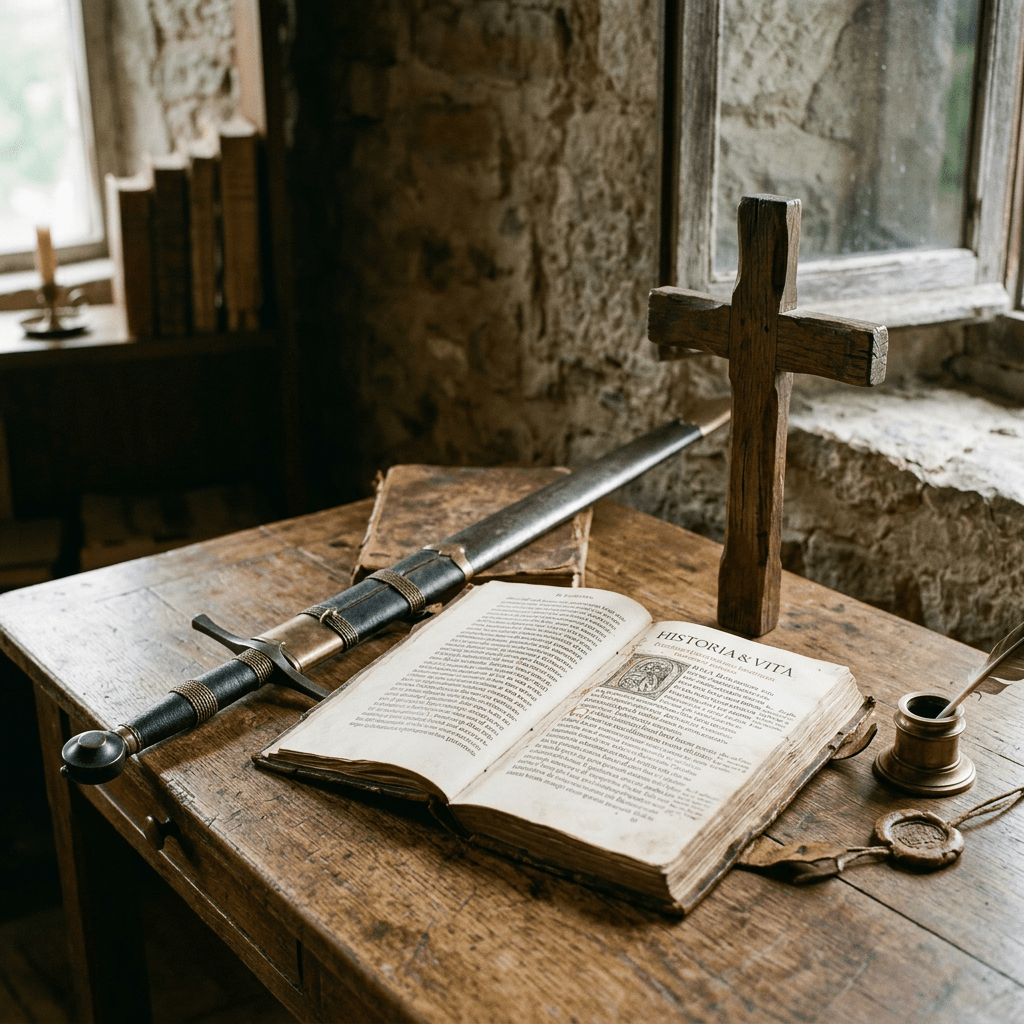
Open ancient book titled Historia & Vita on wooden table with wooden cross and sword
Memorial of Saint Ignatius of Loyola, Priest
Founder of the Society of Jesus — For the Greater Glory of God

First Reading: Jeremiah 26:1-9
Responsorial Psalm: Psalm 69:5, 8-10, 14
Gospel: Matthew 13:54-58
Daily readings: https://bible.usccb.org/bible/readings/073126.cfm

God tells Jeremiah to stand in the temple court and say everything — omit nothing. And God adds one quiet, hopeful word before sending him: perhaps they will listen. Perhaps. Not certainly. Not probably. Perhaps. Jeremiah goes anyway. He says everything he was told to say. And when he finishes, the priests and prophets seize him: you must be put to death. This is what it looks like to be faithful to a word you did not choose, in front of people who do not want to hear it.

Then Jesus returns to his hometown. He teaches in the synagogue. They are astonished — but not in the good way. Where did he get this wisdom? Is he not the carpenter's son? We know his mother. We know his brothers. And they took offense at him. He did not work many mighty deeds there because of their lack of faith. The people who knew him longest, who had watched him grow up, who had every physical proximity to the holy — they were the ones who could not receive him. Familiarity became a wall instead of a door.

Ignatius of Loyola understood what it cost to say the word you were sent to say. He was a soldier, wounded at Pamplona, laid up with nothing to do but read the lives of the saints — and that reading broke him open. He spent a year in a cave at Manresa doing penance so intense his health almost gave out. He learned, slowly and painfully, to discern which movements of soul came from God and which did not. Out of that long schooling in the interior life he wrote the Spiritual Exercises — a systematic way of paying attention to what God is doing in you. He founded the Jesuits on one principle: go where the need is greatest, and do it for the greater glory of God. He taught his men not to fear rejection or difficulty, because the mission was not theirs — it was God's. Omit nothing. Perhaps they will listen.


A few questions to sit with today:

1. Is there a word I have been given — something I know I should say, or something I should do — that I have been holding back because I am not sure how it will be received? What is keeping me from saying it?

2. The people of Nazareth took offense because they knew Jesus's family. Is there a person in my life whose ordinariness or familiarity has kept me from actually receiving what God might be saying through them?

3. Ignatius learned to discern by paying very careful attention to interior movements — consolation and desolation, what leads toward God and what leads away. Have I been paying that kind of attention to my own interior life recently?

4. God says perhaps they will listen. Not certainly. Ignatius sent missionaries to the ends of the earth not knowing how it would be received. Do I act faithfully even when the outcome is uncertain?


One small thing for tomorrow, Saturday:

Try one small version of the Ignatian Examen tonight or tomorrow morning: look back over the last 24 hours and ask — when did I feel most alive, most connected, most like myself? And when did I feel most hollow, most off, most distant from God? That movement between the two is where Ignatius says God is trying to speak.

Lord Jesus, you were rejected in your hometown by people who thought they knew you too well to be surprised by you. Keep me from making the same mistake — from being so familiar with the words and the forms that I stop actually receiving you. Give me Jeremiah's faithfulness: to say what I am sent to say and omit nothing, even when the reception is uncertain. Give me Ignatius's attention: to notice where you are moving in me, to follow consolation toward you and not away. For your greater glory — not mine. May Ignatius, and Mary who knew you before the world did, pray for me when faithfulness feels costly. Amen.


If you'd like to share: when in your ordinary week do you feel most alive and connected to God — and when do you feel most hollow or distant? Ignatius would call that your most important data.

Morning Brief

Modern city skyline at sunset with digital financial data overlays on buildings and highways

Earnings, Ethics, and Evidence

TL;DR (37 words): AI winners are increasingly expected to prove profits, crypto continues its institutional shift, and the Vatican is turning AI ethics into permanent policy. This week’s theme: confidence now requires evidence, not just ambition.


1. Amazon Surges While Apple Stumbles After Earnings

What happened: U.S. stock futures pointed higher after a busy earnings cycle. Amazon jumped about 11% in premarket trading after beating expectations, driven by strong cloud growth and continued AI investment. Apple, despite beating revenue and profit estimates, fell roughly 8% as investors focused on weaker-than-expected Services performance. Microsoft eased slightly after its record market-value surge earlier in the week, while Bitcoin traded near $63,800. (Investopedia)

Why it matters: The market is rewarding companies that can clearly connect AI spending to business growth. Simply saying “AI” on an earnings call is no longer enough.

Source:


2. Investors Continue Asking the Same AI Question: “Where’s the Return?”

What happened: Analysts continue to warn that Big Tech’s enormous AI infrastructure investments must begin producing measurable returns. Earlier this week, concerns over capital expenditures, inflation, and higher energy prices contributed to increased market volatility. (Business Insider)

Why it matters: AI has entered the accountability phase. Markets are shifting from rewarding vision to rewarding execution.

Source:


3. The Holy See Pushes AI Governance From Principle to Practice

What happened: Archbishop Ettore Balestrero told the UN’s first Global Dialogue on AI Governance that robust governance is essential to ensure AI serves humanity, protects human dignity, and keeps responsibility with human decision-makers. He also warned against excessive concentration of AI power without adequate ethical institutions. (vaticannews.va)

Why it matters: The Vatican is no longer speaking only in broad moral terms—it is advocating concrete governance principles that policymakers and technology leaders can apply.

Source:


4. Pope Leo XIV: Dialogue Is Still the Strategy

What happened: In his message to the UN’s AI for Good Global Summit, Pope Leo XIV explained that Magnifica Humanitas emerged from listening to scientists, engineers, educators, public officials, parents, and teachers, while also responding to concerns about algorithmic misuse and the erosion of human agency. He reaffirmed the Holy See’s commitment to dialogue at this “epochal turning point.” (vaticannews.va)

Why it matters: The Vatican continues treating AI as a societal challenge requiring cooperation across sectors, not simply a technical challenge for engineers.

Sources:


5. Crypto’s Long-Term Story Remains Infrastructure

What happened: Academic research continues to caution that many AI-related crypto token projects remain more centralized than their marketing suggests, relying heavily on off-chain computation while promising decentralized AI ecosystems. Researchers argue that on-chain verification, stronger incentives, and better technical architectures remain necessary before many of these projects can fulfill their ambitions. (arXiv)

Why it matters: For investors, the strongest crypto opportunities may continue to come from practical infrastructure rather than ambitious narratives.


6. Pattern of the Day: Institutions Are Catching Up

Today’s headlines tell a consistent story:

  • Markets are demanding measurable AI returns.
  • Investors are rewarding execution over excitement.
  • The Vatican is building governance frameworks rather than issuing one-off statements.
  • Crypto continues its slow evolution toward financial infrastructure.

Why it matters: Transformative technologies eventually leave the “move fast” phase and enter the “build durable institutions” phase. AI appears to be crossing that threshold now.


What to watch next

  • Federal Reserve: Watch whether policymakers signal any shift in the interest-rate outlook after this week’s market data.
  • Big Tech: Listen for management commentary connecting AI investment to operating margins and cash flow—not just user growth.
  • Digital assets: Monitor legislative progress on U.S. crypto market structure and stablecoin regulation.

What this changes

When evaluating technology companies, pay attention to governance alongside growth. Revenue can surge for a quarter, but organizations that pair innovation with accountability, transparency, and durable institutions are more likely to sustain success over the long run.

The Dragnet of Faith: Gathering Imperfect Lives

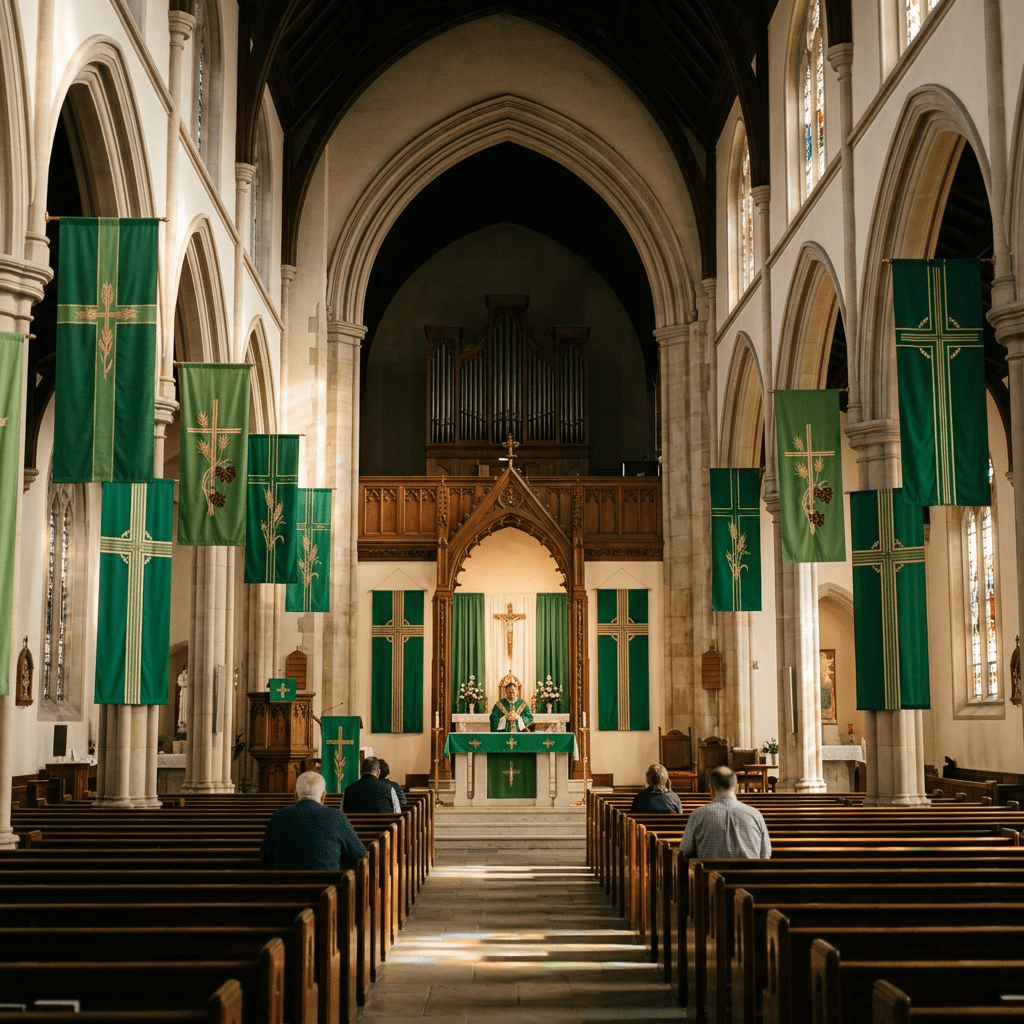
Interior of a church with wooden pews, green banners, and a priest at the altar
Thursday of the Seventeenth Week in Ordinary Time
Optional Memorial of Saint Peter Chrysologus, Bishop and Doctor of the Church
Peter of the Golden Word

First Reading: Jeremiah 18:1-6
Responsorial Psalm: Psalm 146:1b-2, 3-4, 5-6ab
Gospel: Matthew 13:47-53
Daily readings: https://bible.usccb.org/bible/readings/073026.cfm

God sends Jeremiah to the potter's house. And what Jeremiah sees is not a finished object on display — he sees a potter working at the wheel, and when the object of clay turns out badly in his hand, he simply tries again. Not frustrated. Not throwing the clay away. Just trying again, making of the clay another object, whatever sort he pleases. And then God speaks: can I not do to you, house of Israel, as this potter has done? Indeed, like clay in the hand of the potter, so are you in my hand.

This image is worth sitting with on a Thursday morning. Clay does not have to be perfect before the potter works with it. Clay does not have to arrive already shaped. The potter works with what is there — and when it goes wrong, he does not discard it. He tries again. You are in his hands. Still being shaped. Still on the wheel. The fact that it has not come out right yet is not a sign that you have been discarded. It is a sign that the potter is still working.

Then Jesus closes the long run of parables from Matthew 13 with the dragnet. The kingdom of heaven is like a net thrown into the sea, which collects fish of every kind. When it is full, the haul comes ashore, and the good are kept, the bad thrown away. The sorting is real — Jesus does not pretend otherwise. But notice what the dragnet does first: it collects fish of every kind. Not the impressive ones only, not the already-formed ones only. Every kind. And then Jesus asks his disciples: do you understand all these things? And they say yes. So he gives them one final image — the good scribe instructed in the kingdom brings from his storeroom both the new and the old. The old wisdom and the new. Jeremiah's potter and the dragnet in the same storeroom.

Saint Peter Chrysologus, whose memorial we observe today, was a fifth-century bishop in Ravenna known for his short, piercing sermons — he was given the title Chrysologus, golden-worded, because of his gift for saying the essential thing with clarity and warmth. He wrote: "If you want your prayers to reach God, listen to his word when it reaches you." The potter sends a word. The dragnet hauls in everything. The golden-worded bishop distills it to one thing: listen, and be shaped.


A few questions to sit with today:

1. Am I willing to be clay on the wheel — still being shaped, still possibly needing to be remade — or have I decided I am already finished, for good or ill?

2. Is there a place in my life where something has not come out right — a relationship, a habit, a pattern — and I need to hear that the potter has not thrown the clay away but is simply trying again?

3. Peter Chrysologus says: if you want your prayers to reach God, listen to his word when it reaches you. Am I listening? Or am I mostly talking, asking, petitioning — and not pausing to receive?

4. The dragnet collects fish of every kind. Do I trust that I am among those being gathered — even in my inconsistency, my mixed motives, my half-formed faith?


One small thing for tomorrow:

Find one old thing and one new thing in your faith today: something from your past that still holds true (an old prayer, a Scripture you know by heart, a practice you were raised with) and something you have discovered more recently. Hold them together. That is the scribe's storeroom.


Lord Jesus, I am clay in the potter's hand. Sometimes badly formed, sometimes needing to be remade — but in your hands, not discarded. Work with me. Try again with whatever has gone wrong. I trust that the wheel is still turning, that you are still shaping something, even when I cannot see the form yet. Help me to listen the way Peter Chrysologus taught — so that when your word reaches me, my prayers reach you. Gather me in the dragnet, imperfect and mixed as I am, and let me be among those set aside as good at the end. May Mary, who was perfectly yielded clay, pray for all of us who are still on the wheel. Amen.


If you'd like to share: is there a place in your life where something went wrong and you wonder if the potter has set the clay aside — and what would it mean to trust that he is simply trying again?

Faith and Technology News

City skyline at night with blockchain network and cryptocurrency charts overlay

Morning Brief — The Long Game Is Showing

TL;DR (38 words): Markets are rewarding infrastructure over hype, crypto’s next chapter is increasingly institutional, and the Vatican continues making AI governance a priority. The biggest stories today are about building durable systems rather than chasing the next headline.


1. AI Is Becoming a Governance Story, Not Just a Technology Story

What happened: Pope Leo XIV reiterated that Magnifica Humanitas grew out of conversations with scientists, engineers, educators, policymakers, parents, and teachers, while also responding to concerns over AI misuse and the erosion of human agency. He reaffirmed the Holy See’s commitment to dialogue at what he called an “epochal turning point.” (Vatican News)

Why it matters: AI policy is increasingly being shaped by governments, international organizations, academia, and faith communities—not just technology companies. Governance is becoming part of the technology stack.

Source links:


2. The Vatican Is Building Permanent AI Institutions

What happened: The Vatican’s Interdicasterial Commission on Artificial Intelligence held its first meeting, bringing together multiple Holy See departments to coordinate AI initiatives. Initial priorities include internal AI guidelines, collaboration with bishops’ conferences, engagement with academia and business, and eventually a dedicated AI information portal. (Vatican News)

Why it matters: Rather than issuing one-off statements, the Vatican is investing in structures that can respond as AI evolves over the coming years.

Source link:


3. Crypto’s Next Six Months May Matter More Than Its Last Six

What happened: Industry analysts argue that the most important crypto trends are no longer speculative tokens but the expansion of stablecoins, tokenized real-world assets, and AI-enabled financial systems. The report also highlights Google’s Agent Payments Protocol as an example of AI and payments beginning to converge. (The Economic Times)

Why it matters: Crypto is steadily becoming financial infrastructure. The most durable opportunities may come from payment rails and asset tokenization rather than short-lived market excitement.

Source link:


4. AI and Finance Continue Moving Together

What happened: Recent research into agent-based AI portfolio management suggests multi-agent systems can improve risk-adjusted crypto portfolio performance by dynamically adapting to changing market conditions. While still primarily academic, the work illustrates how AI is increasingly being applied to investment management rather than just content generation. (arXiv)

Why it matters: The next wave of AI adoption may happen quietly inside financial systems, where automation, auditability, and disciplined execution matter more than flashy chatbots.


5. Business Strategy Is Shifting Toward Responsible AI

What happened: Ongoing research into AI regulation and innovation ecosystems argues that businesses benefit when governments provide clear, adaptable regulatory frameworks—such as regulatory sandboxes—that encourage responsible innovation while reducing uncertainty. (arXiv)

Why it matters: For investors and business leaders alike, predictable rules can be as valuable as technological breakthroughs. Good governance often attracts capital.


6. Pattern of the Day: Institutions Are Catching Up

Today’s stories point in the same direction:

  • The Vatican is building permanent AI governance.
  • Financial firms are investing in infrastructure.
  • Researchers are improving AI-driven financial tools.
  • Policymakers are exploring frameworks that balance innovation with accountability.

Why it matters: Every transformative technology eventually leaves the “move fast” phase and enters the “build institutions” phase. AI and crypto appear to be making that transition.


What to watch next

  • Big Tech earnings: Watch whether companies continue justifying heavy AI infrastructure spending with measurable business results.
  • Digital assets: Look for progress on stablecoin regulation and tokenized asset initiatives, particularly in the U.S.
  • Global AI governance: Monitor outcomes from Vatican-led and UN-backed discussions on international AI standards.

What this changes

When evaluating new technologies, pay as much attention to institutions as to inventions. Product launches generate excitement, but regulatory frameworks, governance bodies, and financial infrastructure often determine which innovations become lasting parts of everyday life.

Docile, Not Diversified

A single pearl resting in an open, sunlit palm, symbolizing surrender and trust in God

What debt, unemployment, and daily discernment taught me about being dependent on God, not just adjacent to Him

If you’ve spent any time online, you know the checklist. Roth IRA, maxed. Six months of expenses in a high-yield savings account. A diversified brokerage. No credit card balance carried month to month. Every finance influencer is selling some version of this profile as the definition of a responsible adult, and if you’re a young Catholic professional, it’s easy to quietly measure your spiritual life by the same rubric — faithful giving as a line item, Mass attendance as a checkbox, gratitude as something you’ll feel once the numbers finally work.

This article isn’t for the person who has that checklist finished. It’s for everyone else. If you’re carrying debt you can’t see the bottom of, if your savings are gone and your emergency fund is a memory, if you’ve been out of work longer than you told people, if your health has cost you both money and momentum — I want to tell you something that took me a long time to believe: you may already be living the exact thing the checklist can’t teach.

What I Actually Lived

I’ve been through a stretch of real health problems, extended unemployment, and a period where homelessness wasn’t an abstract fear but a real possibility. Credit debt piled up. Savings ran out completely, with no reserve behind them. There was no six-month cushion. There was, some weeks, no cushion at all.

What I found in that place wasn’t a hack or a five-step plan. It was daily dependence, and I mean that literally. I couldn’t plan three moves ahead because I often didn’t have the information, the money, or the certainty to do it. What I had was prayer — asking, most mornings, for enough clarity to see the next single step, and trusting that the Holy Spirit would show up in time for that step and not necessarily any sooner. I write about faith and money less for what it’s earned me and more for what I found in that season worth passing on: a faith-abundant life doesn’t require your finances to cooperate first. Gratitude showed up before the numbers did, not after.

Rereading “To Anyone Who Has, More Will Be Given”

A homily on Matthew 13 named something I recognized instantly: “we could be religious churchgoers but not docile to God.” The warning usually gets aimed at people who look financially secure and spiritually comfortable. But flip it around, and it says something else too — the “having” that gets multiplied in that verse was never about your account balance. “To anyone who has, more will be given. He will grow rich. Anyone who has not, even what he has will be taken away” (Matthew 13:12) is describing docility, not net worth. If you’ve been forced by circumstance into daily, undeniable dependence on God, you are not behind. You may be exactly where that verse says gets more.

Docility is usually pictured as a beautiful, freely chosen surrender — Mary at the Annunciation, saying “let it be done unto me according to your word” (Luke 1:38) before she understood any of the plan. Nobody forced that fiat on her. But surrender doesn’t stop counting just because it wasn’t your first choice. When life sells everything out from under you — a diagnosis, a layoff, a debt spiral — and there’s nothing left to hold onto but trust, that is still docility. Maybe closer to it than most of us who get to choose our surrender in comfortable, low-stakes moments ever come.

The Purse That Was Already Empty

“Sell your possessions, and give alms; provide yourselves with purses that do not grow old, with a treasure in the heavens that does not fail” (Luke 12:33) is usually preached to people who have something to sell. If your earthly purse is already empty, you didn’t need the instruction — you’re already living past it, whether you meant to or not. The treasure that doesn’t fail isn’t a reward for the financially disciplined. It’s simply what’s left when everything else has been taken, and it turns out to be enough.

“See that you abound in this gracious work also” (2 Corinthians 8:7) doesn’t require a bank account either. If you’ve ever stayed up with someone in a worse spot than you, shared a meal you couldn’t really spare, or written something honest to help a stranger feel less alone in their own financial fear — that is the gracious work Paul is describing. It was never gated behind income.

And “he who is faithful in a very little is faithful also in much” (Luke 16:10-11) reads differently from where you’re standing. It’s not a verse about scaling up from a small salary to a large one. It’s an honor given to whoever manages real scarcity with real integrity — the person who pays what they can, tells the truth about what they can’t, and keeps showing up to the discernment even when the numbers are bad. That faithfulness is the whole point of the verse, not a stepping stone to something more respectable.

The Pearl You Didn’t Choose to Sell Everything For

The merchant in Matthew 13:44-46 sold everything he had for one pearl of great price — a deliberate, chosen trade. Most of us in financial crisis didn’t get to choose the sale. Life took the possessions first and left the pearl — trust in Christ — as the only thing remaining. That’s not a lesser version of the parable. It might be the truest ending of it: everything else gone, one thing left, and it turns out to be enough to build a life on.

Wherever You Are Right Now, This Still Applies

You don’t need a spreadsheet to practice this. Tomorrow morning, before you check a balance or open a bill, ask one question instead of making one plan: not “what do I need to fix today,” but “what is Jesus asking me to trust Him with today.” That’s the whole practice. It won’t clear your debt or fill your account. But it’s the difference between being adjacent to Christ — showing up, checking boxes, staying nearby — and being dependent on Him, which is what docility actually is. The checklist can wait. This can’t.

Finding Hope in Grief: Lessons from Jeremiah

Stone archway covered with green ivy and moss, sunlight shining through trees behind
Tuesday of the Seventeenth Week in Ordinary Time

First Reading: Jeremiah 14:17-22
Responsorial Psalm: Psalm 79:8, 9, 11 and 13
Gospel: Matthew 13:36-43
Daily readings: https://bible.usccb.org/bible/readings/072826.cfm

Jeremiah weeps. Not a passing sadness — let my eyes stream with tears day and night, without rest. He walks out into the field and sees those slain by the sword. He enters the city and sees those consumed by hunger. Even the prophet and the priest forage in a land they do not know. And then he turns to God with the most honest kind of prayer: Have you cast Judah off completely? Is Zion loathsome to you? We wait for peace, to no avail. For a time of healing, but terror comes instead.

What Jeremiah does next is worth noticing. He does not stop praying. He does not walk away from God because the answer he wanted did not come. He pivots from the grief to an act of trust: we recognize our wickedness. We have sinned against you. But for your name's sake, spurn us not. Among the nations' idols, is there any that gives rain? Is it not you alone, O LORD, our God, to whom we look? In the middle of devastation and unanswered prayer, he names the one thing he still knows: there is nowhere else to go. You alone have done all these things.

Then Jesus explains the parable of the weeds. The field is the world. The good seed and the weeds grow together — and there is a reason God does not pull the weeds early: he would uproot the wheat alongside them. The harvest comes. The angels do the sorting. And at the end, the righteous will shine like the sun in the Kingdom of their Father. Jeremiah's weeping is not the last word. The tears are real, but the harvest is coming. The wheat is growing. And the one who sowed the good seed knows exactly what is in the field.


A few questions to sit with today:

1. Is there a place in my life where I have been waiting for peace and healing that has not come — something I have been praying about that seems to be answered with silence or terror instead? Have I brought that honestly before God, the way Jeremiah did?

2. Jeremiah says: "Is it not you alone, O LORD, our God, to whom we look?" In my actual life — when peace does not come and healing does not arrive — is God still the one I turn toward? Or do I turn somewhere else?

3. The weeds and wheat grow together in the world and in my own heart. Am I honest about what is mixed in me — the growing faith and the persistent sins growing alongside each other — without either despair or complacency?

4. Jesus says the righteous will shine like the sun. Do I hold that future as something real and coming — something that gives weight and direction to how I live today — or does it feel abstract?


One small thing for tomorrow:

Borrow Jeremiah's pivot today. Whatever grief or unanswered prayer you are carrying, say it plainly to God — and then add his words: "Is it not you alone, O LORD, our God, to whom we look? You alone have done all these things." Let the honest grief and the honest trust sit together. That is the prayer.


Lord Jesus, Jeremiah wept without rest and kept praying anyway. I want that kind of faithfulness — the kind that does not require good news to stay in the conversation with you. Where I have been waiting for peace that has not come, waiting for healing that has not arrived, help me to stay in the field with you. I know the weeds and the wheat are growing together in me. I trust that you know which is which, and that you will not uproot the wheat. Let me grow. Let me be among the righteous who shine like the sun at the harvest — not because I earned it, but because you sowed me and kept me. May Mary, who stood at the cross weeping and trusting at the same moment, pray for me when grief and hope have to exist together. Amen.


If you'd like to share: is there a prayer you have been praying for a long time without an answer — and what has that waiting done to your relationship with God?

Vatican Advocates for Strong AI Governance

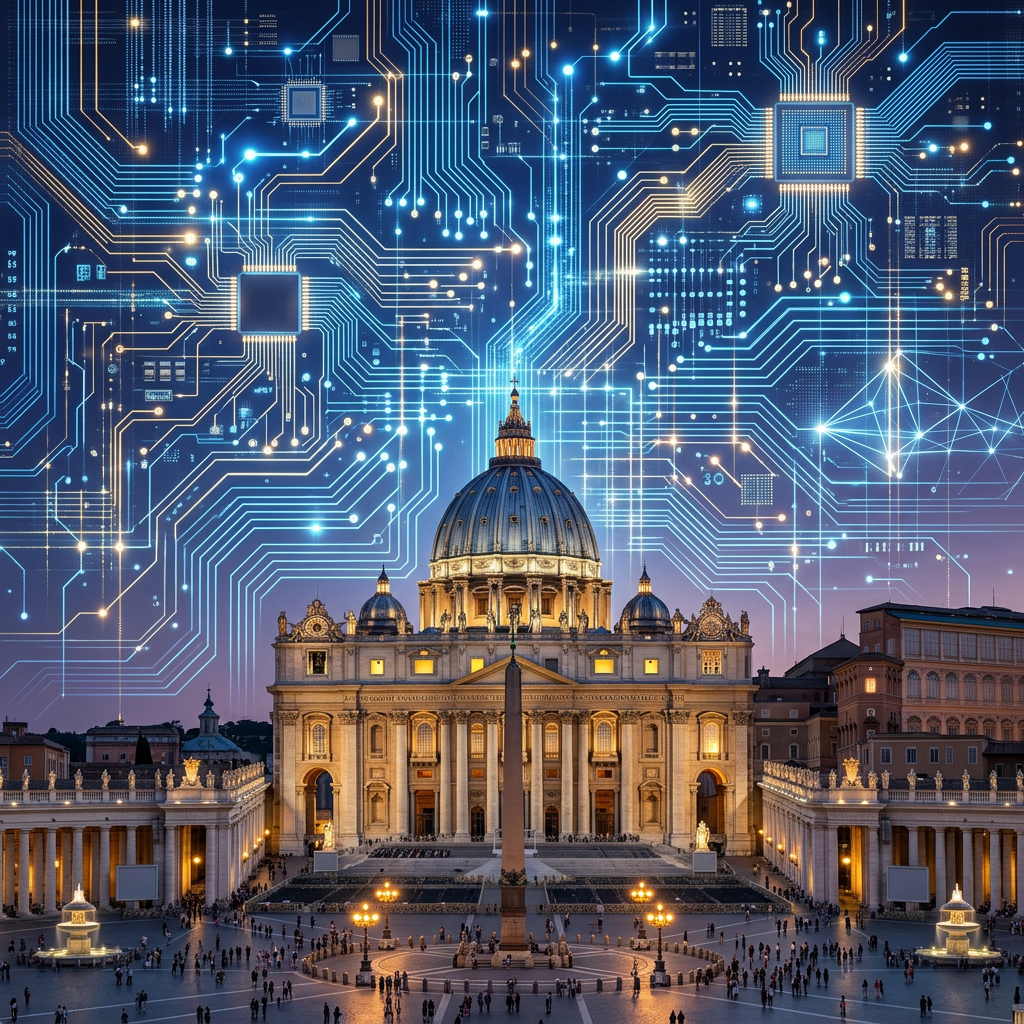
St. Peter's Basilica at dusk with digital circuit patterns overlaying the sky

Morning Brief — The Ethics Premium

TL;DR (38 words): AI’s next competitive edge may be trust rather than intelligence. Markets are still funding infrastructure, crypto continues its institutional transition, and Catholic leaders are sharpening the case that governance—not just innovation—will shape the next decade.


1. A Philosopher Explains Why She Turned Down Anthropic

What happened: Philosopher and theologian Carmody Grey declined an invitation to collaborate with Anthropic, arguing that AI companies risk treating the humanities as a branding exercise rather than engaging seriously with questions of power, human agency, and social impact. She praised Pope Leo XIV’s Magnifica Humanitas for shifting the discussion away from AI itself and back toward the dignity and purpose of human beings. (Financial Times)

Why it matters: As AI matures, credibility may depend less on model benchmarks and more on whether companies demonstrate genuine accountability. The ethics conversation is becoming harder to outsource.

Source:


2. The Holy See Pushes for Robust AI Governance

What happened: At the UN’s first Global Dialogue on AI Governance, Archbishop Ettore Balestrero, the Holy See’s Permanent Observer in Geneva, argued that AI requires robust governance to ensure it serves humanity, protects human dignity, and preserves human accountability. He warned against concentrating technological power in the hands of a few corporations without adequate ethical frameworks. (Vatican News)

Why it matters: The Vatican continues moving from broad ethical principles toward concrete policy positions on transparency, responsibility, and international cooperation.

Source:


3. Pope Leo XIV Keeps Returning to One Theme: Dialogue

What happened: Pope Leo XIV’s message to the AI for Good Global Summit emphasized that Magnifica Humanitasemerged from listening to scientists, engineers, educators, public officials, parents, and teachers, while also responding to AI misuse and the erosion of human agency. He reaffirmed the Holy See’s commitment to dialogue during what he called an “epochal turning point.” (Vatican News)

Why it matters: Rather than approaching AI as an adversary, the Vatican is positioning itself as a long-term participant in shaping its future.

Sources:


4. Human Authorship Is Becoming a Feature, Not a Footnote

What happened: An Australian verification company certified that a collection of Pope Leo XIV’s speeches and writings was entirely human-authored. The project, conducted with academic and Vatican collaboration, reflects growing interest in verifying whether published work is created by people or generated by AI. (The Guardian)

Why it matters: Authenticity is becoming marketable. In an AI-saturated world, “made by a human” may increasingly resemble labels such as “organic” or “fair trade.”

Source:


5. Crypto’s Long-Term Story Still Looks Like Infrastructure

What happened: While there are no dominant market-moving crypto headlines today, the broader trend remains unchanged: institutional attention continues to center on regulated digital assets, tokenization, and financial infrastructure rather than speculative trading. Research into AI-assisted portfolio management also continues to expand, highlighting how AI is increasingly being applied to investment processes. (arXiv)

Why it matters: Quiet infrastructure work rarely trends on social media—but it often determines what becomes mainstream five years later.


6. Pattern of the Day: Trust Is Becoming an Asset Class

Today’s stories fit together remarkably well:

  • AI companies are being asked tougher ethical questions.
  • The Vatican is advocating governance rather than fear.
  • Human-created content is being independently verified.
  • Financial infrastructure continues to mature behind the scenes.

Why it matters: We often think AI competes on speed and intelligence. Increasingly, it may compete on something slower to build: trust.


What to watch next

  • Big Tech earnings: Watch whether companies justify continued AI capital spending with measurable business returns.
  • AI governance: Look for follow-up proposals from the UN’s Global Dialogue on AI Governance and the Vatican’s ongoing initiatives.
  • Digital assets: Monitor U.S. legislative developments affecting stablecoins and broader crypto market structure.

What this changes

One practical lens for the coming week: pay attention to organizations investing in credibility as aggressively as they invest in capability. Faster models can be copied. Public trust, transparent governance, and durable institutions are much harder to replicate—and may prove to be the more valuable competitive advantage.

Understanding the Message of Saint James: A Reflection on Fragility

Older man dressed as a pilgrim walking barefoot on a sandy beach at sunrise holding a wooden staff and gourds
Feast of Saint James, Apostle
Son of Zebedee — First Apostle Martyred — Patron of Pilgrims

First Reading: 2 Corinthians 4:7-15
Responsorial Psalm: Psalm 126:1bc-2ab, 2cd-3, 4-5, 6
Gospel: Matthew 20:20-28
Daily readings: https://bible.usccb.org/bible/readings/072526.cfm

Paul says something that deserves to land slowly this Saturday morning: we hold this treasure in earthen vessels, that the surpassing power may be of God and not from us. The treasure is the Gospel, the life of Jesus, the light of the glory of God. The vessel is you and me — cracked, fragile, ordinary clay. And Paul is not apologizing for that. He is pointing to it as the point. If the vessel were impressive, you would look at the vessel. Because the vessel is ordinary and broken and still somehow carrying extraordinary life, you look at what is inside.

He goes on: afflicted in every way, but not constrained. Perplexed, but not driven to despair. Persecuted, but not abandoned. Struck down, but not destroyed. Four blows. Four survivals. Death is at work in us — but life in you. The carrying of the dying of Jesus in a fragile body is not failure. It is the method. The life of Jesus is made visible precisely in the places where human strength runs out.

Then James and his mother come to Jesus with a request: seats at the right and left in the Kingdom. It is a very human moment — ambition dressed up in devotion, the desire to be near Jesus tangled up with the desire to be above everyone else. And Jesus does not shame them. He asks one question: can you drink the chalice I am going to drink? They say yes — confidently, quickly — without knowing what they are agreeing to. Jesus receives it: yes, you will drink my chalice. James was the first apostle to be martyred, beheaded by Herod Agrippa around the year 44. He drank it. The chalice he said yes to without fully understanding became the thing that made him a saint.


A few questions to sit with today:

1. Paul says we are earthen vessels — fragile, cracked, ordinary. Is there a place in my life where I have been ashamed of my weakness or brokenness, rather than trusting that the treasure can shine through it?

2. "Afflicted, but not constrained. Perplexed, but not driven to despair." Which of those pairs most describes something I am living through right now? Can I hold both halves of it today?

3. James said yes to the chalice before he understood what it meant. Is there something God has been asking of me — a direction, a sacrifice, a commitment — where I have been waiting to understand it fully before I say yes?

4. The psalm says those who sow in tears shall reap rejoicing. Is there a place in my life where I am sowing in tears right now? Have I held onto the second half of that promise?


One small thing for tomorrow, Sunday:

At Mass tomorrow, when you receive the Eucharist — the treasure in the earthen vessel — pause for just one moment before you return to your seat and say quietly: this is what I am carrying. This life. This light. In this ordinary body. Let that be enough.


Lord Jesus, you asked James if he could drink your chalice — and he said yes before he understood it. I want that kind of yes, but I confess I usually want to understand first. Help me to trust that you are asking me nothing you have not already carried yourself. You hold the treasure. I am the cracked clay pot. Make me willing to be used that way — not impressive, just willing. And when death is at work in me in the small ways, the quiet ways, the ways that go unseen, let life be at work in someone else because of it. May James, who drank the chalice and is now rejoicing, pray for all of us who are still sowing in tears. Amen.


If you'd like to share: which of Paul's four pairs feels most true for you right now — afflicted but not constrained, perplexed but not despairing, persecuted but not abandoned, struck down but not destroyed?