Lessons from Saint Thomas: Embracing Doubt in Faith

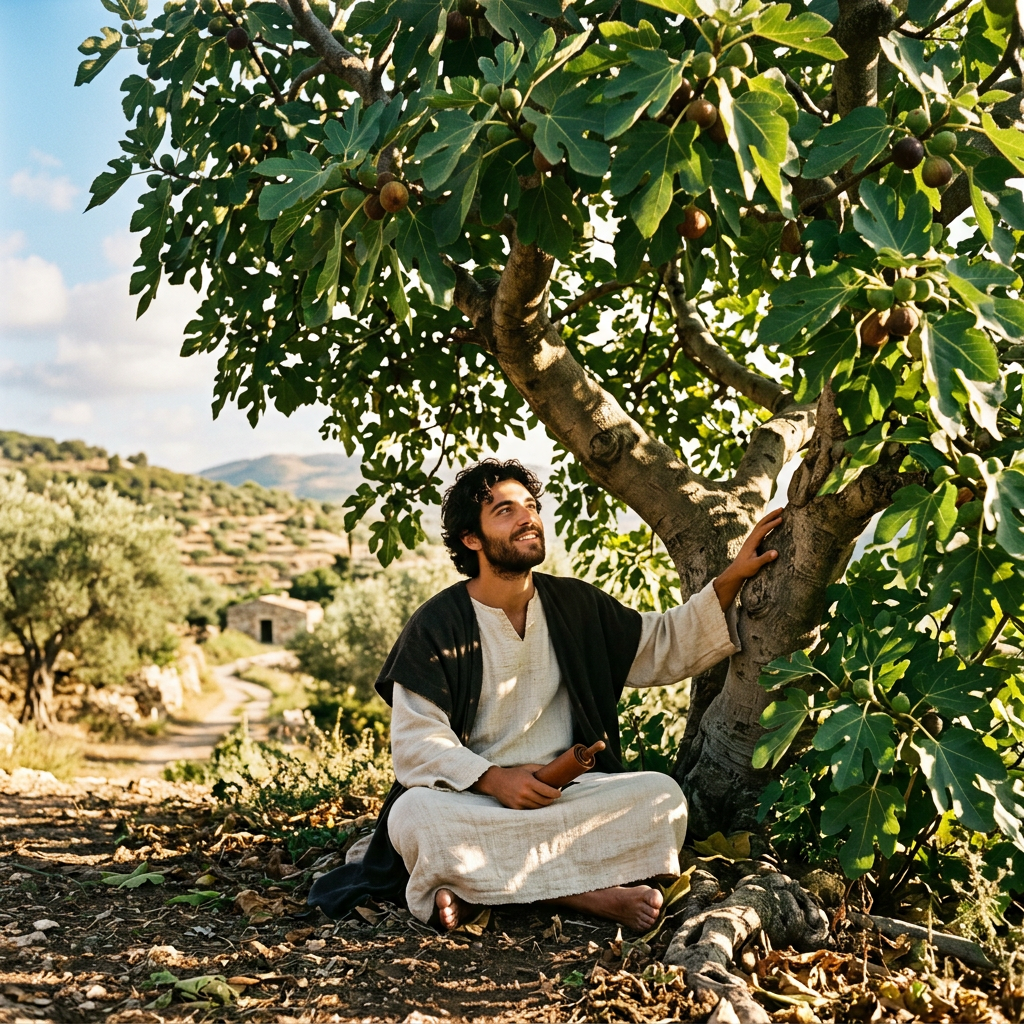
Apostle Thomas touching Jesus' wounds, confirming his resurrection
Feast of Saint Thomas, Apostle

First Reading: Ephesians 2:19-22
Responsorial Psalm: Psalm 117:1bc, 2
Gospel: John 20:24-29
Daily readings: https://bible.usccb.org/bible/readings/070326.cfm

Thomas was not there. We do not know why — the Gospel does not say. But while the other ten were locked in a room together, seeing the risen Lord, Thomas was somewhere else. And when they told him, he said: I will not believe unless I see for myself. It is easy to read that as stubbornness or failure. But there is something honest about it. Thomas did not pretend. He did not nod along to something he had not yet experienced. He said plainly what he needed.

And Jesus came back. A week later, doors locked again, and this time Thomas was there. Jesus did not scold him. He did not announce his disappointment. He walked straight to Thomas and offered exactly what Thomas had asked for: "Put your finger here. See my hands. Bring your hand and put it into my side." He met Thomas in the exact place of his doubt, with the exact evidence Thomas had named. And Thomas, in a breath, went further than any of the others had: "My Lord and my God." Not just teacher. Not just rabbi. My Lord. My God.

Then Jesus says the line that reaches across two thousand years to us: "Blessed are those who have not seen and have believed." That is us. We were not in that room. We have not touched the wounds. We believe on the testimony of Thomas and the others, carried forward through the Church, the Scripture, the Eucharist, the lives of the saints. Paul says it in the First Reading: we are built on the foundation of the apostles and prophets, with Christ as the capstone, growing into a temple, a dwelling place of God in the Spirit. Thomas's honest doubt — and the encounter that answered it — is part of what we are built on.


A few questions to sit with today:

1. Is there a doubt I have been carrying that I have not said out loud — to God, to a trusted friend, in honest prayer? What would it feel like to name it plainly, the way Thomas did?

2. Has Jesus ever met me in the exact place of my doubt — not scolding me, but showing up with exactly what I needed? When was that?

3. Do I experience my faith as something I am building on — a foundation laid by the apostles, alive in the Church — or does it feel more isolated and personal?

4. What would it mean for me, today, to say with Thomas: "My Lord and my God"? Not as a formula, but as something I actually mean?


One small thing for tomorrow:

Tomorrow, at some ordinary moment in the day — driving, washing dishes, between tasks — say Thomas's words out loud, slowly: "My Lord and my God." Say them like you mean them. Let that be your prayer. Just those five words.


Lord Jesus, thank you for going back for Thomas. Thank you for not leaving him in his doubt, for not requiring him to fake certainty he did not have. You met him where he was, showed him exactly what he needed, and received the most complete confession of faith in the Gospels. I want that kind of encounter. I have doubts too — things I have not seen, questions I carry quietly. Come through the locked doors of whatever is keeping me closed. Meet me there. Show me your hands. Help me to move from whatever I am uncertain about to the place Thomas arrived: not just belief, but belonging — my Lord, my God. Through the intercession of Saint Thomas, patron of those who need to see before they believe, draw me deeper into you. Amen.


If you'd like to share: is there a doubt you have been carrying in silence — and has Jesus ever shown up in the middle of it in a way that surprised you?

Embracing Forgiveness in Ordinary Life

Green vine leaves climbing a wooden trellis with sunlight shining through
Thursday of the Thirteenth Week in Ordinary Time

First Reading: Amos 7:10-17
Responsorial Psalm: Psalm 19:8, 9, 10, 11
Gospel: Matthew 9:1-8
Daily readings: https://bible.usccb.org/bible/readings/070226.cfm

Amos is not a professional prophet. He tells us that himself. "I was no prophet, nor did I belong to a company of prophets. I was a herdsman and a dresser of sycamore trees." He is an ordinary man from an ordinary trade, and God pulled him out of it and sent him to speak. Amaziah the priest wants him silenced — tells him to go back to Judah and earn his bread prophesying there, not here. And Amos's response is simple: I did not choose this. God took me and said, go, prophesy. This is not my idea. When an ordinary person is willing to be used, God tends to take them at their word.

Then Jesus comes back to his own town. A paralyzed man is brought to him on a stretcher. And before he does anything else, Jesus says something that causes a small scandal in the room: "Courage, child, your sins are forgiven." Not — you are healed. First: your sins are forgiven. The scribes immediately recognize what this implies. Only God forgives sins. So either Jesus is blaspheming, or he is who he says he is. Jesus reads the room, addresses their thoughts directly, and then heals the man to demonstrate that the authority is real. "But that you may know that the Son of Man has authority on earth to forgive sins..." He gets up and walks home.

The crowd's response is worth sitting with: "They were struck with awe and glorified God who had given such authority to human beings." Not just to this one man — to human beings. The Incarnation means that God, in becoming one of us, has authorized something new. Forgiveness walking the earth in a human body. Healing happening through human hands. Ordinary people like Amos — like us — being taken from their fig trees and sent somewhere. The same authority that raised the paralyzed man is offered to the Church, and through the Church, to each of us in confession, in prayer, in the ordinary moments of a Thursday.


A few questions to sit with tonight:

1. Is there something I am carrying — a guilt, an old wound, a sin I keep circling back to — that I have not yet fully received forgiveness for? What is keeping me from letting it go?

2. Like Amos, has God ever pulled me out of something ordinary and asked me to do something I did not choose? How did I respond?

3. When I encounter Jesus in prayer or at Mass, do I come as someone who needs forgiveness first — or do I mostly come with requests? What would it change to start there?

4. Was there a moment today when I was struck with awe — when something reminded me that God is real and near? Did I stop long enough to notice it?


One small thing for tomorrow:

If you have been away from Confession for a while, let tomorrow be the day you look up your parish's confession times and write them down. You do not have to go tomorrow — just find the time and put it somewhere visible. That small act of intention is already a turning.


Lord Jesus, you said to the paralyzed man what you say to me: courage, your sins are forgiven. I do not always feel the courage or the forgiveness. But I want to receive both. Thank you for crossing into my ordinary life — my ordinary Thursday — with the same authority you brought to that room in Capernaum. Forgive me for the things I carry that I have not laid down. Heal what is paralyzed in me, the places where I have stopped moving because I stopped believing you could reach there. Like Amos, I am nothing special — just someone you took from their ordinary work. Use me anyway. May Mary, who said yes before she understood, help me to say the same. Amen.


If you'd like to share: is there something you have been carrying that you have not yet fully received forgiveness for — and can we pray together that you find the courage to lay it down?

Connecting Worship to Life: A Call for Justice

Open Bible with rosary beads, wooden cross, and lit candle on wooden table
Wednesday of the Thirteenth Week in Ordinary Time

First Reading: Amos 5:14-15, 21-24
Responsorial Psalm: Psalm 50:7, 8-9, 10-11, 12-13, 16bc-17
Gospel: Matthew 8:28-34
Daily readings: https://bible.usccb.org/bible/readings/070126.cfm

Amos has been speaking hard words all week, but today he offers something surprising — a way through. "Seek good and not evil, that you may live. Hate evil and love good, and let justice prevail." It is not complicated. There is no elaborate ritual required, no spiritual performance. Just a turning: toward good, away from evil, toward justice for the people around you. God will be with you if you do this, he says. As you have claimed.

Then comes the part that stings: "I hate, I spurn your feasts. I take no pleasure in your assemblies. Away with your noisy songs. I will not listen to the melodies of your harps." God is not dismissing worship — he is dismissing worship that is hollow because it is disconnected from how people treat each other. You can fill a church, sing every hymn, show up every Sunday, and still be far from God if outside those walls you are indifferent to the suffering of the people around you. "Let justice surge like water, and goodness like an unfailing stream." The worship God wants is a life.

Then Jesus arrives in Gadara — territory outside Israel, pagan land, a place of tombs — and two men possessed by demons come out to meet him. They are violent, untouchable, living among the dead. And immediately they recognize him. "What have you to do with us, Son of God?" They know exactly who he is. He casts them out, the pigs rush into the sea, and the town comes to meet him. And then this strange, sad ending: the whole town begs Jesus to leave. He has just freed two men who had been terrorizing the region. And instead of celebrating, they want him gone. Perhaps his power frightened them. Perhaps losing the pigs cost too much. Whatever the reason — when Jesus shows up fully, it sometimes asks more of us than we planned to give.


A few questions to sit with today:

1. Is my worship — my Sunday Mass, my daily prayer, my Catholic identity — connected to how I actually treat people the rest of the week? Where is the gap?

2. Is there something in my life I would rather Jesus not touch — because cleaning it up would cost something I am not ready to lose?

3. Where have I been asked to let justice surge like water, and quietly turned down the volume instead?

4. Was there someone today living among the tombs — isolated, struggling, pushed to the edges — whom I noticed, or whom I passed by?


One small thing for tomorrow:

Think of one person in your life who is overlooked, difficult, or on the outside of your usual circle. Tomorrow, do one thing that acknowledges their dignity — a word, a small act, a moment of real attention. Let justice be, for that one moment, an unfailing stream.


Lord Jesus, you crossed into pagan territory, into the land of tombs, to free two men nobody else would go near. I want to be that kind of follower. Help me to connect my worship to my life — to let what I receive at Mass on Sunday actually change how I treat people on Wednesday. Forgive me for the places where I have sung the songs and said the prayers but kept the door closed on the justice you are asking for. And where you show up in my life asking for something costly — help me not to beg you to leave, but to trust that your presence is worth whatever it rearranges. May Mary, whose whole life was an act of justice and love, pray for me to live the same way. Amen.


If you'd like to share: is there a place in your life where you sense God is asking for more than ritual — more than showing up — and what would it look like to say yes?

Trusting Jesus in the Storm: Reflection for the First Martyrs of Rome

Sunlight shining through stained glass windows inside a gothic church with wooden pews and stone arches
Tuesday of the Thirteenth Week in Ordinary Time
Optional Memorial of the First Martyrs of the Church of Rome

First Reading: Amos 3:1-8; 4:11-12
Responsorial Psalm: Psalm 5:4b-6a, 6b-7, 8
Gospel: Matthew 8:23-27
Daily readings: https://bible.usccb.org/bible/readings/063026.cfm

Amos opens today with something that sounds severe but is actually a word of intimacy: "You alone have I known, of all the families of the earth — therefore I will punish you for all your iniquities." That word "known" is the same word used for the deepest kind of relationship in Hebrew Scripture. God is not punishing Israel like a distant judge punishing strangers. He is correcting people he is close to, people he brought out of Egypt, people he carried like a father. The warning comes because the relationship is real.

Then the string of rhetorical questions — do two walk together unless they have agreed? Does the lion roar without a reason? Does a trumpet sound in a city without alarming the people? — each one pointing to the same truth: things happen for reasons, and God's warnings through the prophets are not random. When hardship comes, when things shake loose, there is often something God is saying in it. The question is whether we are listening. "The Lord GOD has spoken; who can but prophesy?"

Then Jesus and his disciples get into a boat. A violent storm comes up. The disciples wake him in a panic: "Lord, save us! We are perishing!" And Jesus gets up, rebukes the winds and the sea, and there is great calm. Then the small, stunning question the disciples ask each other: "What sort of man is this, whom even the winds and the sea obey?" They have been with him. They have watched him heal people, teach crowds, touch the untouchable. And still the storm reveals how little they really knew. The answer to the disciples' question is the same answer Peter gave yesterday: the Christ, the Son of the living God. The one in the boat with you in the storm is that one.

Today we also remember the First Martyrs of Rome — the Christians burned and killed by Nero following the Great Fire of 64 AD, the ones Tacitus described as being covered with the skins of beasts and torn by dogs, or nailed to crosses and set afire as living torches after dark. They knew the answer to the disciples' question. And they got into the boat anyway.


A few questions to sit with today:

1. Is there a storm in my life right now — a fear, a crisis, a season of uncertainty — where I have been reacting with panic before turning to Jesus? What would it look like to wake him first?

2. When hardship has come, have I asked what God might be saying through it — not in a self-punishing way, but with the openness of someone in a real relationship listening for a word?

3. Is Jesus someone I really know, or someone I know about? Where does the difference show up in how I handle hard days?

4. What would it cost me to trust him enough to stay in the boat?


One small thing for tomorrow:

The next time something goes wrong tomorrow — a frustration, a difficulty, an unexpected interruption — before you react, say one sentence: "Lord, you are in this boat with me." Not a long prayer. Just that. Then see what follows.


Lord Jesus, you were asleep in the stern of the boat, and the storm was real, and your disciples were genuinely afraid. You did not shame them for waking you. You just got up and spoke, and there was great calm. I need that today. There are storms in my life that I have been managing on my own, trying not to bother you with, white-knuckling through on my willpower. Forgive me for forgetting you are in the boat. Help me to turn to you first — before the panic, before the plan, before I decide I need to handle it myself. Through the intercession of the First Martyrs of Rome, who knew exactly who you were and trusted you with everything, give me even a small portion of that faith. Amen.


If you'd like to share: what storm are you in right now — and have you woken Jesus yet, or are you still bailing water on your own?

Lessons from Saints Peter and Paul: Faith and Resilience

Solemnity of Saints Peter and Paul, Apostles

First Reading: Acts 12:1-11
Responsorial Psalm: Psalm 34:2-3, 4-5, 6-7, 8-9
Second Reading: 2 Timothy 4:6-8, 17-18
Gospel: Matthew 16:13-19
Daily readings: https://bible.usccb.org/bible/readings/062926.cfm

Peter is in prison. Chained to two soldiers, guards at the door, Herod planning to execute him after Passover. And the Church is praying — fervently, without ceasing — for him. In the middle of the night an angel appears, a light fills the cell, the chains fall off his wrists. "Get up quickly," the angel says. And Peter follows, thinking he is seeing a vision, until he is standing in the street and the angel is gone and he says to himself: "Now I know for certain that the Lord sent his angel and rescued me." The prayer of the Church, offered in darkness and uncertainty, reached heaven and brought him home.

Paul in the Second Reading is writing from a very different place — the end. He is near death, probably in a Roman prison of his own, and he is at peace. "I have fought a good fight. I have finished the course. I have kept the faith." Not boasting — accounting. He is looking back at a life spent entirely for the Gospel and finding it sufficient. "The Lord stood by me and gave me strength." That is the testimony of someone who discovered, over decades of shipwrecks and beatings and cold and betrayal, that Jesus does not abandon the people who follow him.

And then the Gospel gives us the hinge moment — the question that everything else hangs on. Jesus asks it first generally: who do people say I am? Then he narrows it: but who do you say I am? And Peter, before he has time to second-guess himself, answers from somewhere deeper than his own understanding: "You are the Christ, the Son of the living God." Jesus tells him: flesh and blood did not reveal this to you. My Father did. You are Peter. On this rock I will build my Church. The gates of the netherworld will not prevail against it.

Peter — the man who will deny him three times before dawn — is the rock. Not because Peter is perfect, but because what the Father revealed to him is true. The Church is built on a confession, made by a man who would fall and be forgiven and rise again. That is good news for everyone who has ever fallen.


A few questions to sit with today:

1. If Jesus asked me right now, "But who do you say I am?" — what would my honest answer be, from the place deeper than I usually speak from?

2. Is there a prison I am in — a fear, a habit, an old wound — where I have been waiting for the chains to fall? Have I let the Church pray with me and for me, the way the early Church prayed for Peter?

3. Am I more like early-Peter — impulsive, enthusiastic, prone to falling — or late-Paul — finishing the course, at peace? And am I willing to become either one?

4. Where did I experience the Lord standing by me and giving me strength today, even in a small way?


One small thing for tomorrow:

Pray Psalm 34 tomorrow — even just the refrain: "The angel of the Lord will rescue those who fear him." Say it for yourself and then say it for one person you know who is in a hard place right now. Let your prayer be the Church praying without ceasing on their behalf.


Lord Jesus, today we stand with Peter and Paul — two men so different from each other, both broken in their own ways, both utterly transformed by knowing you. I want to know you the way they did — not just about you, but really know you, the way the Father's own revelation lands in a person's chest and changes everything. Help me to answer your question honestly: you are the Christ, the Son of the living God. Help me to live as though I mean it. When I am in my own prison — afraid, stuck, chained — let the prayers of your Church reach me. And when I am near the end of something hard, let me be able to say with Paul: I have kept the faith. Through the intercession of Saints Peter and Paul, pillars of your Church, hold me close to you. Amen.


If you'd like to share: who do you say Jesus is — and has there been a moment when that became real to you in a way that surprised you?

Examen: Saturday of the Twelfth Week in Ordinary Time

Open Bible on wooden table next to lit candle and closed Bible
Saturday of the Twelfth Week in Ordinary Time
Optional Memorial of Saint Cyril of Alexandria, Bishop and Doctor of the Church

First Reading: Lamentations 2:2, 10-14, 18-19
Responsorial Psalm: Psalm 74:1b-2, 3-5, 6-7, 20-21
Gospel: Matthew 8:5-17
Daily readings: https://bible.usccb.org/bible/readings/062726.cfm

The Book of Lamentations does not dress up its grief. The old men sit in silence on the ground, strewing dust on their heads. Children faint in the streets. The Temple is in ruins. And then comes this line, raw and direct: "Cry out to the Lord; moan, O daughter Zion! Let your tears flow like a torrent day and night. Pour out your heart like water in the presence of the Lord." It is not a command to feel better. It is an invitation to bring the grief exactly as it is, without editing it first.

Then Matthew gives us a morning full of healings. A Roman officer — a gentile, someone with no claim on Israel's God — approaches Jesus with a request for his servant. He does not push or demand. He just describes the need: my servant is paralyzed and suffering. Jesus says immediately: I will come. And the centurion's response has echoed through the Mass for two thousand years: Lord, I am not worthy to have you enter under my roof; only say the word and my servant will be healed. Jesus marvels at this. He calls it the greatest faith he has found in Israel. Then Peter's mother-in-law — fever gone at a touch. Then the whole town's sick, gathered at evening, healed one by one. Isaiah's words hang over the scene: He took away our infirmities and bore our diseases.

Today we also remember Saint Cyril of Alexandria, a bishop who spent decades fighting for one central truth: the one who walked the streets of Nazareth, who touched the leper, who marveled at a centurion's faith, is truly God in the flesh. Not God in a costume. Not a holy man especially close to God. The Word made flesh. Cyril called Mary Theotokos — God-bearer — not to honor her above all things, but to protect the truth that the child she carried was genuinely God. If Jesus is not truly God, the centurion's faith is in the wrong person, and the healings are just impressive acts. But if he is — then "only say the word" is the most reasonable thing a human being could ever say.


A few questions to sit with today:

1. Is there a grief I have been trying to present to God in cleaned-up form rather than pouring it out like water — exactly as it is, without editing?

2. Do I approach Jesus with the centurion's faith — genuinely believing he has authority over whatever I am facing — or do I bring him my worries while secretly doubting he will act?

3. Who in my life is lying paralyzed and suffering right now — someone I could bring to Jesus in prayer today, the way the centurion brought his servant?

4. Where did I experience Jesus taking away something heavy this week — a fear, a burden, a moment of unexpected peace?


One small thing for tomorrow, Sunday:

At Mass tomorrow, when you say the words "Lord, I am not worthy that you should enter under my roof, but only say the word and my soul shall be healed" — mean them. Say them slowly. Say them to the person who is actually present. Let that be your whole prayer for the day if nothing else comes.


Lord Jesus, you are the Word made flesh — truly God, truly human, truly present. Cyril of Alexandria gave his life to protecting that truth, and I receive it as a gift today. Help me to approach you the way the centurion did — not with elaborate arguments, but with simple, honest faith in your authority. There are things in my life that need only your word. I lay them before you now, the way Lamentations teaches me to: without pretending, without dressing them up, pouring them out like water in your presence. Only say the word, Lord. That is enough. Through the intercession of Saint Cyril and through Mary, whom he rightly called God-bearer, draw me deeper into the mystery of who you really are. Amen.


If you'd like to share: what is something you have been bringing to Jesus with doubt instead of the centurion's faith — and what would it look like to simply say "only say the word"?

Examen: Friday of the Twelfth Week in Ordinary Time

Dirt path winding through lush green bushes and trees in foggy morning light
Friday of the Twelfth Week in Ordinary Time

First Reading: 2 Kings 25:1-12
Responsorial Psalm: Psalm 137:1-2, 3, 4-5, 6
Gospel: Matthew 8:1-4
Daily readings: https://bible.usccb.org/bible/readings/062626.cfm

The First Reading today is the bottom of the long fall we have been watching all week. The Temple burns. The walls of Jerusalem come down. Zedekiah watches his sons killed, then has his own eyes put out — the last thing he ever sees is the worst moment of his life. The people are carried away into exile, and Psalm 137 puts their grief into words: "By the rivers of Babylon we sat mourning and weeping when we remembered Zion." They hung their harps on the willow trees. Their captors asked them to sing — and they could not. How could they sing the Lord's song in a foreign land?

It is the cry of anyone who has lost something they thought was permanent. A marriage. A parent. A health diagnosis that changes everything. A faith that used to feel easy and now feels distant. The exile is not just a historical event — it is a season many of us know from the inside. The harps go silent. The songs stop coming. We sit by the river and grieve.

And then Jesus comes down the mountain, and a leper walks up to him. This man has been untouchable — by law, by custom, by everyone around him — for who knows how long. He does not demand. He does not bargain. He says nine words: "Lord, if you wish, you can make me clean." It is one of the most honest prayers in the Gospels. He knows Jesus has the power. He is not sure about the willingness. And Jesus answers immediately: "I will do it." He stretches out his hand and touches him — actually touches someone no one had touched in years. That touch alone, before the healing even registers, must have been everything.

In the middle of a week that ends in exile and burned temples, the Gospel gives us this: Jesus still comes down the mountain. He still sees the one everyone else passes by. And he still says, "I will."


A few questions to sit with today:

1. Is there something I have been afraid to bring to Jesus because I am not sure he is willing — not sure he wants to touch that part of my life? What would it feel like to say, "Lord, if you wish, you can"?

2. Am I in an exile season right now — somewhere I did not choose to be, grieving something I thought was permanent? Have I let myself bring that grief honestly to God?

3. Where have I hung up my harp this week — stopped singing, stopped praying, gone quiet in a way that is more avoidance than rest?

4. Who in my life is untouchable right now — someone others avoid, someone I find it hard to reach toward? What might it cost me to stretch out a hand?


One small thing for tomorrow:

Pray those nine words tonight before you sleep: "Lord, if you wish, you can." Fill in whatever comes after — whatever the thing is you have been holding back. Just say it. You do not have to have faith the size of a mountain. You just have to be honest enough to walk up to him and ask.


Lord Jesus, this week's readings have walked us through exile, burned temples, and silent harps. And then you come down the mountain and touch the one no one would touch. Thank you for that. Thank you for still coming. There are things in my life that feel like the Temple burning — losses I have not known how to pray about, places where my faith has gone quiet. I am walking up to you today like that leper: not certain of your willingness, but certain of your power, and hoping. Touch me there. Say "I will." Help me to trust that you are still coming down the mountain for me. May Mary, who stood at the foot of the cross without losing hope, pray for me to do the same. Amen.


If you'd like to share: is there something you have been afraid to bring to Jesus because you were not sure he would be willing — and can we pray that prayer together?

Examen: Thursday of the Twelfth Week in Ordinary Time

Stone church and graveyard in green countryside with sunrise and winding road
Thursday of the Twelfth Week in Ordinary Time

First Reading: 2 Kings 24:8-17
Responsorial Psalm: Psalm 79:1b-2, 3-5, 8, 9
Gospel: Matthew 7:21-29
Daily readings: https://bible.usccb.org/bible/readings/062526.cfm

The First Reading today is blunt and sad. Jerusalem falls. The temple is stripped. Ten thousand people are carried off into exile. Jehoiachin had been king for only three months, and the text gives his reign a quiet, devastating epitaph: "He did evil in the sight of the LORD, just as his forebears had done." He inherited a kingdom already weakened by generations of people who chose their own way over God's. When the storm came, there was nothing solid underneath.

Jesus closes the Sermon on the Mount today with the same image — but told as a choice, not a judgment. Two men, two houses, one storm. The rain falls on both. The floods come for both. The winds batter both. The only difference is what is underneath. The house on rock does not avoid the storm. It simply stands through it because it was built on something real.

The key line is easy to miss: "Not everyone who says to me, 'Lord, Lord,' will enter the Kingdom of heaven, but only the one who does the will of my Father." Jesus is not talking about being good enough or working hard enough. He is talking about whether the relationship is real. The people who say "Lord, Lord" and are told "I never knew you" — they had activity, even impressive activity. What they did not have was intimacy. A house built on Jesus is not just a house that uses his name. It is a house where someone actually lives with him, listens to him, and then does what he says. That is what holds when the flood comes.


A few questions to sit with today:

1. Is my faith built on a real relationship with Jesus, or mostly on routines, appearances, and saying the right things? When did I last actually listen to him and let it change something?

2. When the storms have come in my life — the hard seasons, the losses, the failures — what did I discover was solid underneath me, and what gave way?

3. Is there something Jesus has been saying to me — in Scripture, in prayer, in a quiet nudge — that I have been hearing but not acting on?

4. Where today did I say "Lord, Lord" with my words but build on sand with my choices?


One small thing for tomorrow:

Pick one teaching of Jesus that you know well but have been slow to live — one thing from the Sermon on the Mount that you have heard many times and keep meaning to do. Tomorrow, do just one small version of it. Not a big overhaul. Just one brick laid on rock instead of sand.


Lord Jesus, you taught with authority — not the authority of someone showing off, but the authority of someone who actually knows. I want to build on you, not just speak about you. I confess the places where my faith has been more performance than foundation — the routines I keep up without meeting you in them, the words I say without letting them reach my choices. Forgive me, and help me to build something real. When the storms come — and they will — I want to be found standing, not because I was strong, but because I was standing on you. Thank you for the Sermon on the Mount, and for ending it with this honest warning spoken in love. May Mary, who built her entire life on your word alone, pray for me to do the same. Amen.


If you'd like to share: what is one area of your life where you sense your foundation has been more sand than rock — and what would it look like to build there on Jesus?

Solemnity of the Nativity of Saint John the Baptist

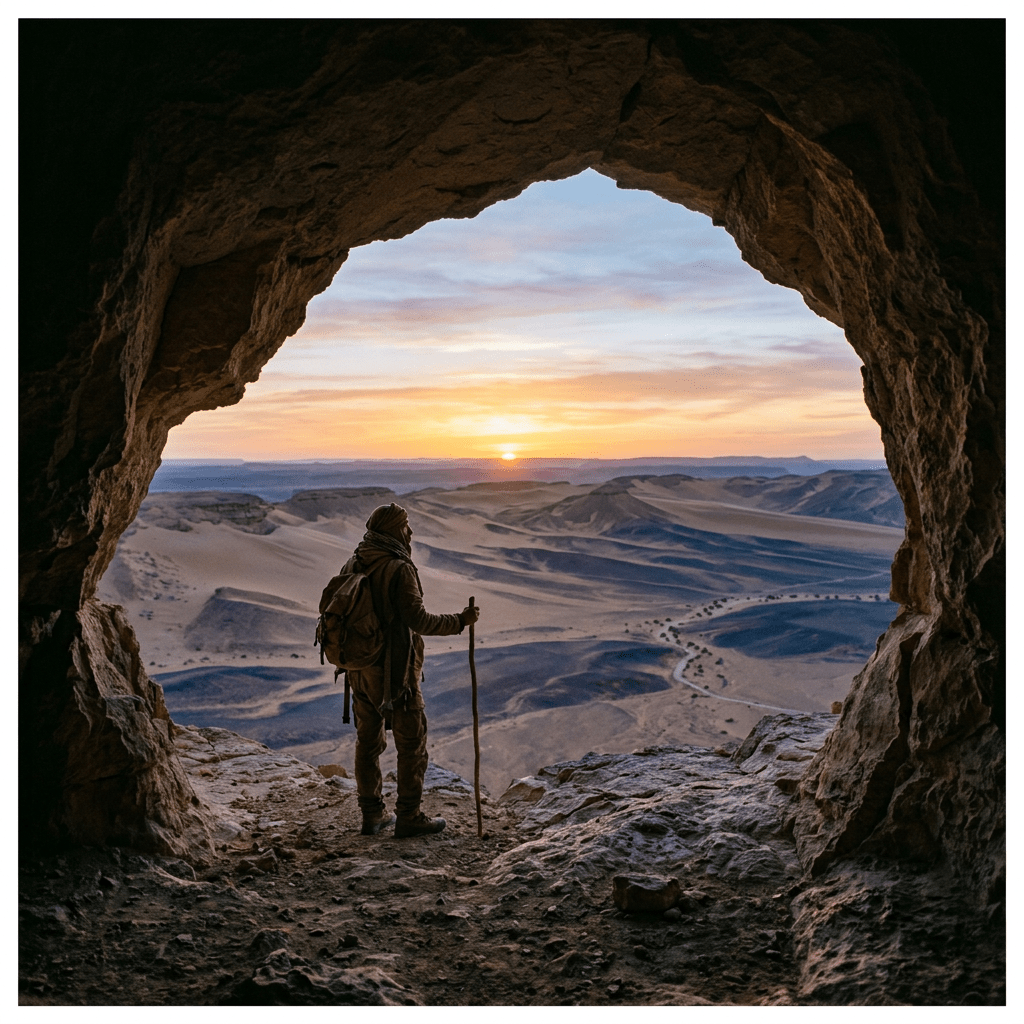
A person dressed in layered robes and headscarf holding a walking stick, standing on rocky terrain overlooking a wide desert landscape with sand dunes and distant mountains at sunset.
Solemnity of the Nativity of Saint John the Baptist

First Reading: Isaiah 49:1-6
Responsorial Psalm: Psalm 139:1b-3, 13-14ab, 14c-15
Second Reading: Acts 13:22-26
Gospel: Luke 1:57-66, 80
Daily readings: https://bible.usccb.org/bible/readings/062426.cfm

Today the Church celebrates the birth of a saint — something she does for almost no one else. Only Mary and John the Baptist receive the honor of a birth feast, because their very arrivals into the world carried divine significance. John came with a purpose already written into him before he drew his first breath.

Isaiah describes it: "The LORD called me from birth, from my mother's womb he gave me my name." And the Gospel shows it landing in real life — a child is born, the neighbors come to celebrate, everyone assumes he will be named after his father, and Elizabeth says simply: "No. He will be called John." Nobody in the family has that name. There is confusion, sign language, a tablet passed to a mute father. Zechariah writes four words — "John is his name" — and immediately his tongue is freed and he blesses God. The name itself was an act of obedience, and obedience broke the silence.

Paul adds in the Second Reading what John himself understood better than anyone: "I am not he. Behold, one is coming after me; I am not worthy to unfasten the sandals of his feet." John's whole greatness consisted in knowing exactly who he was and who he was not. He did not try to be the main character. He was a voice — clear, direct, purposeful — pointing always toward someone else. He grew strong in spirit in the desert, in quiet, in preparation, until the day of his manifestation. And when that day came, his mission was to make sure all eyes turned away from him and toward Jesus.

The Psalm wraps all of this together: "You knit me in my mother's womb. I praise you, for I am wonderfully made." This is the ground of John's freedom. He knew he was made on purpose, known before he knew himself, called by name before he had one. That certainty made him fearless.


A few questions to sit with today:

1. Do I know, in a real and felt way, that I was made on purpose — that God called me from my mother's womb and has a name for me? Or does that feel more like a nice idea than a living truth?

2. Is there a role in my life — at home, at work, in my community — where I am being asked to be a voice that points to Jesus rather than to myself? How am I living that out?

3. Where today did I try to be the main character in a story that was not actually about me?

4. Is there a silence in my life — a Zechariah moment — where God is waiting for a small act of obedience before something is freed?


One small thing for tomorrow:

Pray Psalm 139 slowly — just the few verses from today's Mass: "You knit me in my mother's womb. I praise you, for I am wonderfully made." Say it as though you mean it. If it feels hard to believe, say it anyway. Let the words do their work before your feelings catch up.


Lord Jesus, today we celebrate the birth of the one you called the greatest born of woman — and his greatness was entirely in how completely he pointed away from himself toward you. I want to live a little more like that. Help me to know, in the places where I forget, that I too was made on purpose — knit together, named, called. Free me from the need to be the center of things. Give me John's clarity about who I am and who I am not, and his courage to say so. May his example and his prayers help me to be a voice, however small, that helps the people around me see you more clearly. Amen.


If you'd like to share: is there a moment in your own life when you sensed that you were made on purpose — called by name for something — and would you share it in the comments?

Examen: Tuesday of the twelfth Week in Ordinary Time

Interior of a Gothic church with arched ceilings, stained glass windows, wooden pews, and one person sitting
Tuesday of the Twelfth Week in Ordinary Time

First Reading: 2 Kings 19:9b-11, 14-21, 31-35a, 36
Responsorial Psalm: Psalm 48:2-3ab, 3cd-4, 10-11
Gospel: Matthew 7:6, 12-14
Daily readings: https://bible.usccb.org/bible/readings/062326.cfm

There is something beautiful in what Hezekiah does today. He receives a letter — a threatening, mocking letter from the most powerful king in the world, telling him that his God cannot save him. And instead of panicking, strategizing, or firing back, Hezekiah walks up to the temple and spreads the letter out before the LORD. He just puts it there. He says: you see this, God? You hear what they are saying about you? He does not pretend he is not afraid. He does not try to solve it himself first. He brings the whole thing, exactly as it is, and places it in front of the one who made the heavens and the earth.

And God answers. Not with a long speech, not with conditions, but simply: "I have listened."

That is the model of prayer today's reading is giving us. Not elegant language, not spiritual performance — just bringing the actual situation, the actual threat, the actual letter, and laying it before a God who sees and hears. It is honest. It is humble. And it is enough.

Jesus then gives us three short, dense teachings in the Gospel — on discernment, on the Golden Rule, and on the narrow gate. The one that belongs with Hezekiah is the narrow gate. The wide road is easy, broad, crowded. The narrow gate takes intention — you have to actually choose it, duck your head a little, mean what you are doing. Hezekiah could have taken the wide road: appease Sennacherib, negotiate, give a little ground to survive. Instead he walked up to the temple. That was the narrow gate. It is rarely the obvious move. But it is the one that leads somewhere.


A few questions to sit with today:

1. Is there a letter I have been carrying — a threat, a worry, a situation that feels too big — that I have not yet spread before the LORD? What would it feel like to just put it down in front of him tonight?

2. When I pray, am I bringing my actual situation, or am I bringing a cleaned-up version I think God will find more acceptable?

3. Today, was I on the wide road or the narrow one? Where did I take the easier path when the truer one was available?

4. Did I treat someone today the way I would want to be treated — and where did I fall short of that?


One small thing for tomorrow:

Think of one thing you are carrying right now — a worry, a conflict, a decision — that you have been trying to manage on your own. Tomorrow morning, write it down on a piece of paper or in your notes, and say out loud: "Lord, I am spreading this before you. I have listened. Now I need you to." Then leave it there.


Lord Jesus, thank you for Hezekiah's example today — the courage to walk into your presence with the actual problem, not a dressed-up version of it. I want to do that too. There are things I am carrying that I have not fully handed to you because I am still trying to fix them myself or because I am not sure you will answer. Forgive me for that small faithfulness. Help me to believe that you see, that you hear, that your answer — even when it comes differently than I expect — is enough. Give me the wisdom to find the narrow gate tomorrow when the wide one is right there and so much easier. May Mary, who brought her own impossible situation to you and trusted your word, pray for me when my trust runs thin. Amen.


If you'd like to share: is there something you have been carrying that you have not yet fully laid before God — and would you like us to pray with you?